

As a longtime member, I have a list of favorite San Diego Zoo animals, attractions, and experiences to look out for. It’s impossible to see and do everything in a single day or even two days, so knowing what the highlights are will help you get the most out of your visit.
Tickets and Planning Tips
Before visiting the San Diego Zoo animals and seeing the different attractions, I recommend reviewing:
- The daily schedule for Wildlife Presentations, so you can plan around the ones you want to see.
- The San Diego Zoo app to confirm which animals are currently on view.
- My detailed San Diego Zoo tips guide (especially helpful if it’s your first visit).
Also, don’t forget that I have exclusive pricing on San Diego Zoo tickets that is the lowest price I’ve seen online.

Save $8 · 1-Day Pass
San Diego Zoo or Safari Park
Skip the ticket line with a 1-day pass you can print or scan on your phone, valid a full year from purchase. Final price after my code: $70 (ages 12+) and $60 (ages 3–11).
Use promo code to save $8 at both parks.
I also have a guide to the best time to visit the San Diego Zoo by season and time of day, which affects when the animals are most active.
Lastly, if you are short on time, here’s how I’d prioritize the visit:
- Go straight to the Giant Pandas at opening.
- Visit Polar Bears early while they’re active.
- Use the Skyfari Aerial Tram to minimize uphill walking.
- With kids, plan time at Wildlife Explorers Basecamp.
Can’t Miss San Diego Zoo Animals
The San Diego Zoo is home to some of the world’s most iconic wildlife, from giant pandas and polar bears to koalas, gorillas, giraffes, and pygmy hippos.
The Zoo publishes its full animal list, and it is worth clicking through to your animal before you go to confirm it is still on view.
Giant Pandas (Panda Ridge)
The giant pandas are back at the San Diego Zoo. Yun Chuan and Xin Bao arrived in 2024, and the Zoo rebuilt Denny Sanford Panda Ridge at four times the size of the previous panda habitat.
- Getting in: There is no separate panda ticket to buy and nothing to book ahead. Panda Ridge is a walk-through habitat on a one-way path, and there is always a standby line you can join once you are inside the park. On some days the Zoo also hands out free Giant Panda Timed Tickets, which hold a slot so you are not standing in that line, and you pick one up on arrival by scanning the QR code on the sign at the main entrance. If the code gives you trouble, any open ticket booth can help. When it is busy, expect about 15 minutes at the habitat itself.
- Best time to go: Early. Pandas are most active in the morning, and getting there before the crowd builds is what buys you time in front of them.
- If you want longer: the paid Early Morning with Pandas Walking Tour reaches Panda Ridge before the habitat opens to anyone else. Full details are in the tours section below.
- Telling them apart: Yun Chuan is the male, with a long, slightly pointed nose. Xin Bao is the female, with a large, round face and big, fluffy ears.
Polar Bears (Northern Frontier)
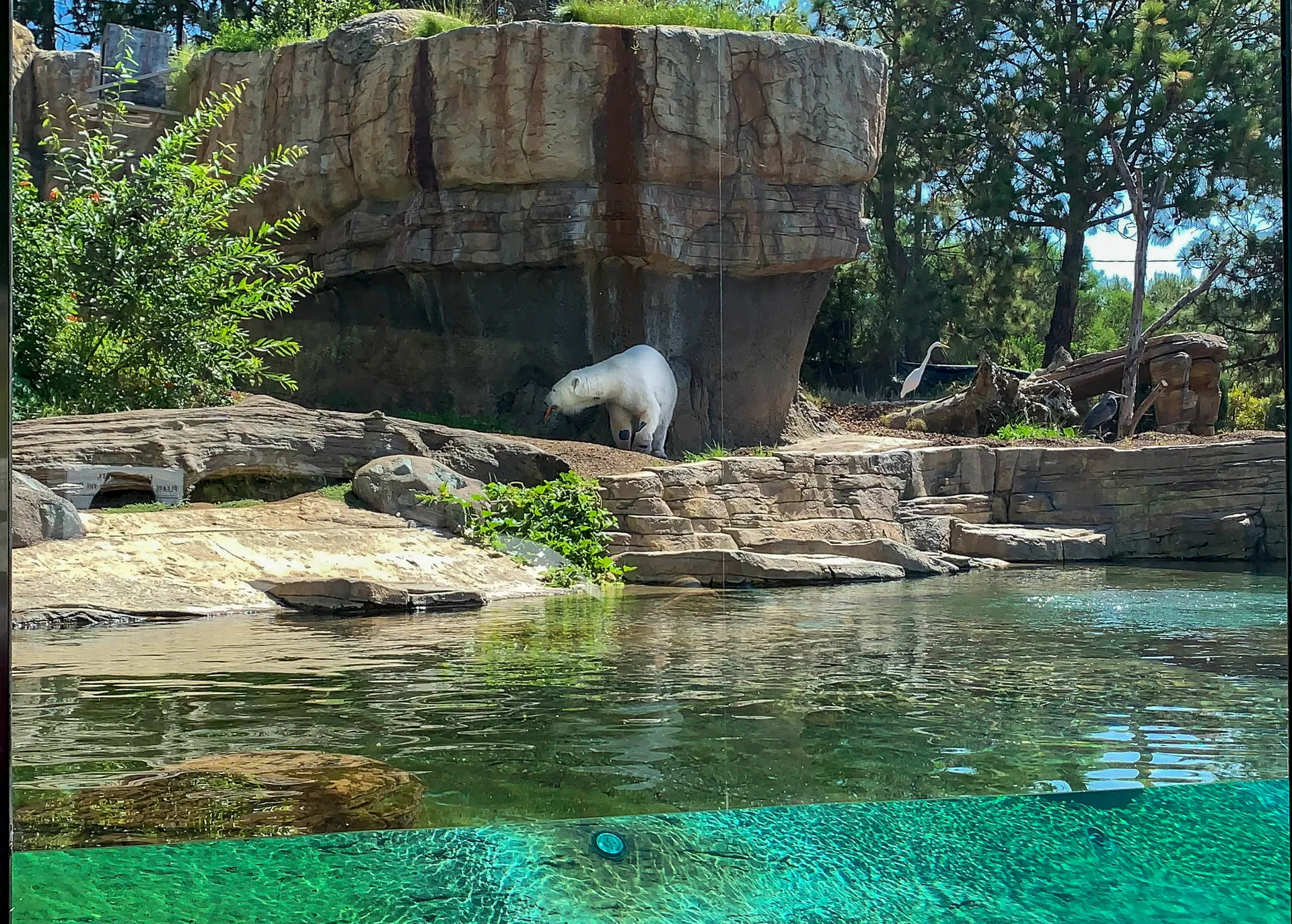
We have polar bears living outside in San Diego. Think about that for a minute.
The Northern Frontier habitat lets you watch them on land and underwater. When they swim, they often glide right up to the viewing glass.
- Best time to visit: First thing in the morning, when the bears are most active. Docents are usually nearby to answer questions, and kids can crawl through a mock “den” to learn more about Arctic life.
- What’s interesting about them: Unlike other bear species, polar bears do not hibernate. Their fur-covered feet also feature small bumps for traction on the ice.
- Conservation note: Polar bears are listed as threatened, and the Zoo’s Arctic work is why the habitat is built for research as well as viewing.
- Fun fact: A polar bear’s nose is so powerful it can smell a seal on the ice 20 miles away.
You can get your polar bear fix at any time through the polar bear cam.
Koalas (Outback)
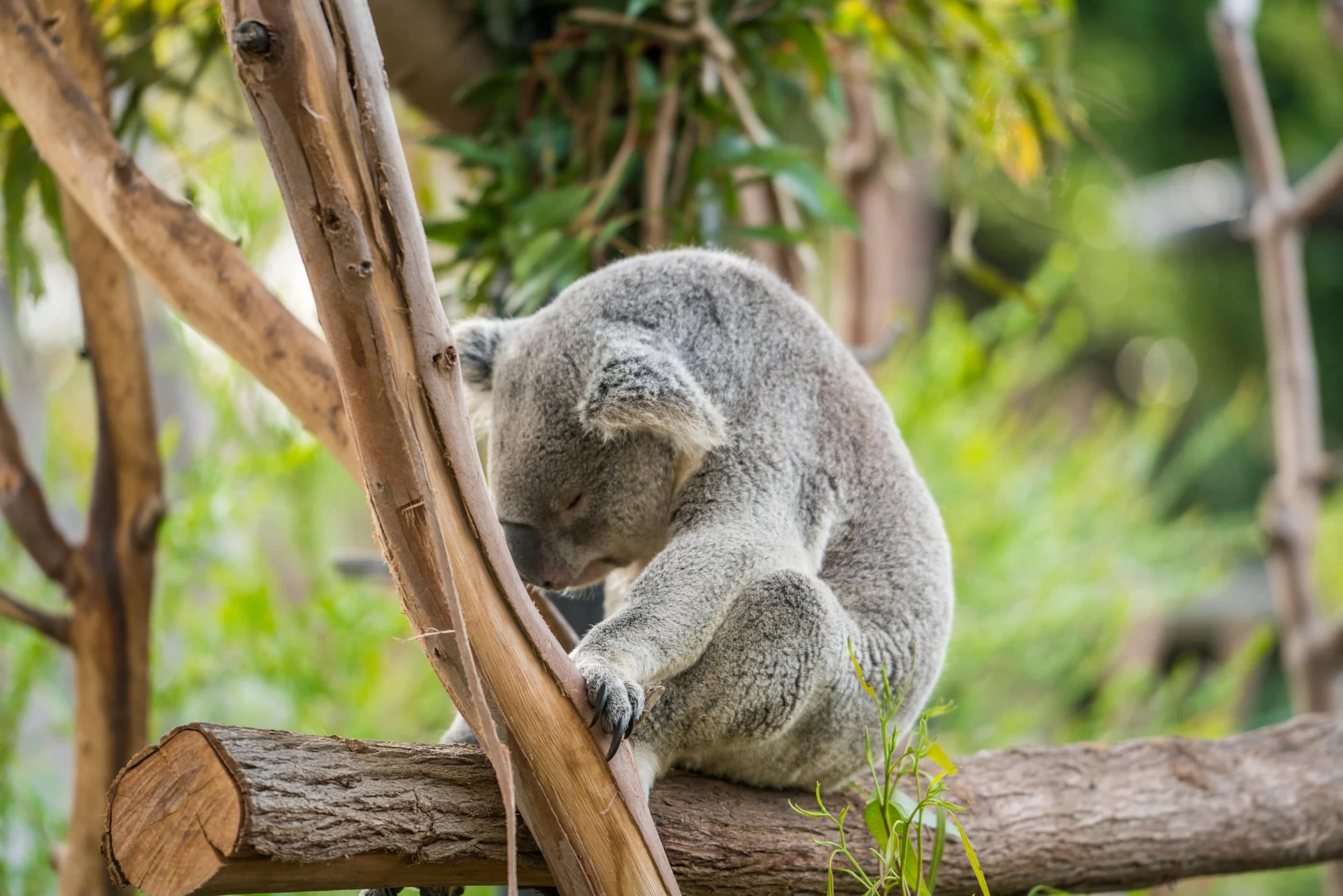
The San Diego Zoo has the largest koala colony and the most successful koala breeding program outside Australia. The first pair, Snugglepot and Cuddlepie, arrived in 1925.
Elevated walkways bring you up to eye level with them, and the Queenslander-style house alongside is the koala care center, where you can watch staff preparing the day’s eucalyptus.
- What’s interesting about them: Koalas spend most of their days in the eucalyptus trees either eating, sleeping, or climbing really slowly around. Koalas sleep 20 hours a day, which is why avid viewers of the koala cam likely see a lot of gray furry backside.
- How they are housed: Males can be territorial, so they get their own perches, while the females and their joeys share a separate area.
- Bear in mind: Despite the nickname “koala bear,” koalas are marsupials, not bears. They carry their young in a pouch.
We’re lucky to have them. Many zoos can’t keep koalas because they’re located in climates where eucalyptus trees do not grow well. We have loads of this koala food all over San Diego and the Zoo maintains its own eucalyptus tree farm.
There is also a play structure by the koalas with life-size koala sculptures, which is where small children tend to want to stop anyway.
Pygmy Hippos (Treetops Way, Lost Forest)
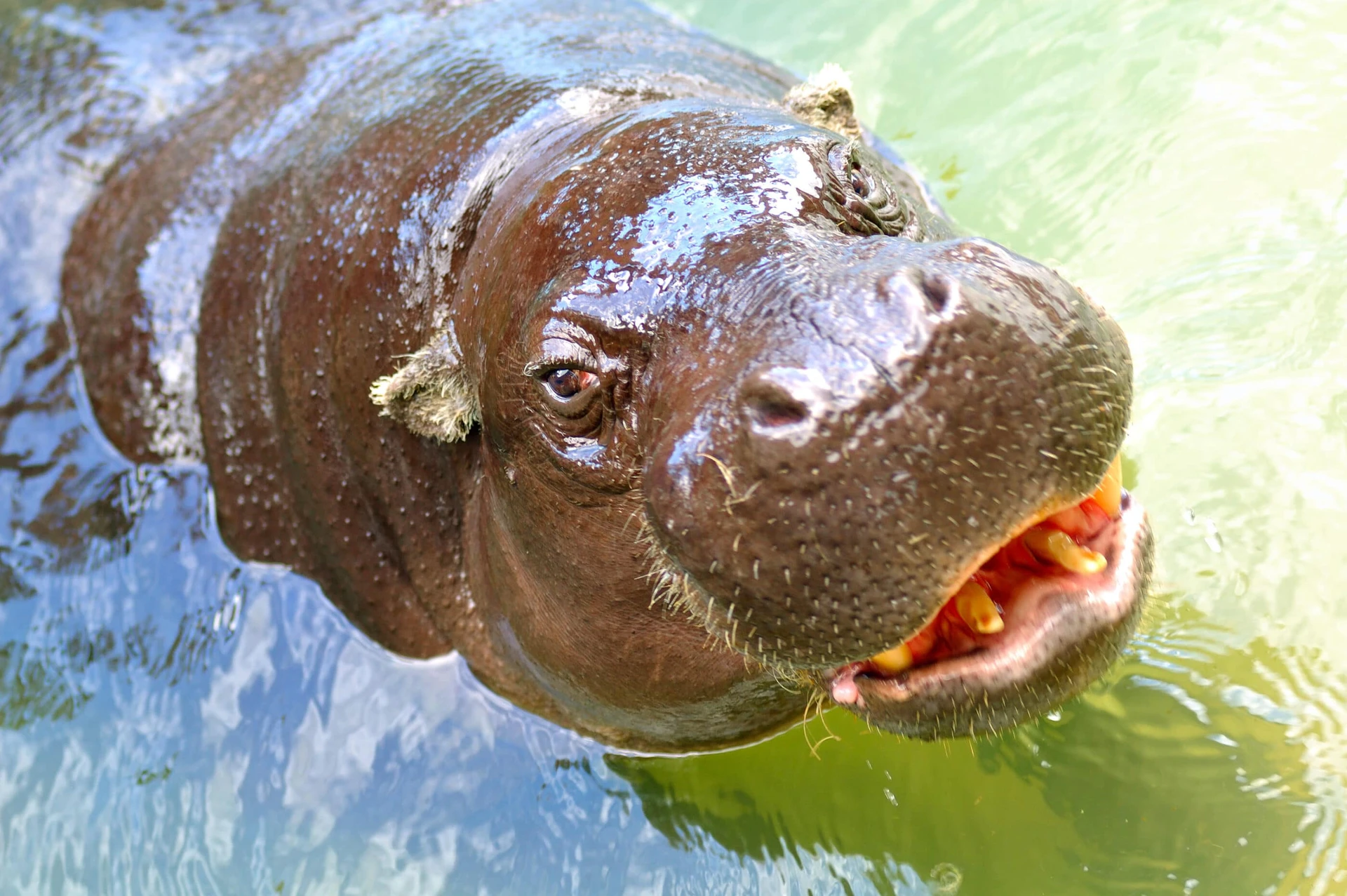
Pygmy hippos are smaller and rounder than their river hippo relatives, with eyes positioned more on the sides of their heads rather than on top. They share their habitat with Wolf’s monkeys, and yes, the monkeys occasionally hop onto their backs for a ride.
- What you need to know: Pygmy hippos are endangered, and far less aquatic than the Zoo’s river hippos, so expect to see them on land more often than in the water.
- How to see them: The habitat is small and shaded, so give it a few minutes rather than walking past. They are largely nocturnal and get the outdoor space to themselves once the monkeys go in for the night.
- Fun fact: Pygmy hippos secrete a pinkish fluid that acts as a natural moisturizer and sun protectant.
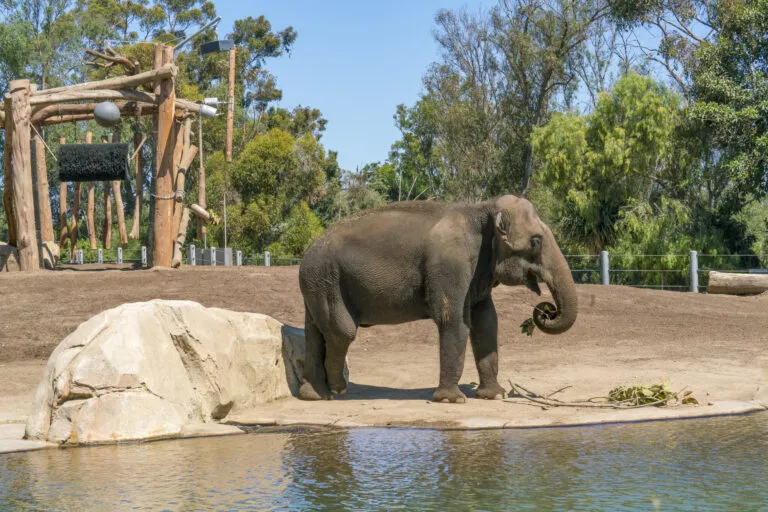
Elephants (Elephant Odyssey)
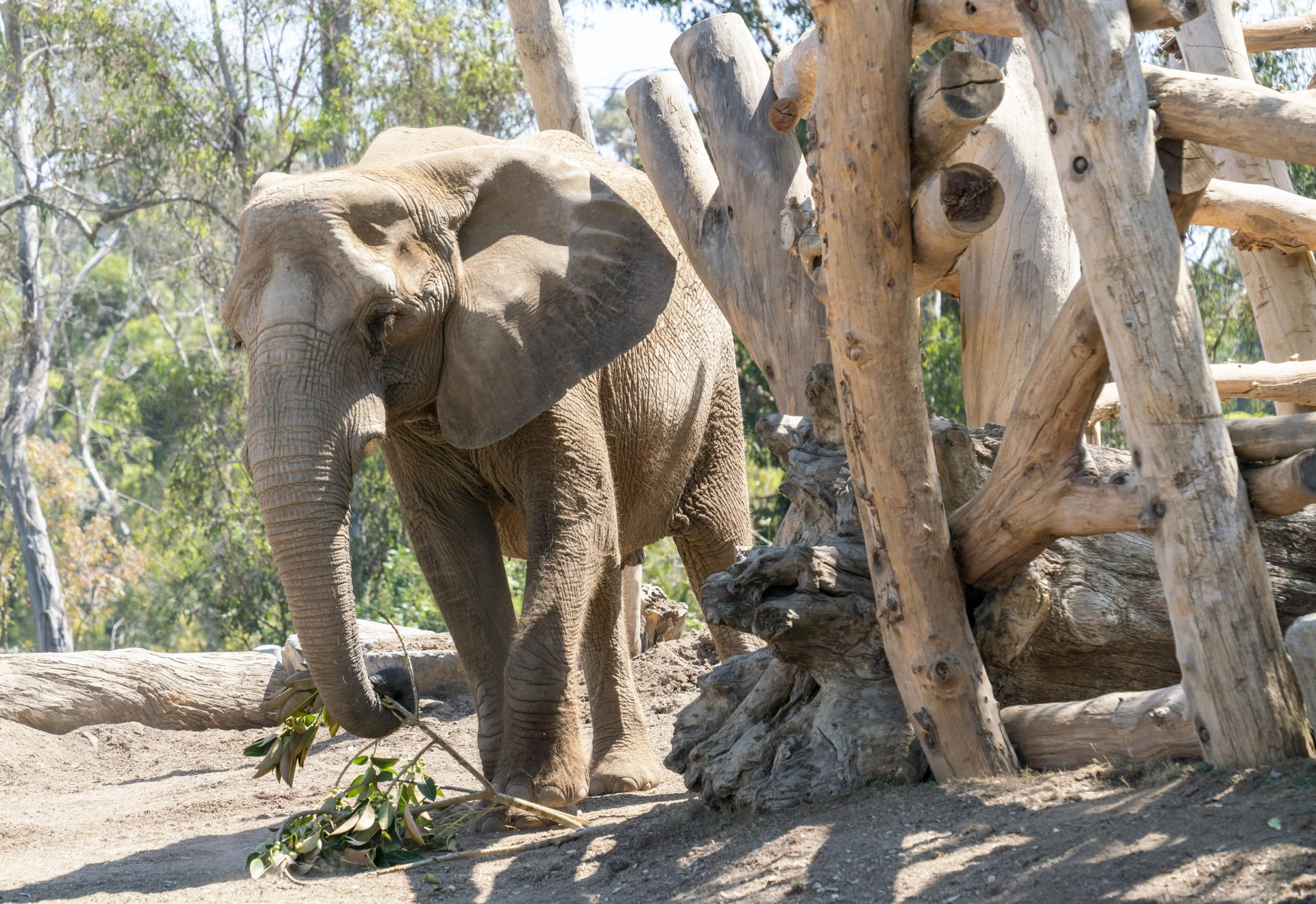
Signage along the path at Elephant Odyssey helps you identify each elephant by name and by the features that tell them apart.
If you’ve watched The Zoo: San Diego, you have already seen the level of veterinary care that goes on here, including treatments like acupuncture.
- What to look for: The Elephant Care Center sits along the pathway, and the keepers use toys, feeding sessions, and social time to keep the herd busy.
- Best time to visit: Elephants are usually active throughout the day, though this area offers limited shade, so morning visits are more comfortable.
- Also here: the Elephant Play Yard sits across from the condors, with a maze of satellite tracking collars, a play fossil dig, and puzzles. It is one of the Zoo’s three play areas.
African Penguins (Africa Rocks)
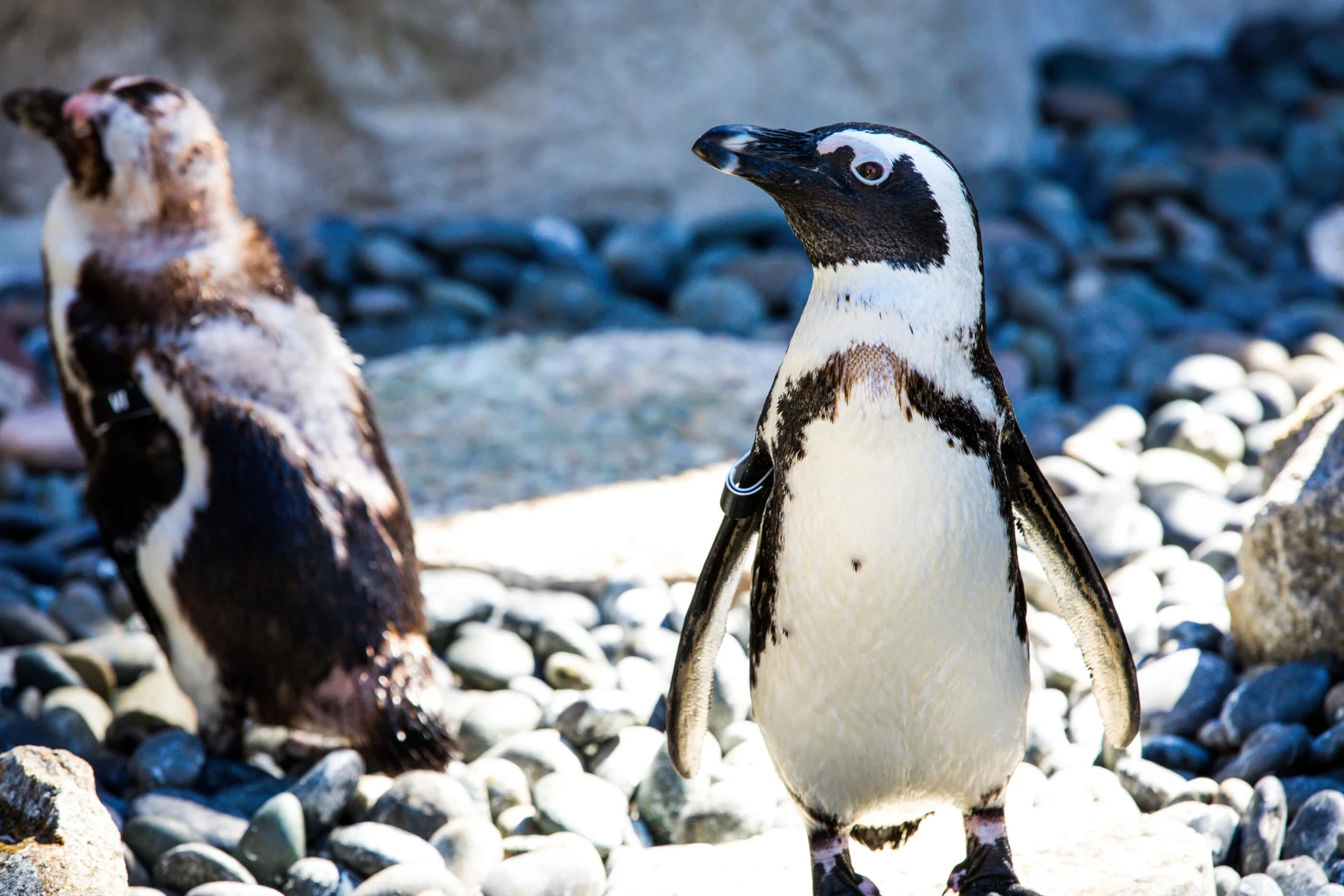
Africa Rocks runs through six habitats, from seashore to savanna, and the penguins are in the Cape Fynbos section. African penguins are warm-weather birds from the southern African coast, so the habitat is a rocky beach with a deep pool rather than anything icy.
Look for the nesting burrows tucked among the rocks, and for the spotted leopard sharks sharing the water.
- What to watch: Head for the underwater viewing windows, which is where you see how fast they swim.
- Fun fact: They hit 15 miles an hour underwater and can stay down for more than two minutes, chasing schooling fish like sardines and anchovies.
- Conservation note: African penguins are endangered, which is why the breeding program here matters as much as the viewing does.
Galapagos Tortoises (Discovery Outpost)
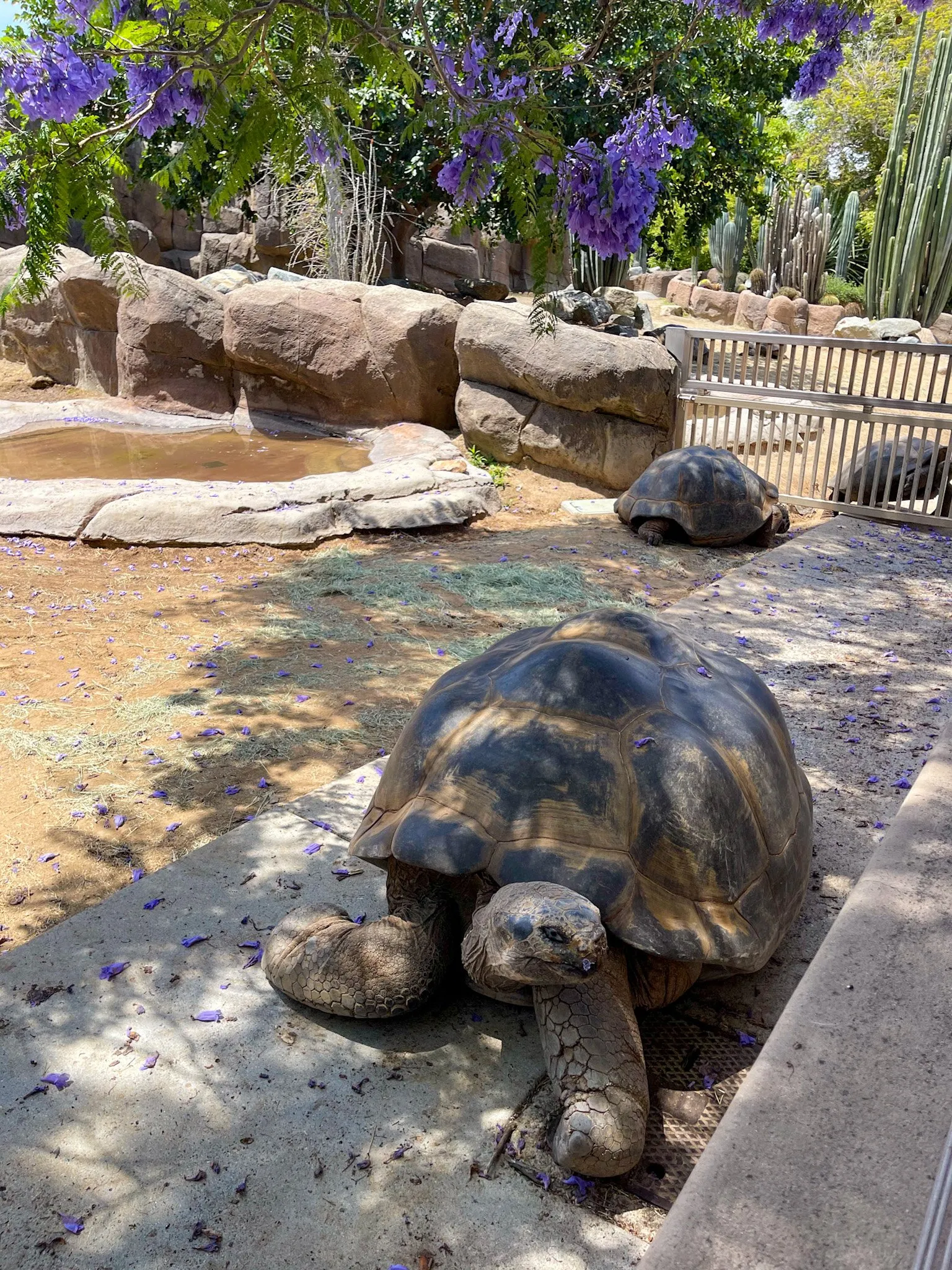
A few of the Galapagos tortoises have been at the Zoo since 1928.
- What you need to know: Some are over 100 years old and can weigh up to 500 pounds. Their shells are not solid bone. They contain honeycomb-like air pockets that make them lighter and buoyant.
- Fun fact: They are drawn to the colors of the flowers they eat, so reds, yellows, pinks, and oranges. The Zoo’s own suggestion is to turn up in your brightest clothes and see whether you get a tortoise’s attention.
- Viewing tip: Look for the numbers on their shells. White numbers are males and red are females.
Some are shy and some are not. The Zoo says the bolder ones will stretch up for a neck rub from their keepers. A Galapagos tortoise can also go a year without eating or drinking, because it stores food and water in its body.
To get the Galapagos tortoises inside for the night, keepers trained them to respond to a cowbell. When they hear it, they slooooowly walk in.
Hamadryas Baboons (Africa Rocks)
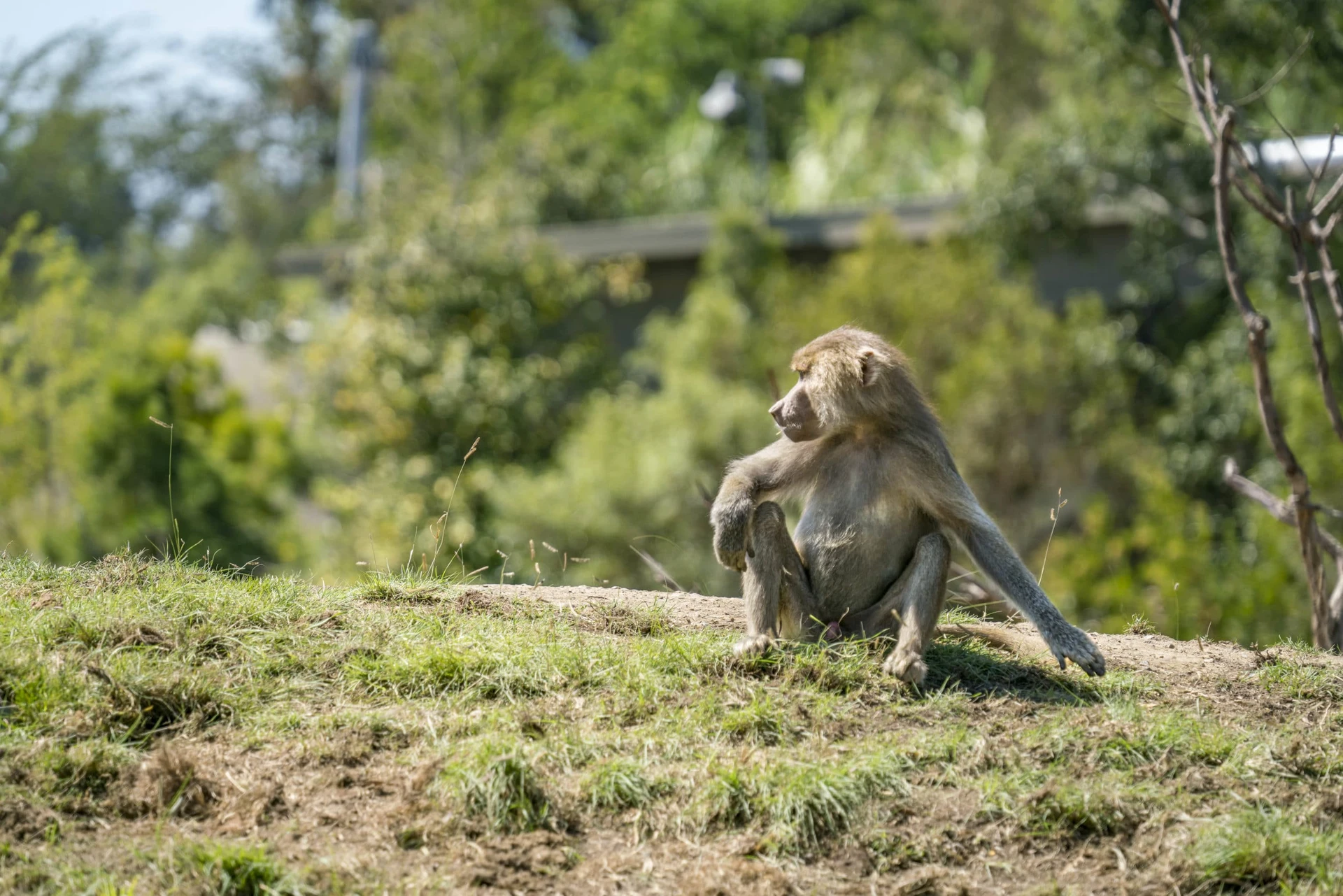
There’s never a dull moment in the baboon habitat. More than 20 hamadryas baboons live here, and a larger, dominant male leads a family unit of many females and their young. Watching him keep order is half the fun.
- What makes them interesting: The troop runs on a strict social hierarchy, and most of what you see is grooming, play, and interaction. They share their Ethiopian Highlands-inspired habitat with geladas (look for the red hourglass-shaped marking on their chest) and Nubian ibex.
- Viewing tip: Spend a few minutes here. The dynamics shift quickly, and there’s usually something happening.
Hamadryas baboons are not currently endangered.
Meerkats (Africa Rocks)
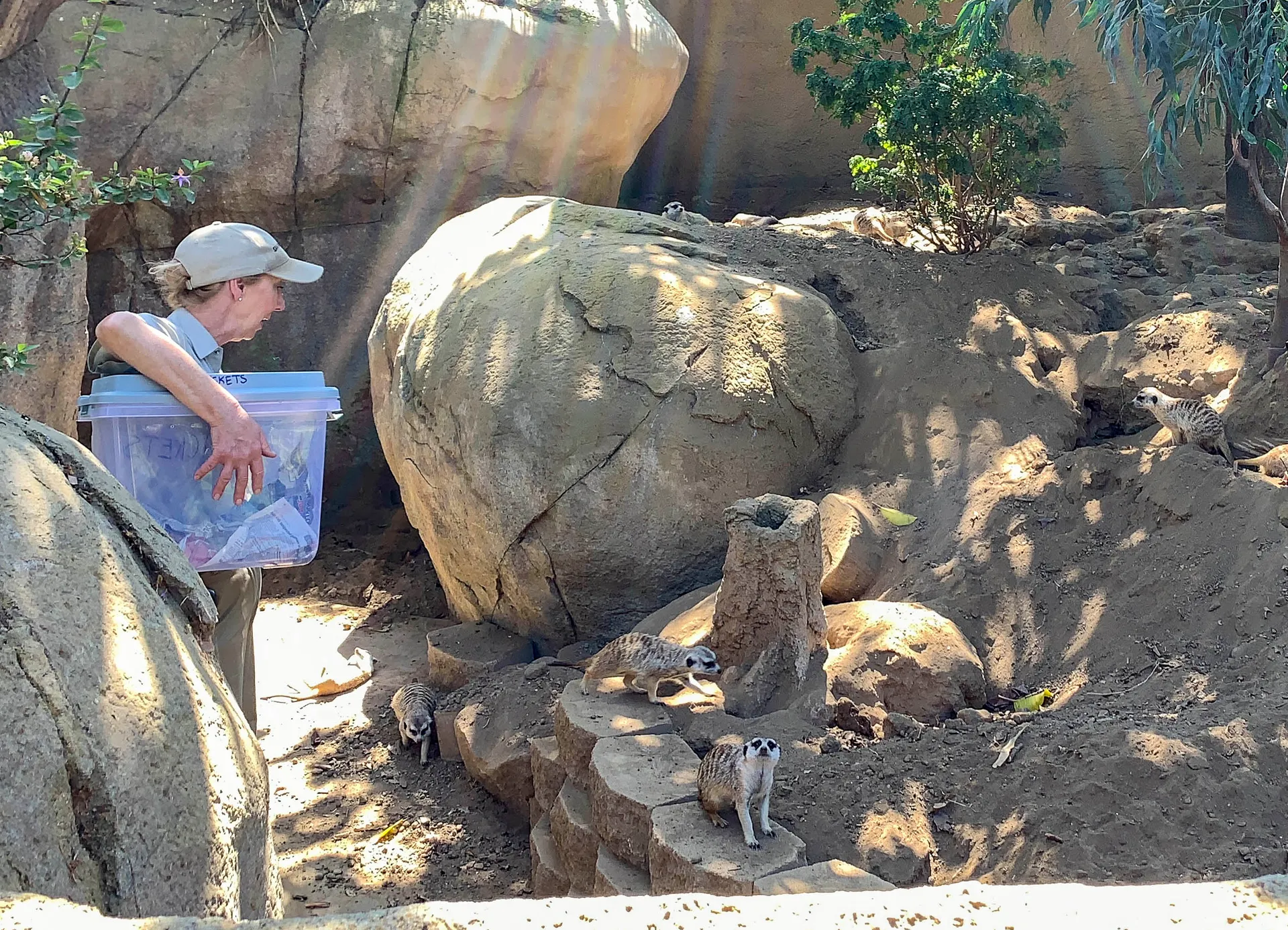
You’ll find the meerkats just around the corner from the baboons, and they’re almost always in motion.
The viewing area sits close to their burrow system, so you can watch several family groups rotate lookout duty, dig tunnels, groom one another, and sunbathe upright on their hind legs.
- Worth planning around: the Africa Rocks Encounter runs daily at the Africa Rocks Stage, where wildlife care specialists bring out ambassador animals and take questions. Times are on the Zoo app and its Wildlife Presentations page, which is the only place they are current.
- Good with small children: They are easy to see from the path, and something is always moving, so this is a short, easy stop when patience is running out.
Meerkats also live at the San Diego Zoo Safari Park. Not sure which park to visit? Here’s my San Diego Zoo vs. Safari Park comparison.
Axolotl Salamanders (Wildlife Explorers Basecamp)
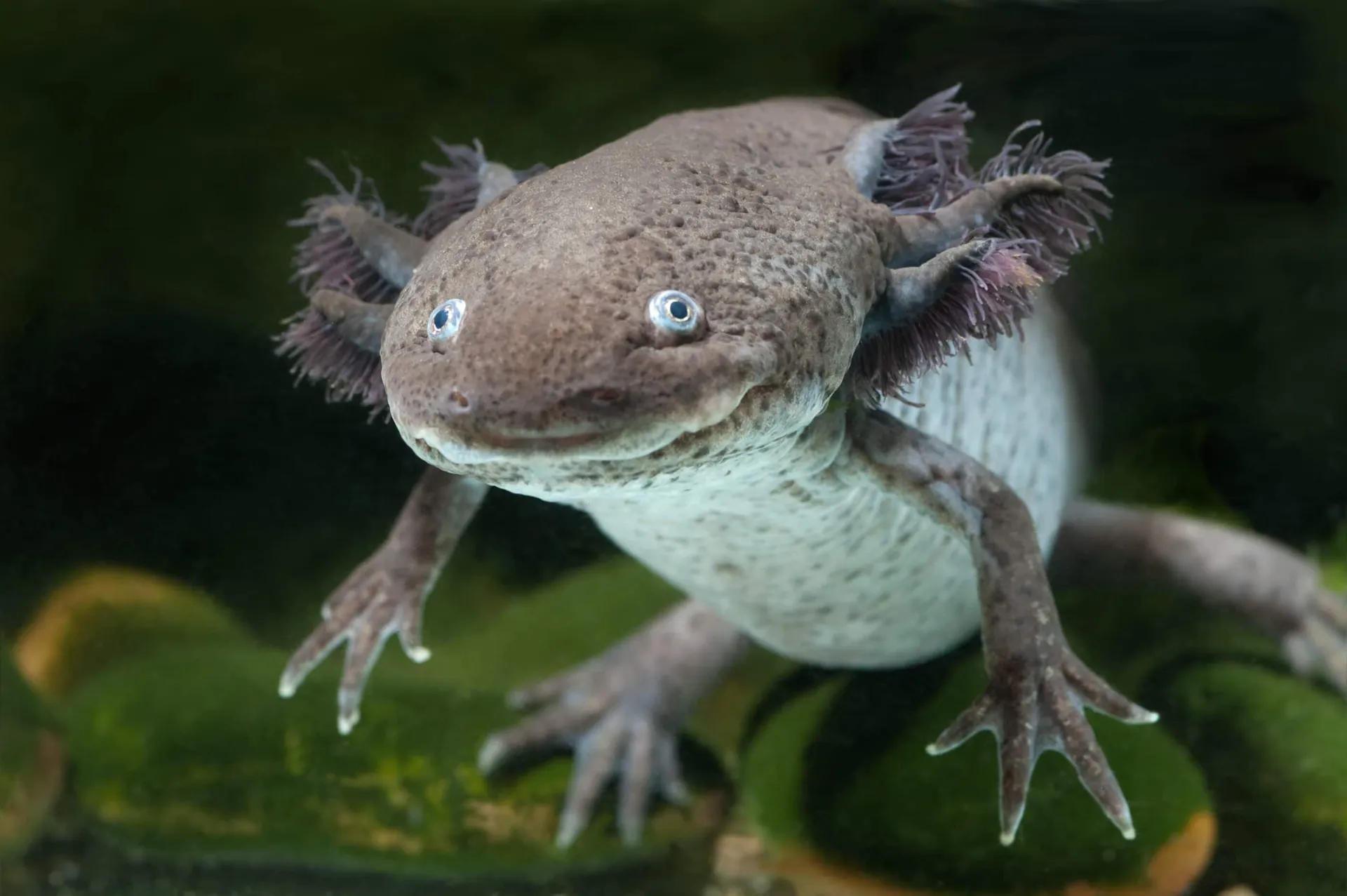
These critically endangered salamanders are located in the Cool Critters building within Wildlife Explorers Basecamp.
- What to look for: The feathery gills and the permanent “grin.”
- What makes them remarkable: They can regenerate limbs and even organs.
What I didn’t know until recently is that they’re only found in Lake Xochimilco and Lake Chalco in Mexico City.
Trivia: A Xochimilco trajinera (boat) ride is one of the top things to do in Mexico City, and while people rarely spot them, it would be fun to try.
Gorillas (Gorilla Tropics)
The western lowland gorillas at Gorilla Tropics are among the most captivating animals at the San Diego Zoo. The planting is the point here. The Zoo credits the dense vegetation and constant browse for the troop’s health, and it is why this habitat looks wilder than the manicured grounds around it.
Walk on through to Scripps Aviary while you are there. It is a walk-through aviary with benches, waterfalls, and gentle showers, and it is the quietest place in this part of the Zoo.
- What to watch for: The silverback is easy to spot — he’s the largest member of the troop and often sits in a prominent position keeping watch. Younger gorillas are the entertainers, wrestling and chasing each other through the vegetation.
- Best time to visit: Mornings, when the troop is most active after their first meal. Afternoons tend to be nap time.
- Conservation note: Western lowland gorillas are critically endangered. The Zoo’s conservation efforts in Central Africa focus on habitat protection and anti-poaching initiatives.
- Fun fact: Gorillas share about 98% of their DNA with humans. Watch long enough and you’ll notice very human-like expressions and gestures.
Giraffes (Urban Jungle)
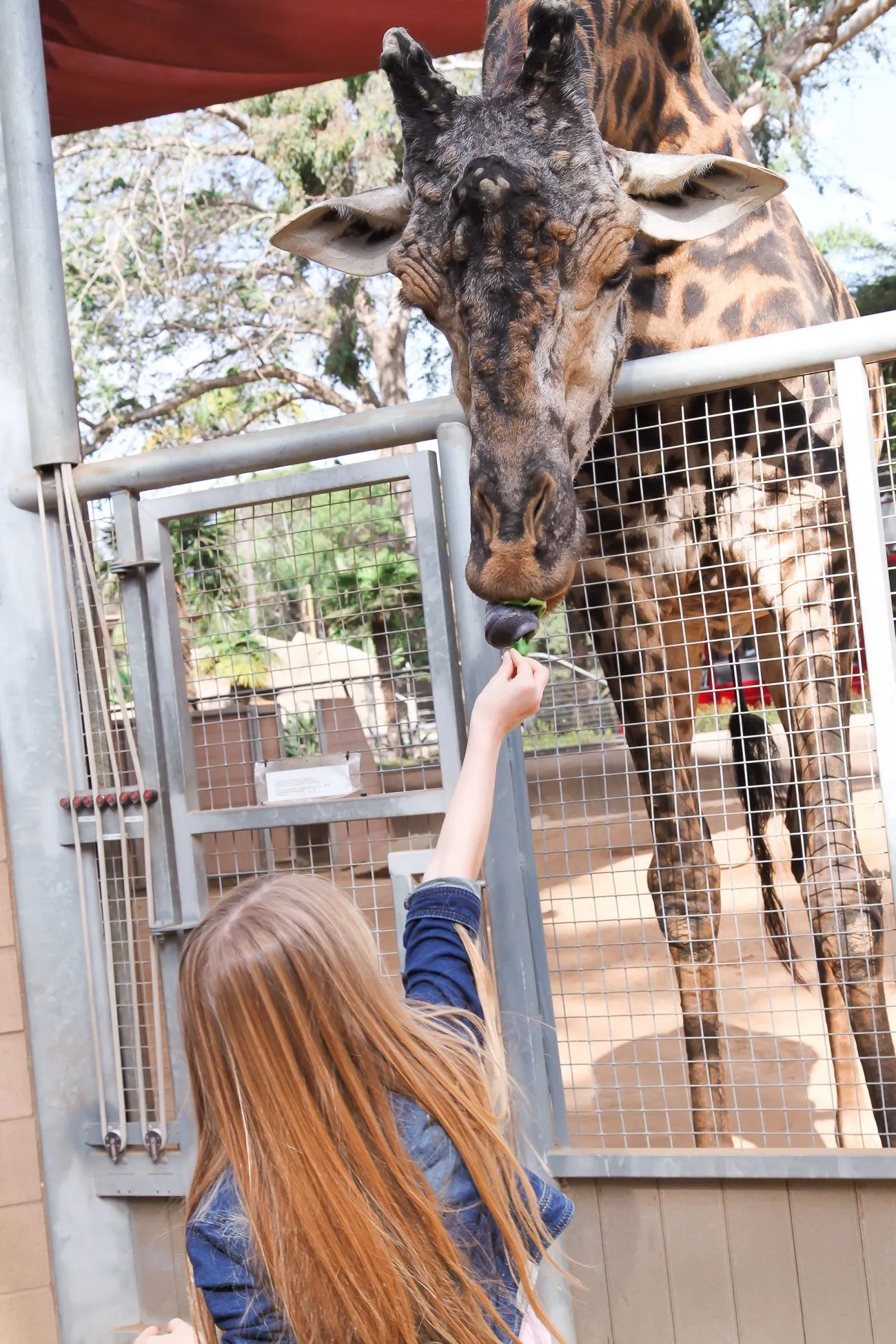
The Masai giraffes in Urban Jungle are some of the most photogenic residents at the San Diego Zoo. The habitat lets you get close, and it is shared with Soemmerring’s gazelles, which are easy to overlook next to something that could look into a second-story window without standing on its toes.
- What makes them special: Every giraffe’s coat pattern is unique, like a fingerprint. The Zoo’s Masai giraffes are native to Kenya, and their patterns look like oak leaves.
- Viewing tip: You can feed the giraffes here at certain times of the day (check the app for times). Feeding stations run the length of the habitat, with low ones at the front holding herbivore pellets and higher ones in the middle hung with acacia branches. Stand at one and you get a long look at a giraffe wrapping its tongue around its food.
- Fun fact: A giraffe’s tongue is long, dark, and purple. The Zoo says the extra pigment protects it from the sun while it strips leaves off thorny acacia branches.
Komodo Dragons (Kenneth C. Griffin Komodo Kingdom)
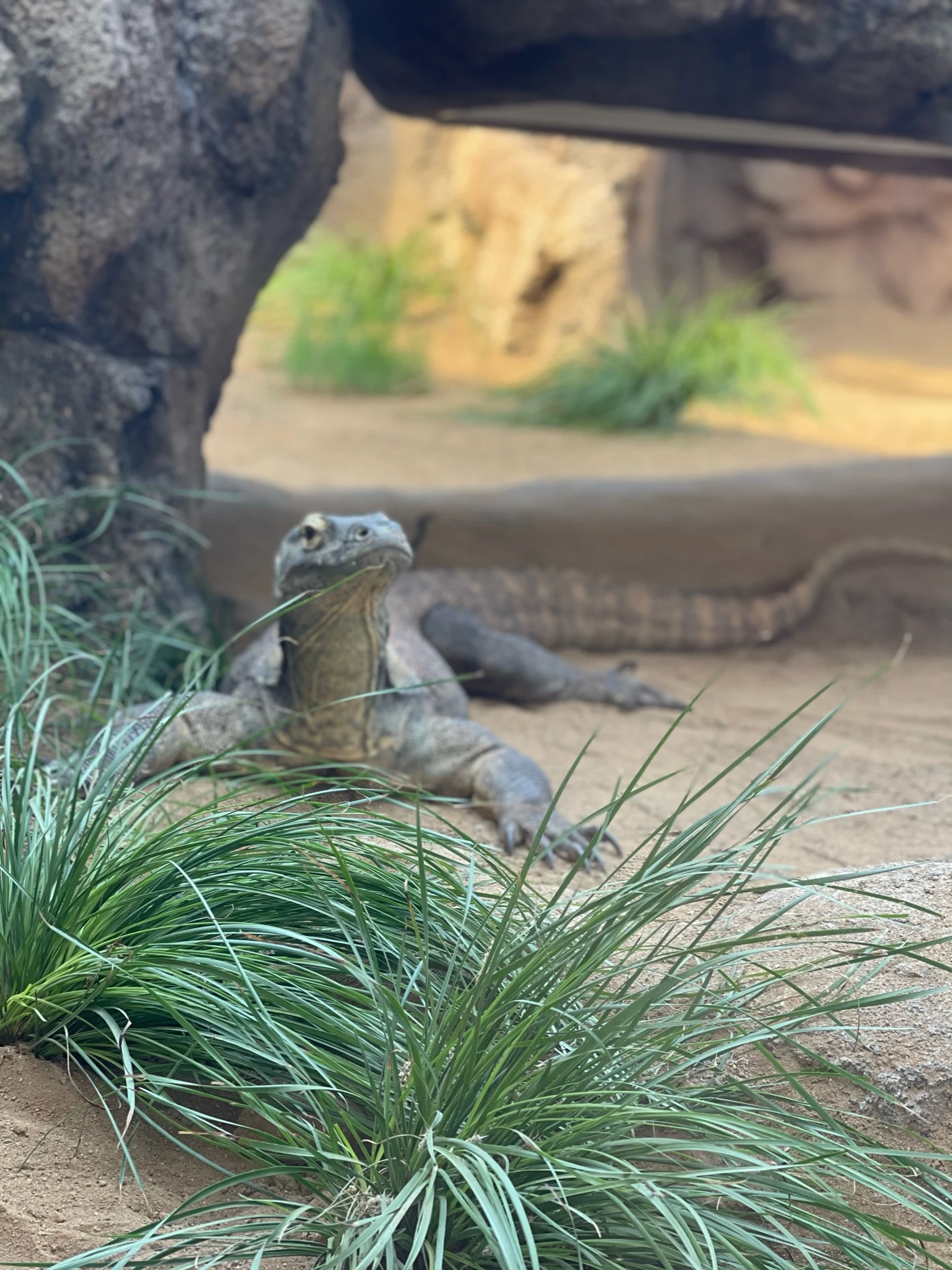
The Kenneth C. Griffin Komodo Kingdom gives visitors an up-close look at the world’s largest living lizard. These prehistoric-looking reptiles grow up to 10 feet long and can weigh as much as 360 pounds. There are two at the Zoo, both in the Reptile Walk area of Discovery Outpost: the adult at Komodo Kingdom and a juvenile in the Reptile House.
- What makes them fascinating: Komodo dragons are apex predators with venomous bites. They can detect carrion from nearly 6 miles away using their forked tongues.
- Viewing tip: They can be surprisingly still, so look carefully. When they do move, they’re faster than you’d expect.
- Fun fact: Female Komodo dragons can reproduce without mating through a process called parthenogenesis.
Favorite San Diego Zoo Attractions
The San Diego Zoo is also packed with rides, play zones, and guided experiences, and two of them are already paid for. Admission includes the Guided Bus Tour and the Skyfari Aerial Tram, no matter which ticket you bought.
They also save you a long uphill walk. For the full rundown on planning your visit, see my ultimate San Diego Zoo guide.
Denny Sanford Wildlife Explorers Basecamp
Basecamp covers more than three acres on the site of the old Children’s Zoo, and it is built for young conservationists. It is arranged around four habitats: Rainforest, Wild Woods, Marsh Meadows, and Desert Dunes.
- Nature play: The Tree of Dreams in Wild Woods is an ancient oak dripping with Spanish moss, climbable by rope bridge, spiral staircase, or fallen branch. Desert Dunes has rocks, caves, and a dry wash. Wild Woods has a waterfall grotto that will get children wet, which is why the Zoo keeps body dryers on hand.
- Indoors: Spineless Marvels is a two-story greenhouse full of butterflies, bees, and grasshoppers, with dark caves to explore and a whole leafcutter ant colony to inspect. The other indoor stop, the Cool Critters Reptile House, holds the axolotls, plus a Fijian iguana, a South American lungfish, and a Chinese giant salamander.
Skyfari Aerial Tram

The Skyfari Aerial Tram is a cable car that takes visitors between Front Street (near the Wildlife Explorers Basecamp) up to Northern Frontier (near Polar Bear Plunge) and back.
It’s both a fun ride and a practical way to minimize walking, with some of the best views of San Diego on the way over, from Balboa Park out to planes landing at the airport. It is included with admission. Children younger than 8 need an adult with them, and strollers have to be folded to ride.
Guided Bus Tour
The Guided Bus Tour is perfect for first‑time visitors. This 35‑minute narrated ride on a double‑decker bus gives you a quick overview of the zoo, passing by giraffes, bears, flamingos, tapirs, and more. It’s also a relaxing break for kids, and many little ones nap through it.
- It boards near the entrance, and there is nothing to reserve.
- Strollers are not allowed on board, so plan to park yours at the queue.
- A Spanish-language tour runs daily, reserved at the Tours & Memberships window by the entrance.
When hunger strikes, check out my San Diego Zoo dining guide for the best food options in the park.
Botanical Tours
The Zoo is an accredited botanical garden as well as a zoo, with more than 700,000 plants on the grounds, and the self-guided botanical tours are free and included with admission. There is no queue for them, which is worth knowing on a hot afternoon or a second visit.
Kids Play Areas
Play areas are scattered through the Zoo, and they are among the activities at San Diego Zoo for kids worth building into your route. There are three:
- Tree of Dreams in Wild Woods at Wildlife Explorers Basecamp, the climbable oak
- Polar Play Area in Northern Frontier, with a den to crawl into and ice holes to pop up through
- Elephant Play Yard at Elephant Odyssey, across from the condors
Balboa Park Miniature Train
It sits just outside the Zoo exit.
Hop on for a four-minute, half-mile loop through four acres of Balboa Park. A small fee applies, and it is a good way to end a visit while everyone waits for the parking lot to clear.
How to Interact With San Diego Zoo Animals
If you want to get closer than the pathways allow, take a San Diego Zoo tour. Admission is separate and required for every one of them, and children aged 15 and younger need a paid adult with them.
Set your expectations before you book. The Zoo does not offer feeding or touching wildlife on any of these tours, and it does not guarantee which animals you will see, because that call belongs to the guide on the day.
- Discovery Tour: An hour in a small group with a Zoo educator, hopping off the cart at habitats along the way. It is the least expensive way into a guided experience, and it is open to all ages.
- Inside Look: Ninety minutes, and the one I would pick for a closer look. You step off the cart at two habitats, including areas that are not otherwise open to guests. There is a two-hour Deluxe version if you want more of it.
- Animals in Action: An hour with the wildlife behavior specialists, ages 5 and up. Some of the animals on this one do not appear on any other tour.
- Early Morning with Pandas: Sixty minutes, ages 5 and up, and it reaches Panda Ridge before the habitat opens to everyone else.
- Bear Crawl: An evening walking tour for ages 21 and up that pairs beer or wine with the bears and finishes after hours at Panda Ridge.
- Elite Adventure: Three and a half hours by cart and on foot, with a close-up wildlife encounter, a stop at the panda habitat, and a pause in the VIP Garden.
- Exclusive VIP Experience: Five or seven hours, private and built around whatever you want to see, with a sit-down lunch partway through. It needs at least 72 hours’ notice and it is the most expensive of them.
San Diego Zoo Animals FAQ
These are the questions I get asked most often about which animals are at the San Diego Zoo. Keep in mind that animals may be temporarily out of view for veterinary care or habitat maintenance, so always check the San Diego Zoo app on the day of your visit.
Does the San Diego Zoo have pandas?
Yes! Giant pandas Yun Chuan and Xin Bao arrived in 2024 and live at the expanded Denny Sanford Panda Ridge habitat. See the panda section above for how the standby line and the free timed tickets work.
Does the San Diego Zoo have koalas?
Yes. The San Diego Zoo has the largest koala colony outside of Australia, and they’ve been at the Zoo since 1925.
Does the San Diego Zoo have polar bears?
Yes. The polar bears live at Conrad Prebys Polar Bear Plunge in the Northern Frontier area. The underwater viewing windows are a highlight.
Does the San Diego Zoo have capybaras?
Yes. You will find them at Elephant Odyssey, sharing a habitat with Baird’s tapirs and black spur-winged geese, all of which make good use of the pool. They are the world’s largest rodent and a reliable social media favorite.
Does the San Diego Zoo have elephants?
Yes, at Elephant Odyssey, which is one of the largest habitats in the park. Look for the Elephant Care Center along the path, where you can often watch wildlife care specialists working on an elephant’s feet or running through a wellness check.
Does the San Diego Zoo have tigers?
Yes. The San Diego Zoo has Malayan tigers at Tiger Trail in the Lost Forest, and the Safari Park has Sumatran tigers at its own Tiger Trail. The two parks sit about 35 miles apart, so if tigers are the reason for the trip, either one works. The Safari Park does have animals you will not find at the Zoo, including platypuses and large herds of African savanna species on open-range habitats.
Does the San Diego Zoo have sloths?
The San Diego Zoo has two-toed sloths, but they are ambassador animals rather than a permanent exhibit. You may see them during Wildlife Wonders at Wegeforth Bowl, which the Zoo runs daily. Members get into the amphitheater ten minutes ahead of everyone else, which is worth knowing if you want a seat.
How many animals are at the San Diego Zoo?
More than 12,000 animals representing over 680 species and subspecies, across 100 acres. The Zoo is an accredited botanical garden too, so a good part of what you walk past is the collection rather than the landscaping.
What animals does the San Diego Zoo have that others don’t?
The San Diego Zoo is one of very few zoos in the U.S. with giant pandas. Other rare residents include Komodo dragons, bonobos, and pygmy hippos. The Zoo’s mild climate lets it house species that many other zoos cannot support.
Final Thoughts
One day is not enough for 100 acres, and that is the whole reason to go in with a list. From the giant pandas and the polar bears to the meerkats and the century-old tortoises, the Zoo rewards knowing what you came for.
If you are coming from out of town, my list of the closest hotels to the San Diego Zoo makes the early start easier. Don’t forget to grab discounted San Diego Zoo tickets before you go — it’s the lowest price I’ve found online.
What tops your favorite San Diego Zoo animals list?