


This article is a trip recap and photo essay from my 7-night Uniworld Classic Christmas Markets cruise down the Main River, stopping in different cities with markets along the way.
Boutique river cruising is one of the easiest ways to tour multiple cities in a short amount of time. And, if your vision of a river ship includes a no-frills experience, this isn’t the case. Uniworld’s ships provide 5-star luxury.
Note: This Uniworld Christmas market cruise account is from my own trip. My sailing was aboard the River Queen, and Uniworld operates different ships on this itinerary now. Many clients and readers have taken the same route since then. Itineraries and pricing change each season, so confirm current details when you book.
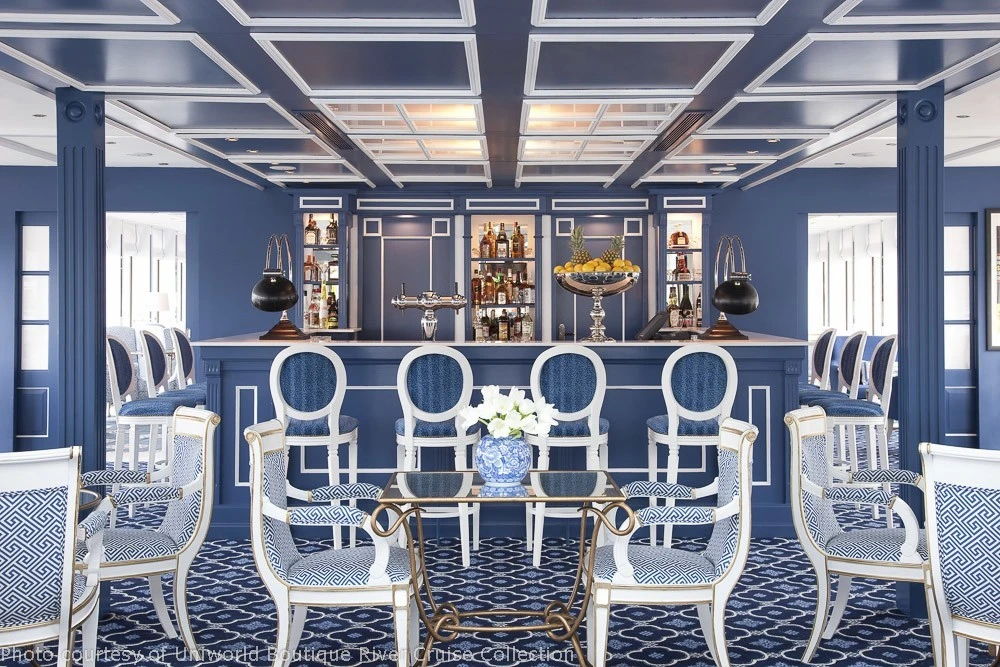
People who have cruised with Uniworld rave about the food, tours, and other ship amenities consistently.
The river cruise starts in Frankfurt and sails along the Main River to Nuremberg. We explored the places where many of our modern-day Christmas traditions began, including Christmas markets in Germany that date back 500 years. Here’s the route, stop by stop, and everything I learned along the way.
Frankfurt: Embarkation and the Weihnachtsmarkt
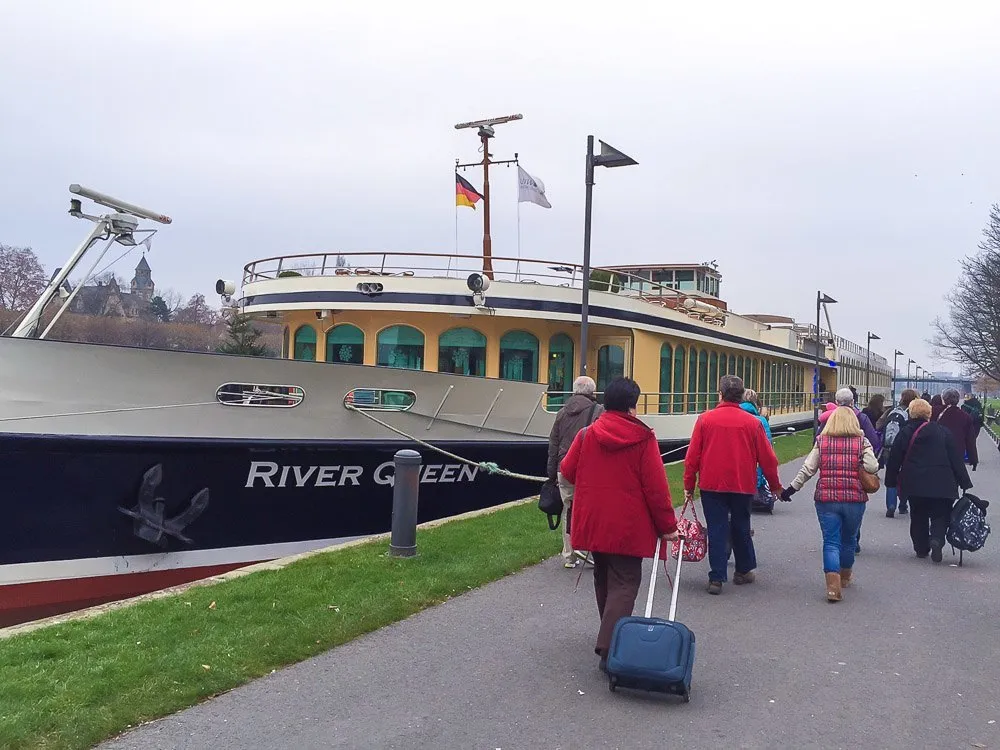
A Uniworld representative waited right outside of baggage claim at Frankfurt airport. I was surprised by how many people had arrived in Frankfurt early. My flight landed at 8:20 a.m. on embarkation day, and I had wrongly assumed I’d be the first one. We were on a big, comfy Uniworld bus to the ship by 8:54 a.m. and at the Main River by about 9:10 a.m. You can sort your own transportation but I suggest you let Uniworld handle it.
The bus parked slightly uphill from the ship, and the staff took care of getting luggage to our rooms. Ensure that your luggage is very clearly labeled so that they know who owns what. I thought the ship looked small from a distance, but it clearly isn’t. Uniworld’s River Queen is a luxury ship decorated in Art Deco style with varying white and blues and original artwork. No detail is overlooked.
We checked in at the front desk where our photos were taken and linked to our room keys, which also serve as cards that we scan every time we leave and board the ship. We were escorted individually to our rooms by staff members and told that buffet breakfast and a light lunch would be served in the lounge as people arrived.
Though tired, I basically had an entire day to explore Frankfurt on my own. The Weihnachtsmarkt (Frankfurt Christmas market) was about a 10-minute scenic walk away from where the River Queen was docked. I unpacked, showered, and set off to explore on my own. The following day started with a helpful lecture about Christmas market food along with an eating tour, which is where the real education happened.
Home to Europe’s most important financial center and virtually leveled during World War II, Frankfurt (officially Frankfurt am Main) hosts one of Germany’s most important Christmas markets, chock full of regional eats.
What to Eat at the Frankfurt Christmas Market
There is so, so much food that I was grateful for a food lecture and sampling tour that was provided as part of my river cruise itinerary with Uniworld. Below is a mix of what I learned, things I ate, and what I saw.
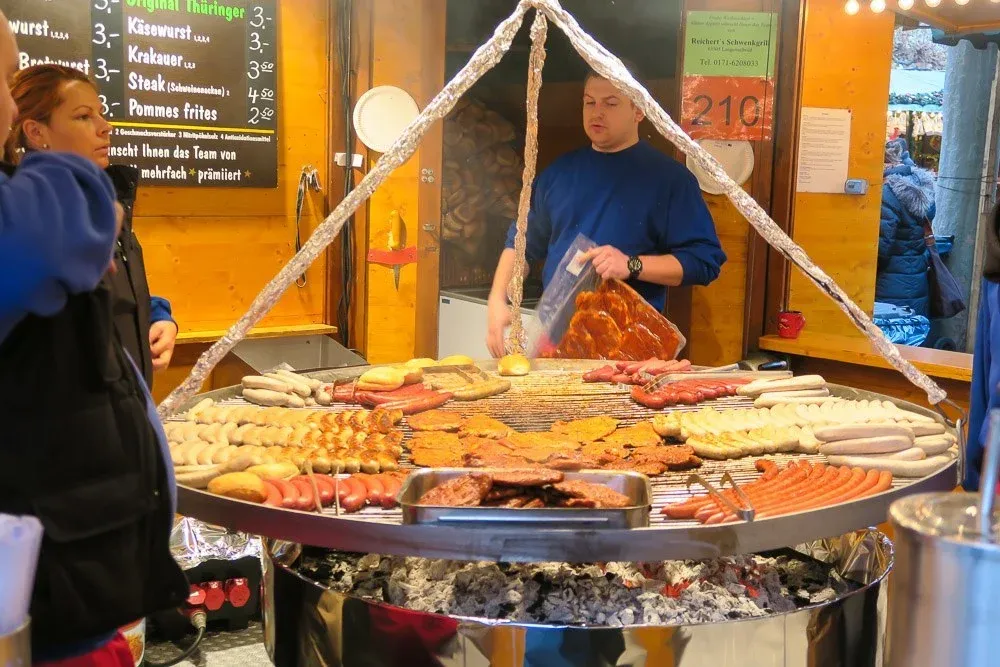
Sausage and other grilled meats. The choice of sausage is totally overwhelming in a good way. A safe bet is to order a bratwurst and you won’t be sorry. Several people on my tour noted that it’s not as fatty or greasy as the kind we get in the states. Share multiple kinds if you can. My bratwurst was at least a foot long, and some varieties are even longer. The soft, fresh baguette was just as much of a treat, and condiments include ketchup and mustard. A few Americans were looking for sauerkraut, but it was not on offer that I could see.
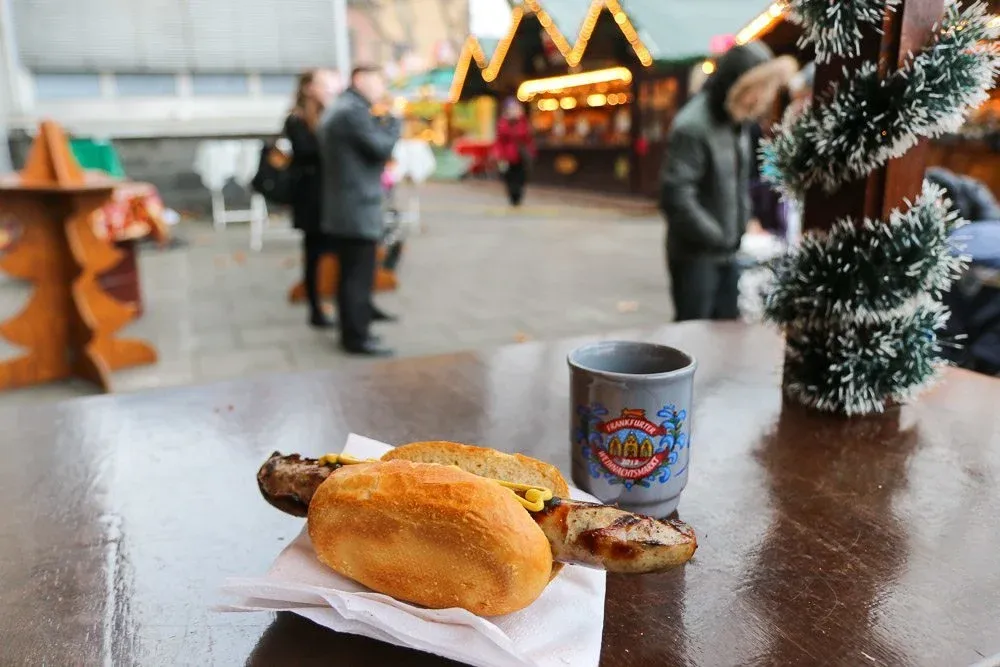
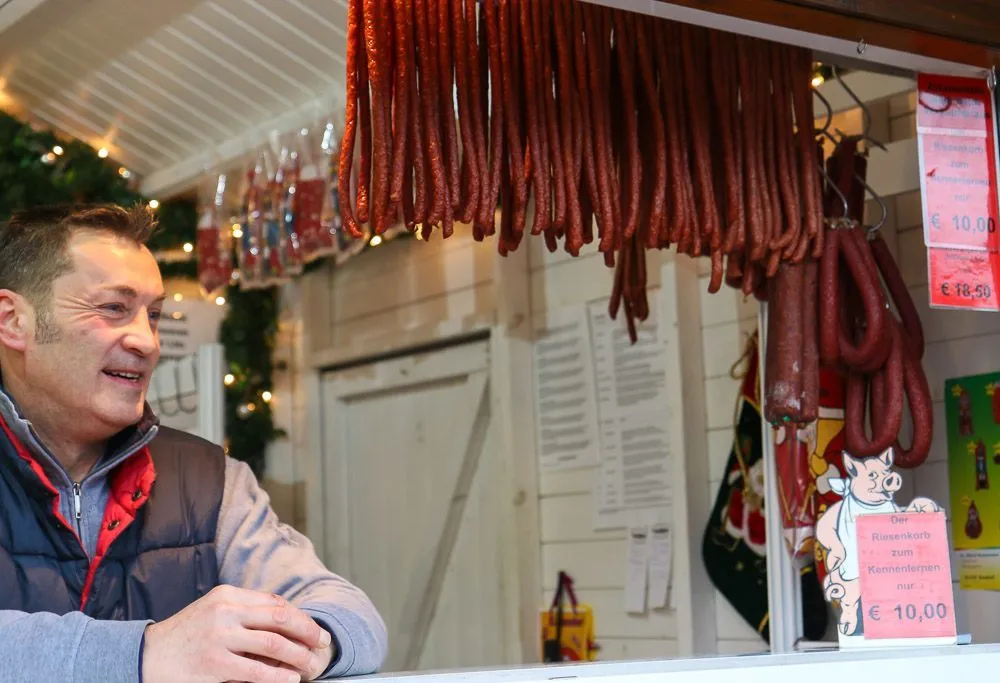
We also noshed on a long, skinny dried sausage, sort of like a moist stick of pepperoni. Our guide said it’s one of the most inexpensive snacks at the market.
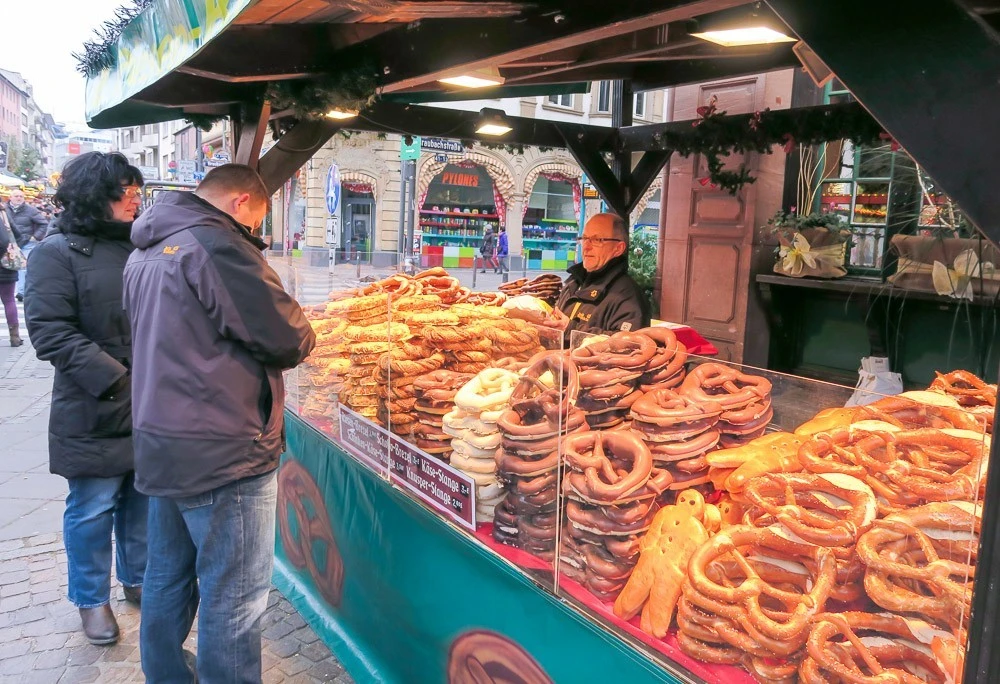
Pretzels. Pretzels in Germany are a delight and available everywhere. Some are sprinkled with sea salt while others are drenched in chocolate. The crust is crispy with the inside a bit doughy, and the pretzel “arms” are significantly thinner than the bottom part, giving the eater the best of both worlds.
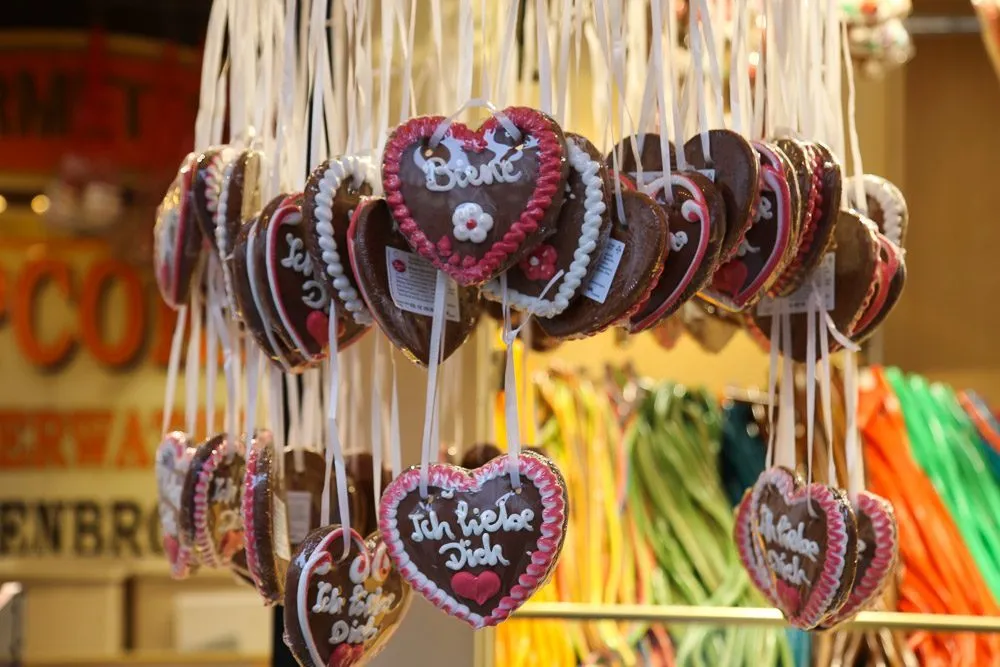
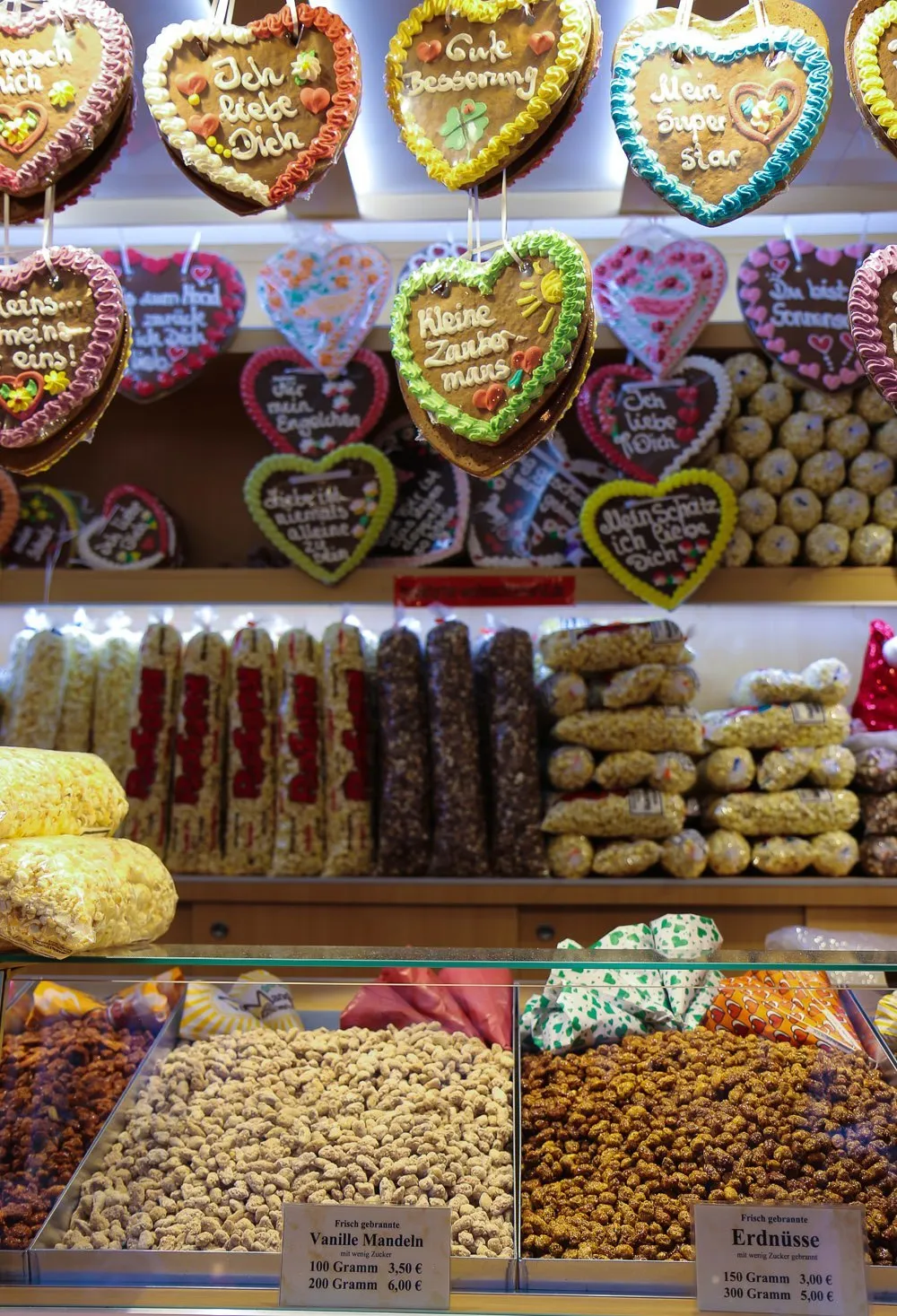
Gingerbread hearts. Available in a variety of sizes, these are meant to be given as tokens of appreciation to friends and loved ones during the holiday season, each with a sentimental saying.
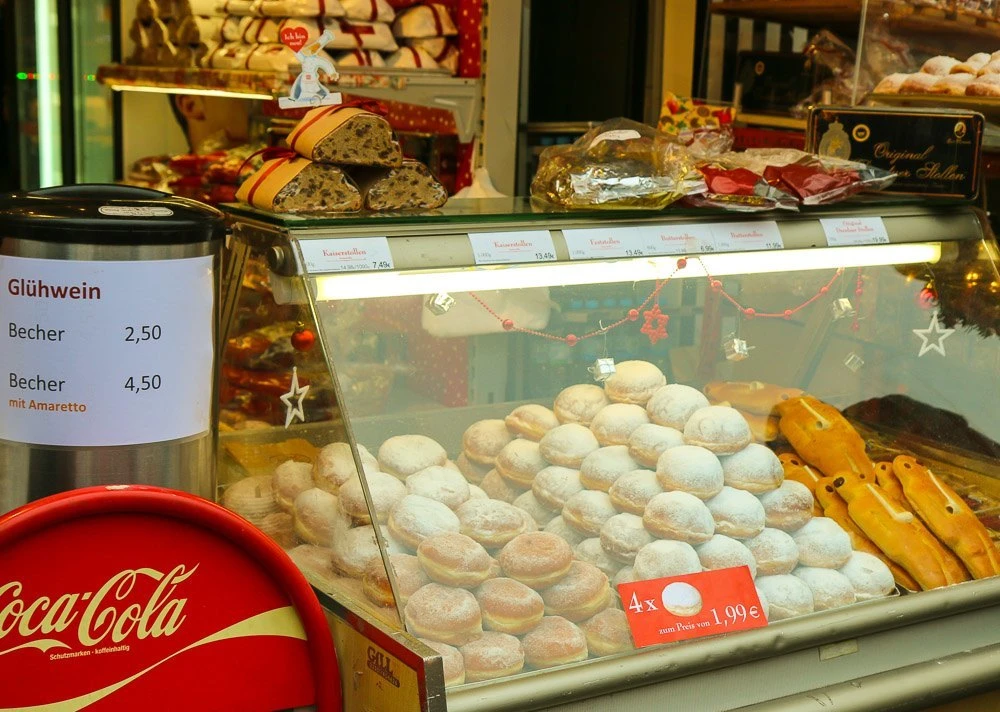
Berliner. A lot like a jelly donut. Mine had a hibiscus jelly inside while the person next to me had a custard flavor. Berliners were typically available only on holidays but you can get them year-round.
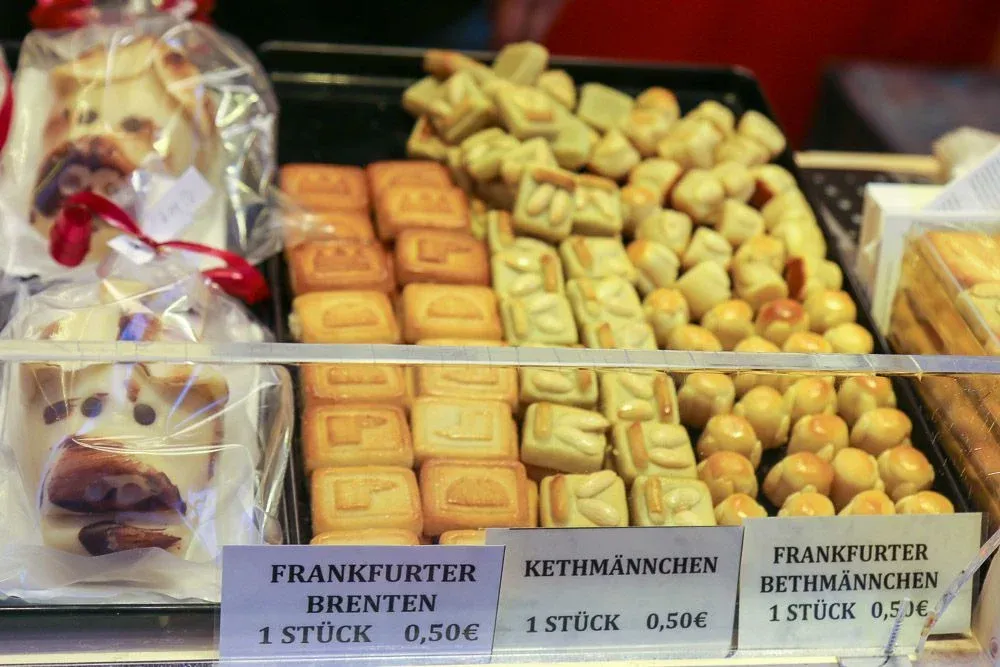
German cookies, some exclusive to Frankfurt. Two cookies we learned about (and ate) are exclusive to Frankfurt. Brenten is spiced marzipan, pressed into molds and baked briefly. Bethmannchen is a traditional Frankfurt Christmas cookie made with marzipan, flour, powdered sugar, rosewater, and egg. It’s pretty moist and not-too-sweet. The pig you’ll see is marzipan too.
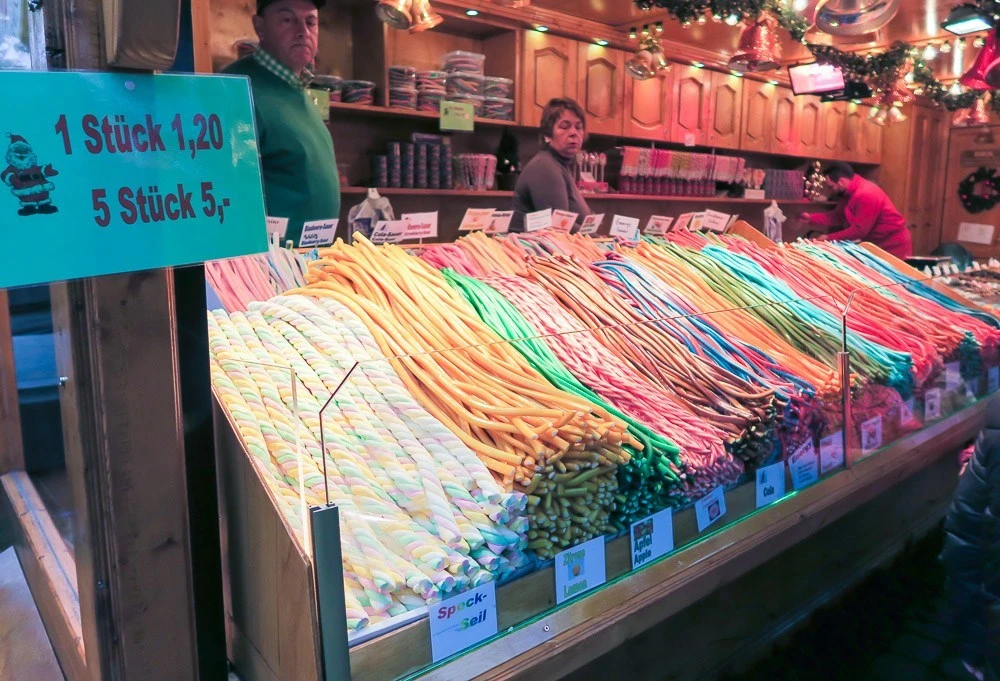
Candy and candied nuts. Kids were loving the long candy lassos, and an enormous variety of herb candy was on offer (centuries ago it was used for medicinal purposes; today people just enjoy it). There’s ginger, mulled wine, fennel, and many other flavors. As for candied nuts, we’re not just talking chocolate and caramel: there’s Bacardi nuts, Red Bull nuts, Snickers bar nuts, and more flavors than you can imagine.
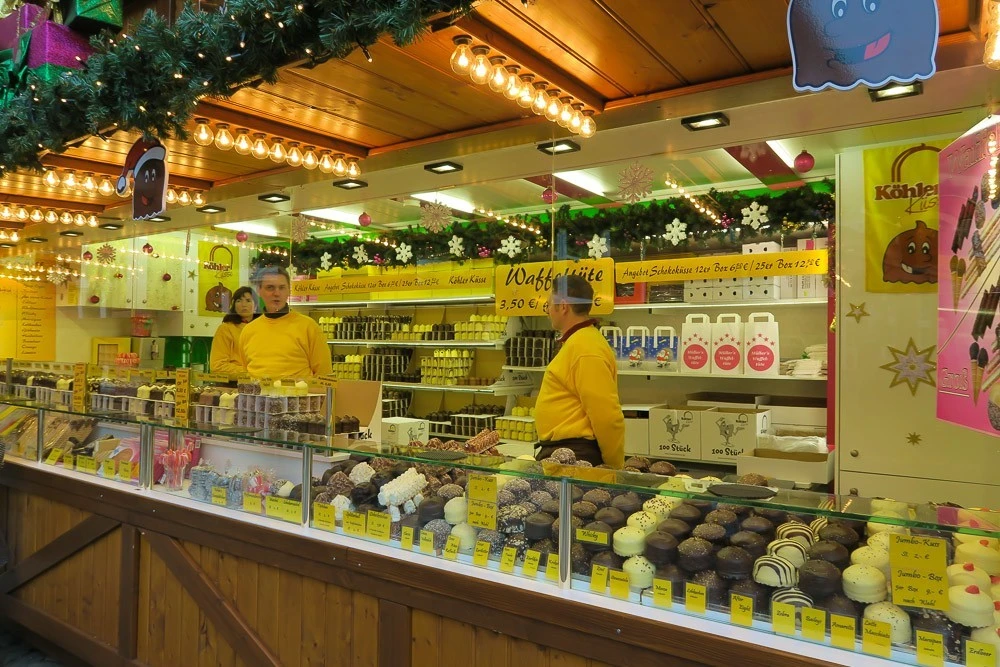
The best dessert I had. Round, dome-shaped desserts were all over the Frankfurt Christmas Market and our guide let us sample the traditional flavor. It’s like a very, very soft and light marshmallow inside a delicate milk chocolate shell. If you like frosting and/or marshmallows, you’ll love this. It was my favorite dessert of the whole trip.
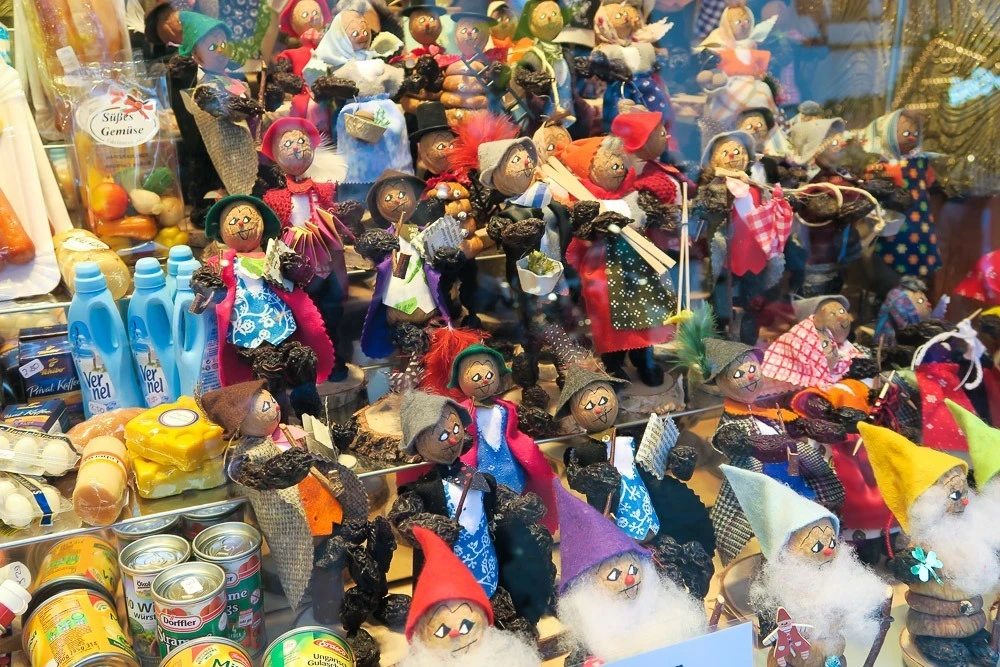
Prune men (Zwetschgenmaennla). Our expert said that back in the day, wealthy people would have portraits painted of themselves and presented to women they’d like to date; if she accepted, she’d go out with him. Poorer people couldn’t afford paintings, so instead they created little prune dolls meant to look like the suitor and left them on the woman’s doorstep. If she accepted the doll, same deal. They have painted walnuts for heads and are considered a symbol of good luck today.
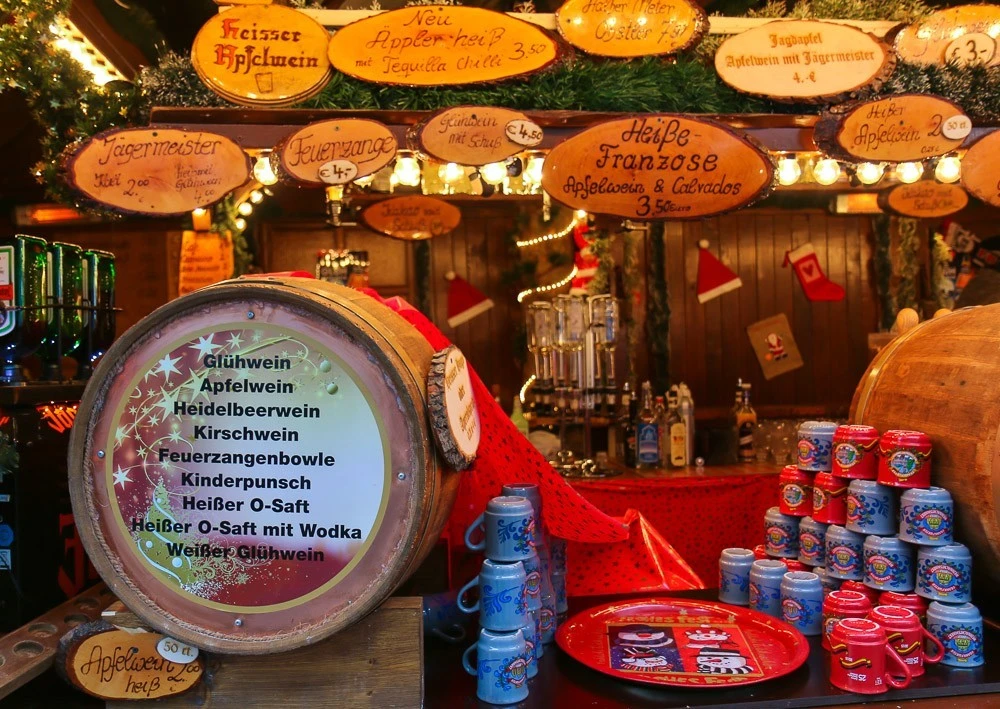
Potatoes, gluhwein, and apple wine. I’d never seen so many potatoes in my life: thick-cut fries sauced with curry and other toppings, baked potato stands, and traditional fried potato pancakes served with applesauce. And of course, gluhwein (mulled wine): usually a port or claret wine heated with cinnamon, cloves, raisins, and orange. It’s served in mugs with a small cup deposit (mine was one euro) that isn’t listed in the posted pricing, so budget for it. Return the chip for your deposit, or just walk away with the mug as a souvenir. Skipping the booze? Order the Kinderpunsch, the non-alcoholic version. The most popular beverage in Frankfurt and the German state of Hesse overall is actually apple wine, brewed throughout the region and served from a pretty ceramic jug. We sampled it on board the River Queen and it tastes like a slightly-spiked apple cider.
While I didn’t eat any stollen, it’s everywhere, along with duck fat toast, Bavarian cake, and even a Germanized Mexican food stand. Seafood sandwiches and fish and chips are all over the market too. You won’t find many disposable goods like plates or utensils. Even paper napkins are hard to come by. Germany is surprisingly green.
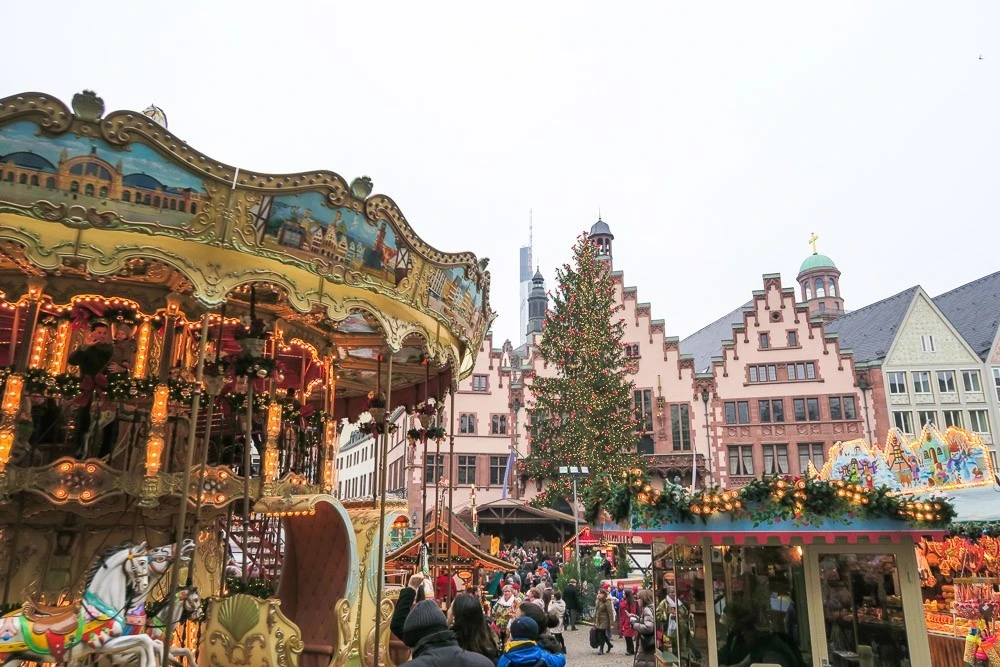
As for shopping, I found the Frankfurt Christmas Market to be rather food-centric. Cold-weather gear like hats and wool socks are for sale, along with handicrafts, some leather goods, toys, and more Christmas ornaments and decor than you can handle. At the end of the markets opposite the Main River, there’s a huge shopping zone with German department stores and international brands in all price ranges.
Back on the ship, the captain, a very easy-going and witty young guy from The Netherlands, gave a safety talk before dinner. A gorgeous lounge area complete with fireplace serves premium liquor and a great selection of German and Austrian wines. Dinner is open seating in the gorgeous dining room; I was blown away by the food, from baked gouda with cranberry to vegetable soup, baked salmon, and a cheese plate that could have been my whole dinner.
Wertheim: The Fairytale Town
“Exit the ship and the town is right there,” said our cruise manager Piet. And he was right. Wertheim was the second stop on my Uniworld Classic Christmas Market Cruise down the Main River from Frankfurt to Nuremberg. The main drag was not hard to find.
Our itinerary allowed for a half-day tour of Wertheim, which worked out fine because the weather is cold in December and the beer garden at the castle was closed. Wertheim is located where the Main River meets the Tauber River in southwestern Germany. The town’s roots date back to the 7th century.
The town feels as if you’ve stepped into a fairytale. It actually does flood, and the residents are totally prepared for it; the town’s streets were raised to help mitigate flooding, and you’ll see windows at ground level that look a bit off because of it. The town is so small that it’s nearly impossible to get lost. Here are the things to do in Wertheim.
Burg Wertheim (the Castle)
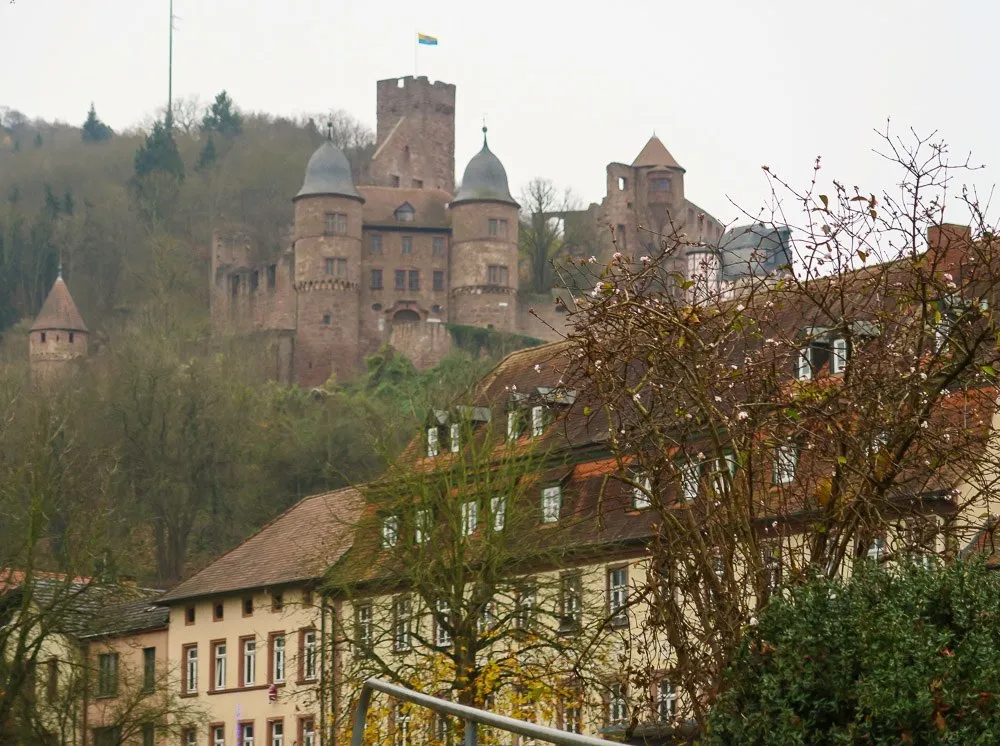
Perched on a hillside, the Wertheim Castle is about a 15-minute walk uphill from the village. It’s pretty much just ruins, but the views are spectacular, and there’s a restaurant and beer garden (closed when I visited). Our guide said the umbrellas visible from the village are open when the restaurant is open; if closed, that’s your signal. This is the landmark attraction in Wertheim.
The Pointed Tower of Wertheim (Spitzer Turm)
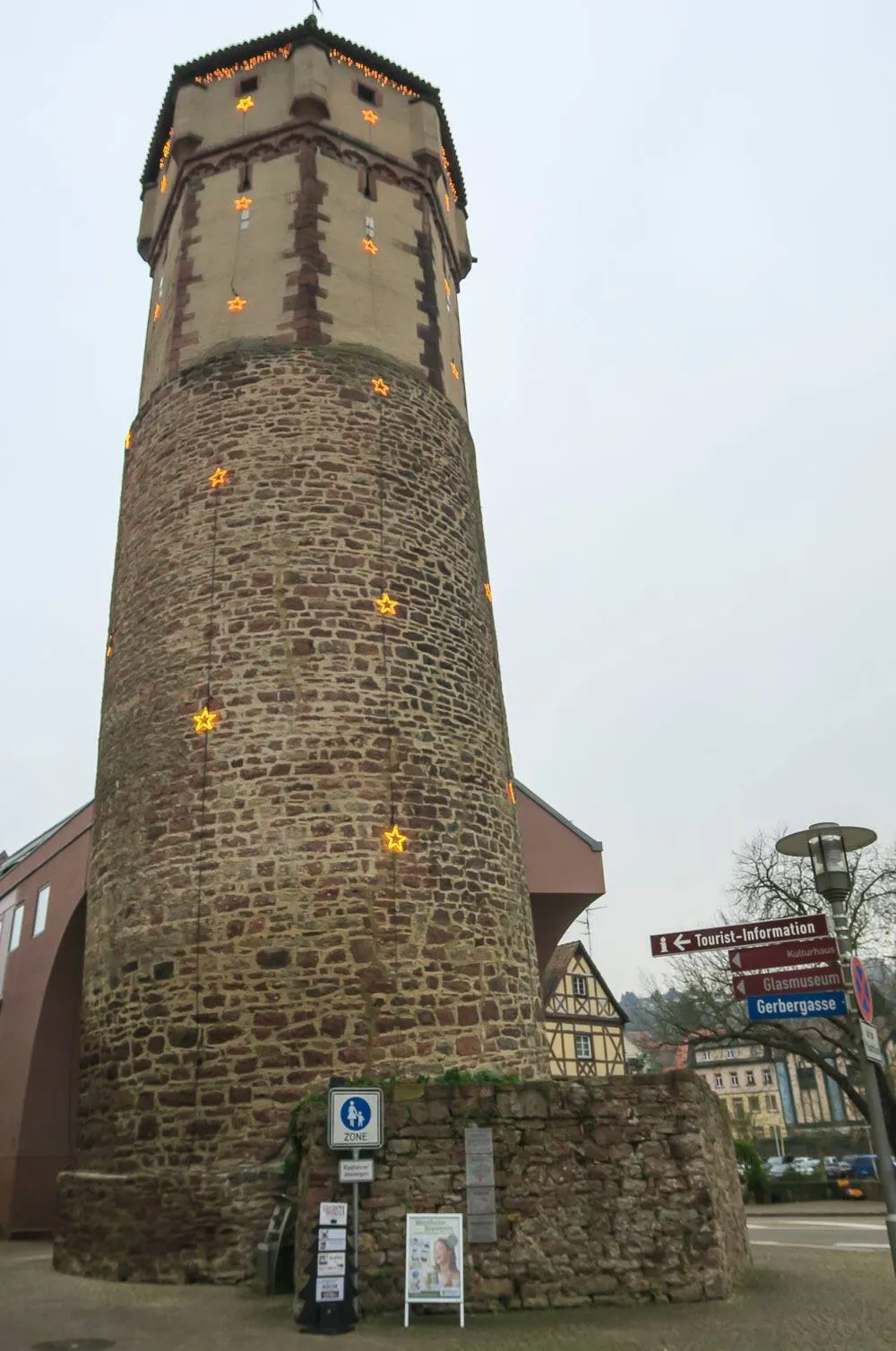
This used to be the prison for drunkards and “quarrelsome wenches” (really). It’s now a place where you can go wine tasting with a view.
Shop the Boutiques
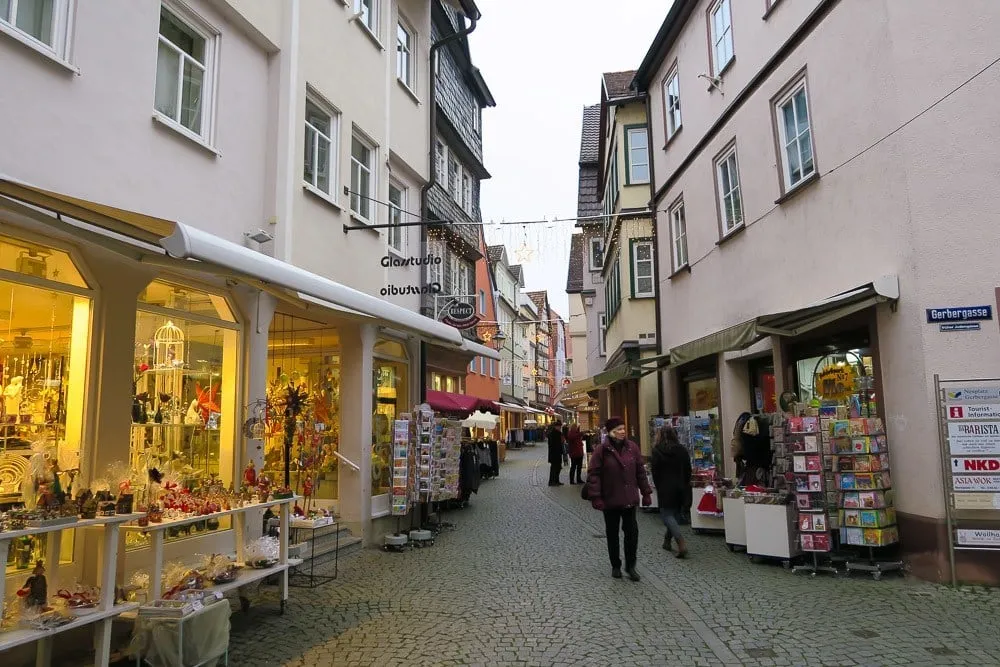
Each boutique in town is a little bit different from the next, with hand-curated kitchenwares, clothes, gifts, food, and other fun items to browse. There’s also a designer outlet center nearby called Wertheim Village that runs a free shuttle from town, plus an alfi factory outlet.
Eat the Best Pretzel
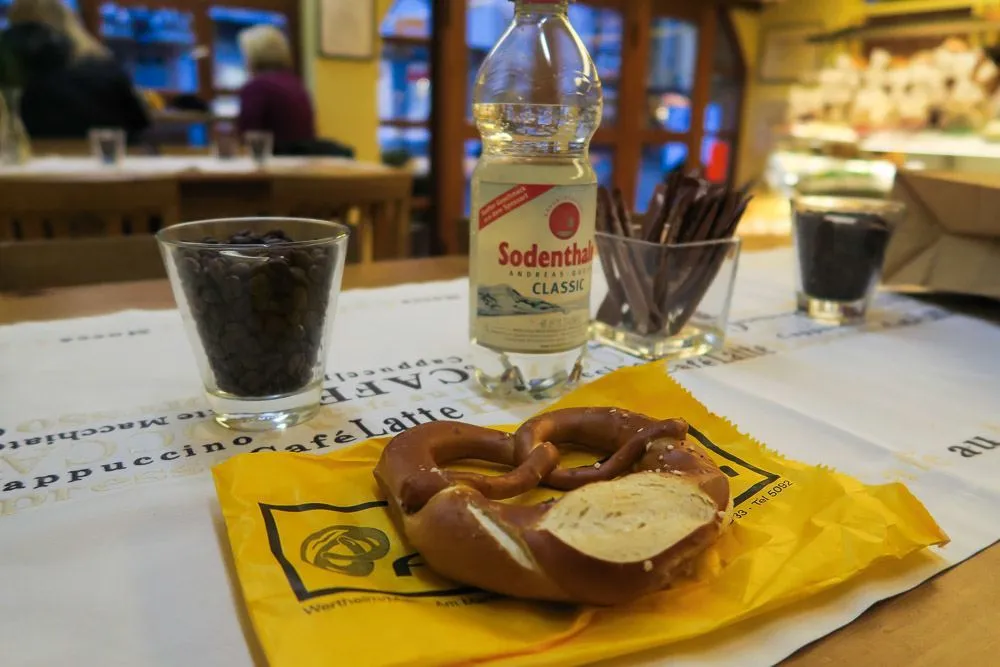
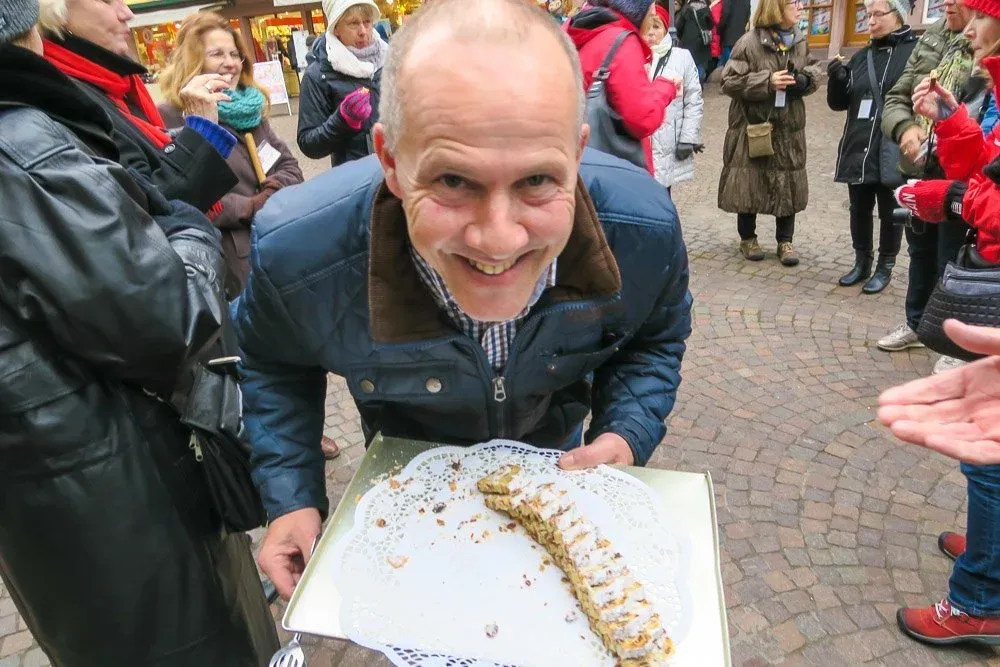
Wertheim’s best pretzel awaits at the Frischmuth bakery, which has been operated by the same family for 13 generations. There are even a few tables at which you can rest your weary legs (with a pretzel, of course). Our guide arranged for us to sample some Christmas stollen too.
Visit the Wertheim Glass Museum
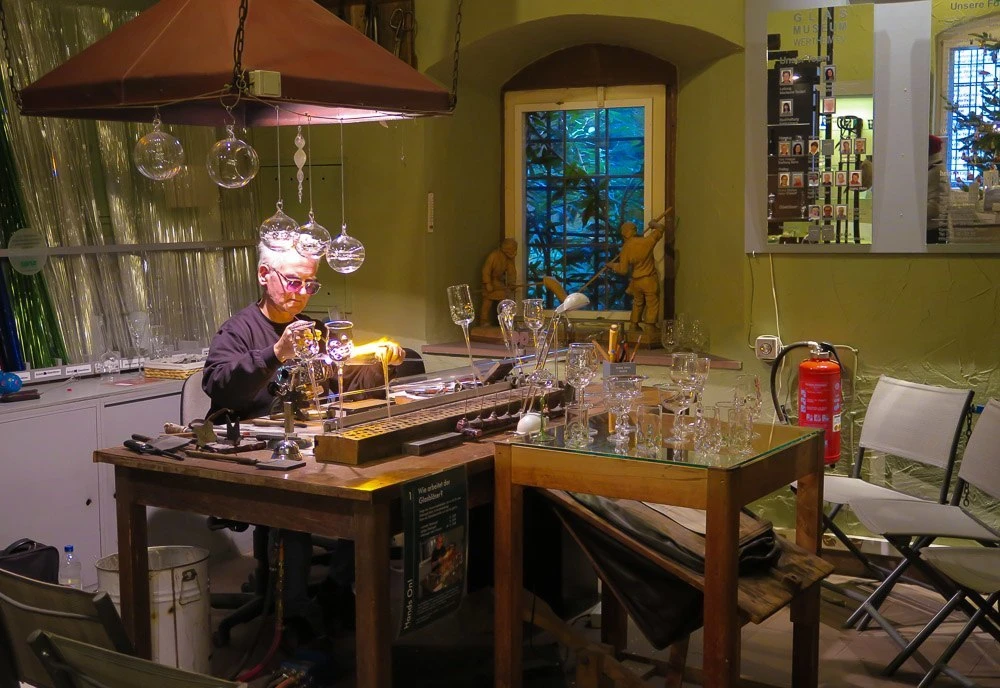
Exhibits range from “luxury glass of ancient times” to “industrial glass,” alternating special exhibitions, regular glass-blowing demonstrations, and a Christmas exhibition in the Advent period. In anticipation of our stop in Wertheim, Uniworld organized a glassblower to come on board and do a demonstration on the ship, which was very cool.
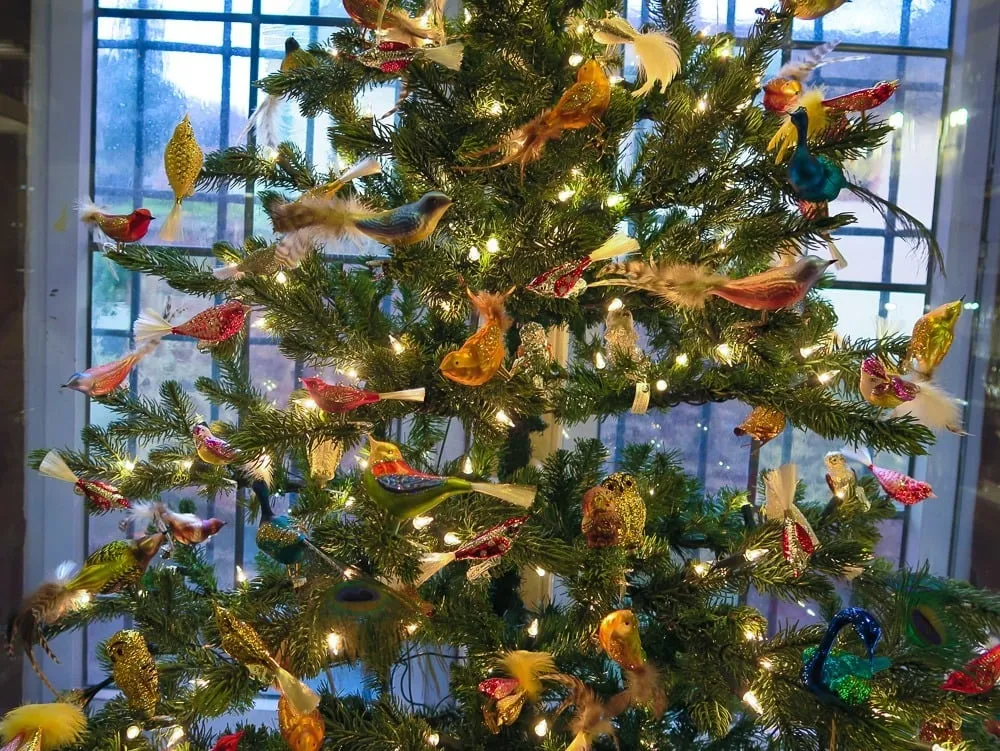
If you’re short on time, definitely stop by the museum gift shop. I bought a number of Christmas ornaments (including many clip-on birds) at very reasonable pricing; I saw some of the same items retail at other Christmas markets for much more.
See Other Historic Buildings
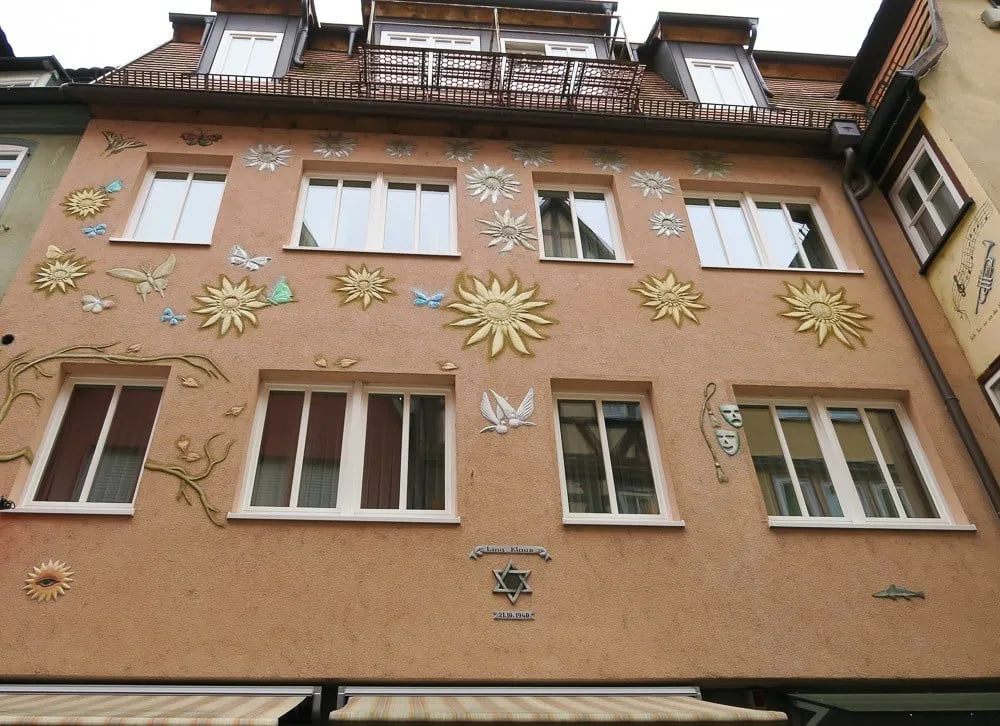
Our group was particularly moved by this home, basically on the way to Wertheim town center from our ship. A Jewish family owned it and was evacuated during World War II. Our guide told us that the town’s mayor in the 1970s had this mural erected as a symbol of unity and recognition of the family’s sacrifice. On the ground, metal plaques bear the names of the inhabitants who died during the war. There’s another building nearby with lines marking the level of flooding each year.
As night fell and my feet grew tired from shopping, I boarded the River Queen again just in time for the nightly cocktail hour.
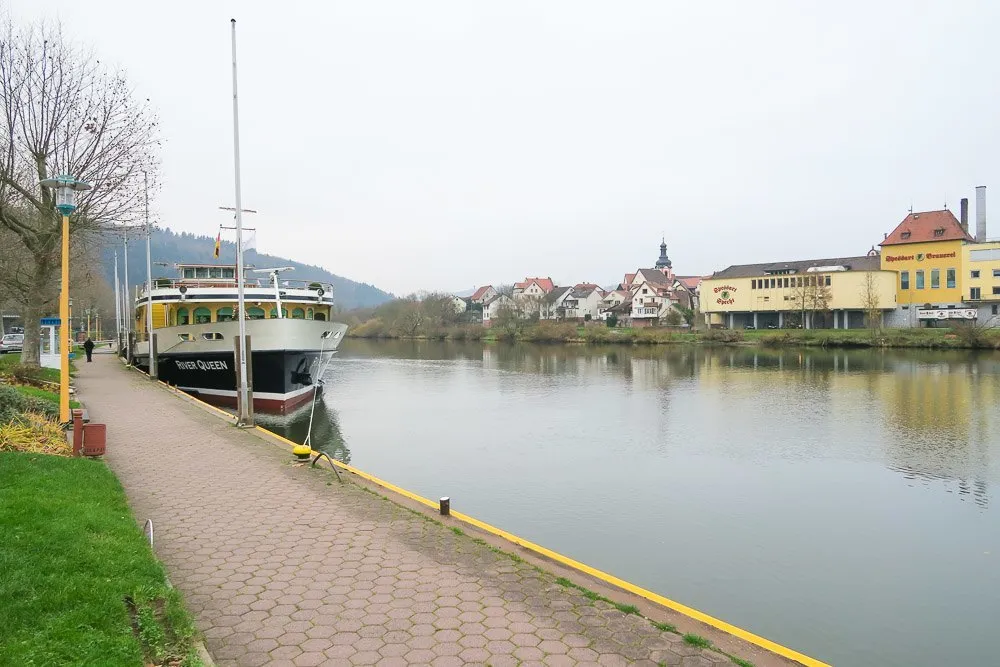
Würzburg: A UNESCO Palace and Christmas Market
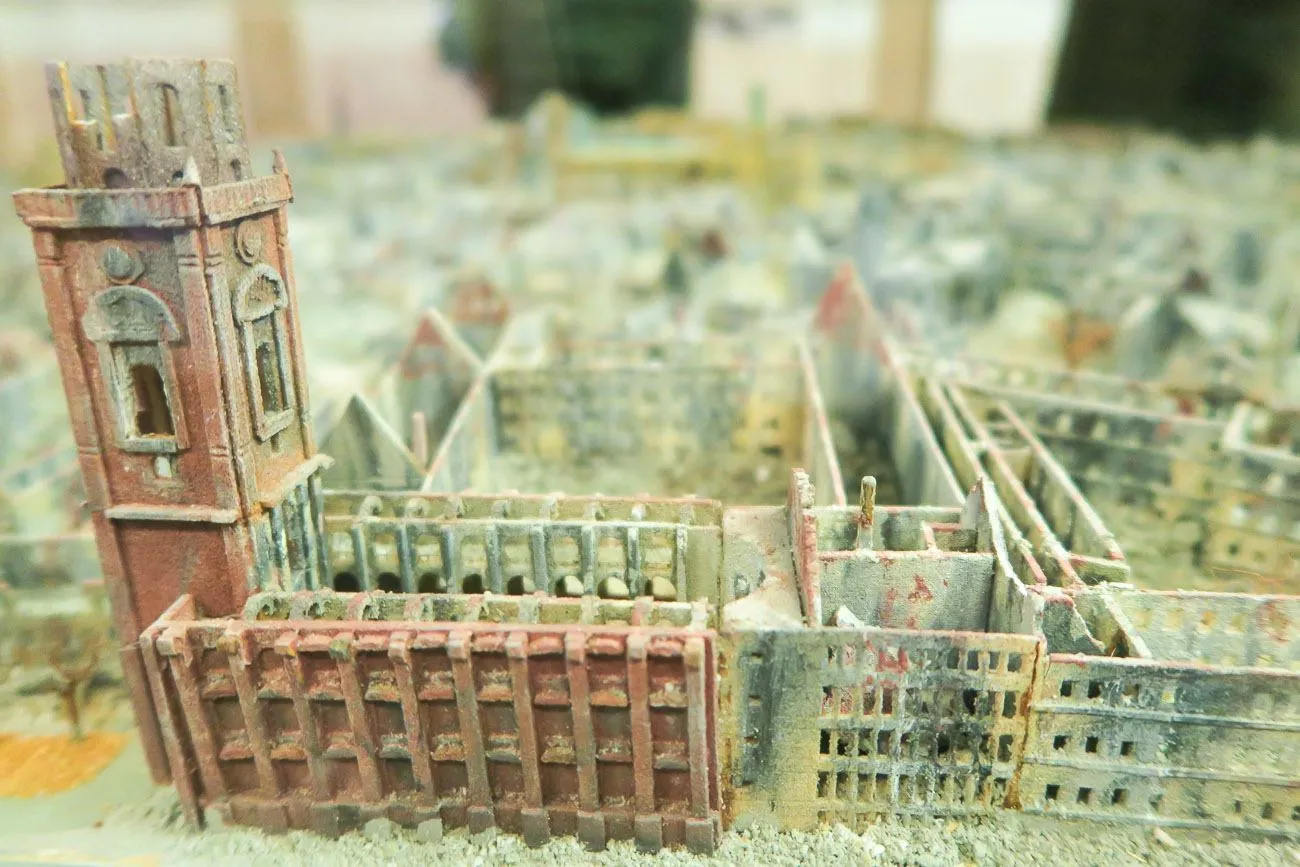
It took 17 minutes to destroy 90% of Würzburg, Germany, during a WWII air raid toward the end of the war. Most of the historic structures have been rebuilt, though it’s amazing to think that it took almost 20 years to clear the city of rubble.
Würzburg was the third stop on our cruise, and I was looking forward to combining Christmas market shopping and touring a UNESCO World Heritage Site there. We had one day to spend here, so I did my best to pack in as many of the highlights as I could.
First, Visit the Würzburg Residence
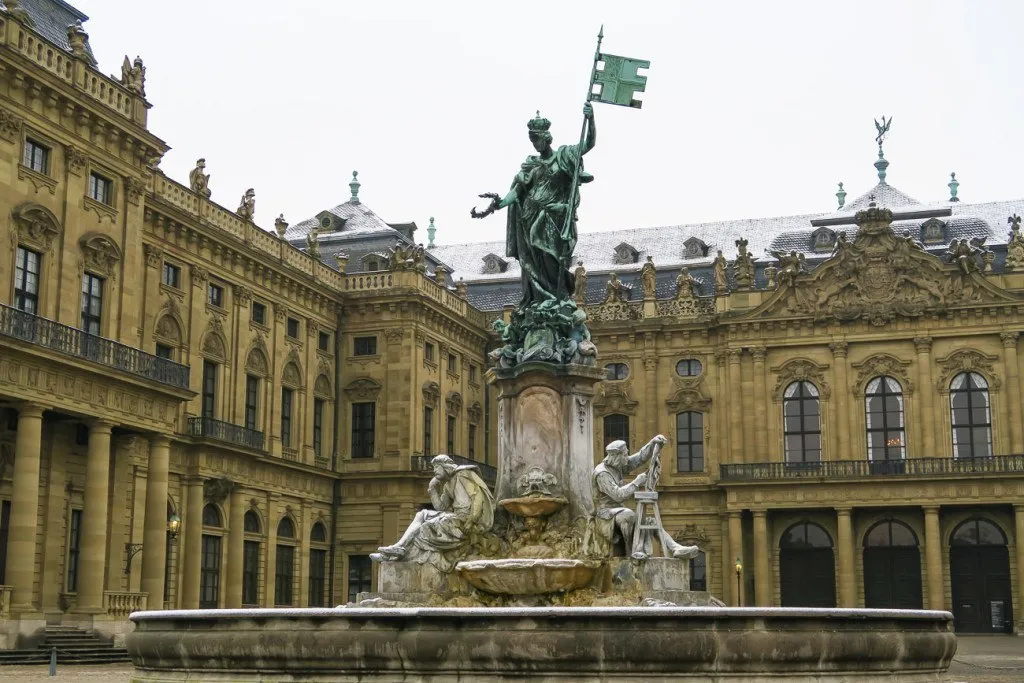
We had a special arrangement via our river cruise to enter the Würzburg Residence about half an hour before it opened, which meant we got a head start on the massive crowds. The palace was built by the town’s prince bishops between 1720 and 1744 (interior finished in 1780), based on plans by architect Balthasar Neumann. Opulent is an understatement, and the details are just overwhelming. It’s considered one of the most important and beautiful Baroque palaces in Europe.
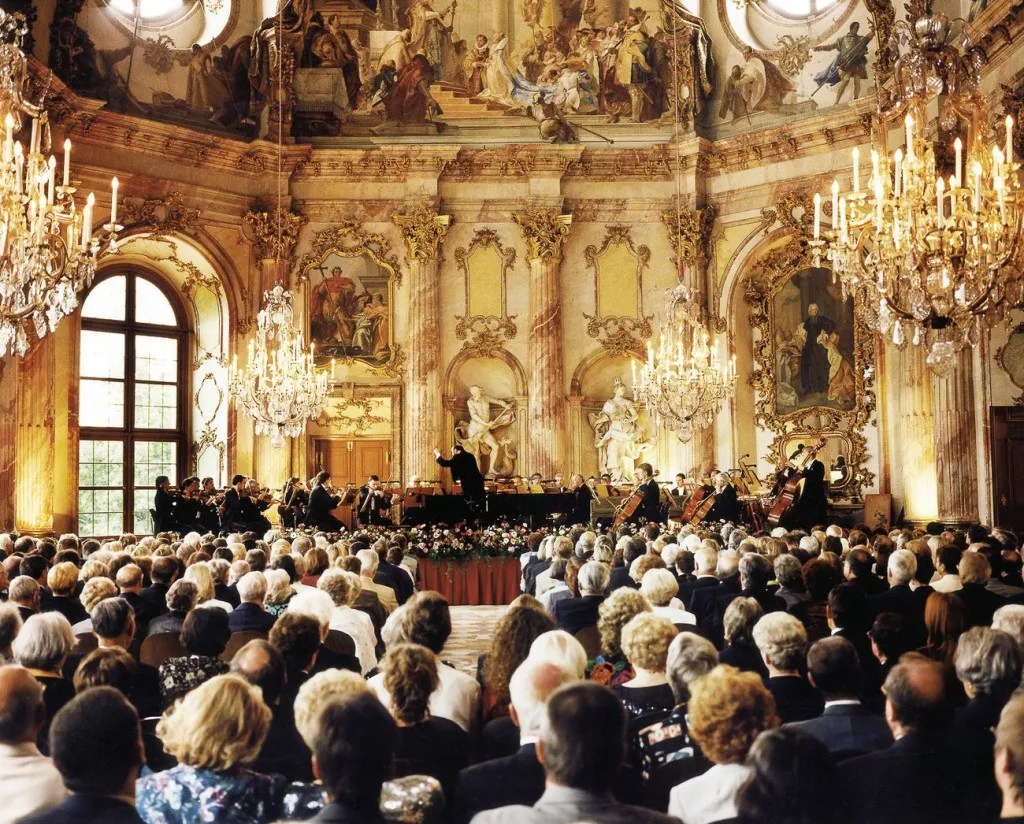
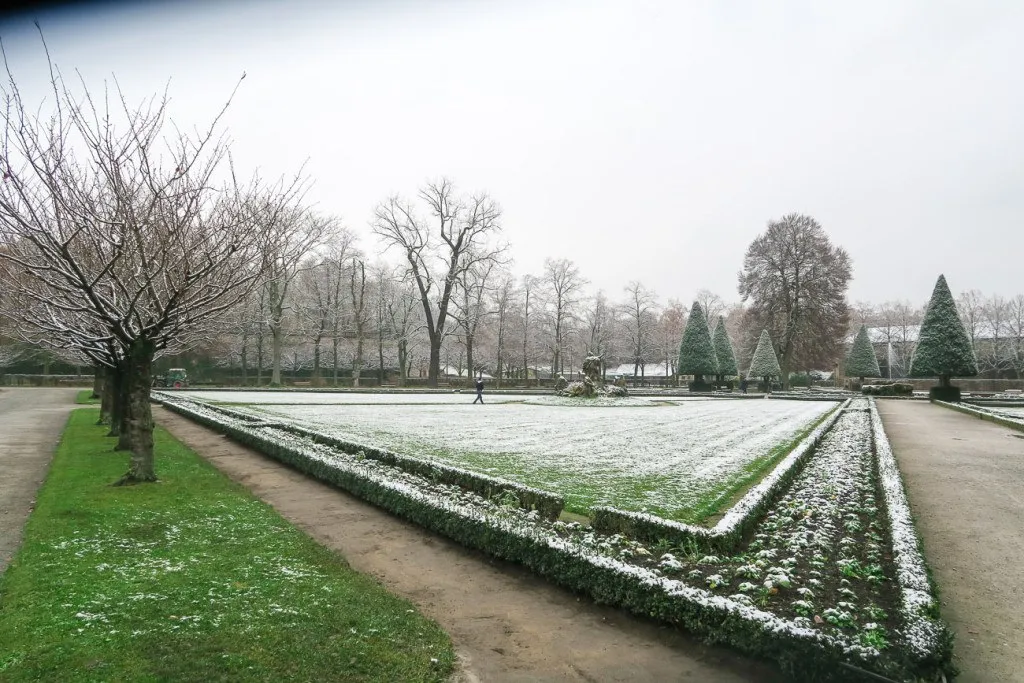
Each room becomes subsequently more impressive than the last, starting with one of the world’s largest frescos, representing the world’s then four continents. The artist, Giovanni Battista Tiepolo, painted it over something like 14 months, according to our guide. This room was one of the only to survive World War II; though much of the art was moved before the bombing, quite a bit was reconstructed. You are not allowed to take photos inside the palace. The garden outside is free to enter and was covered in a light blanket of snow when I visited. It was stunning.
Walk to the Würzburg Christmas Market
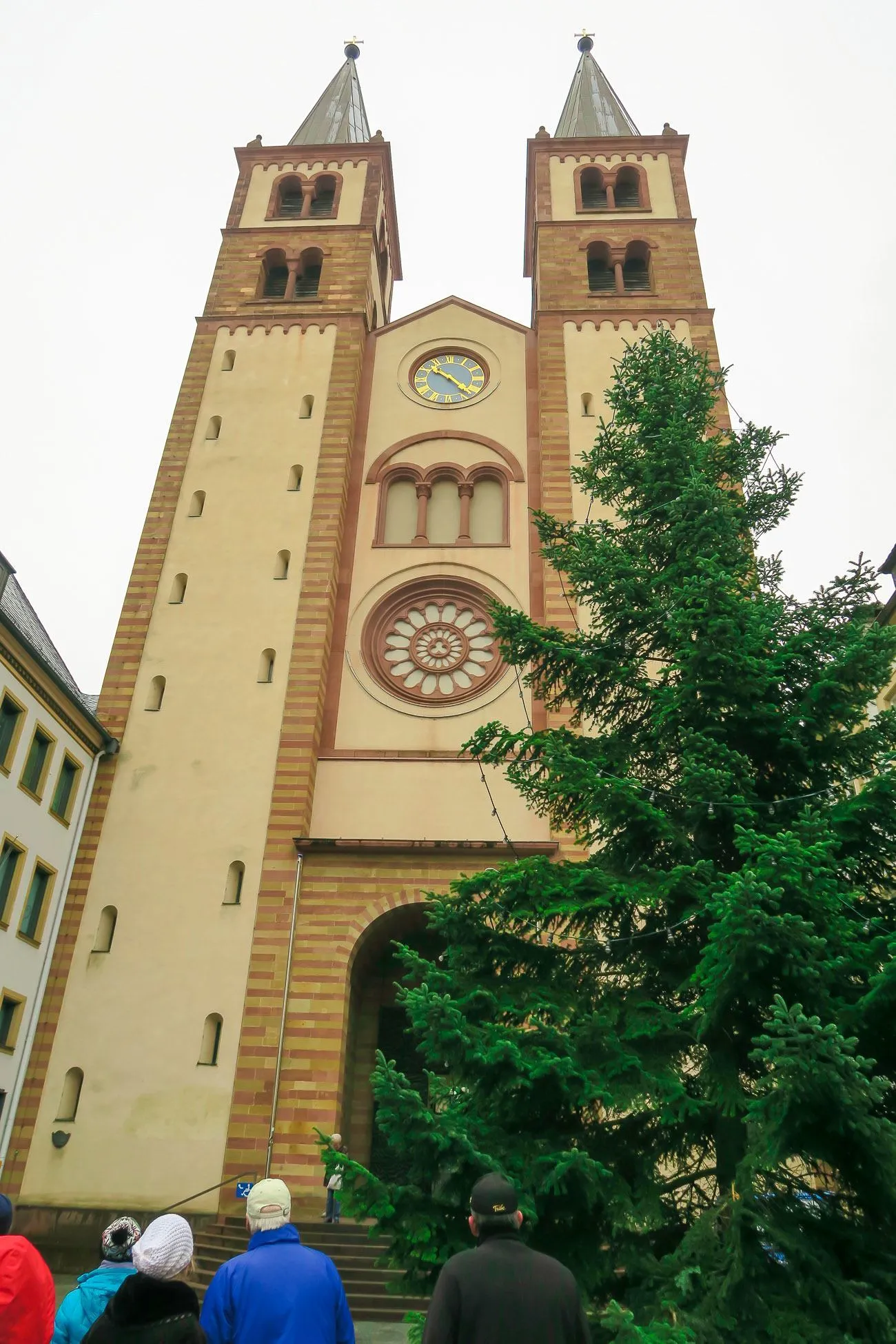
The picturesque Würzburg Christmas Market was a short walk, maybe under five minutes, from the Residence, passing the Würzburg Cathedral along the way. In fact, the entire town is very walkable.
This was the second market we visited, after Frankfurt: noticeably less crowded and more oriented toward gifts. It’s not a huge market by comparison to some, but it’s easy to browse the small Kathe Wohlfahrt store, lots of hand-blown glass, silicone bakeware, cookie cutters, and all sorts of festive trinkets, plus vendors selling fruits, veggies, cheese, meats, and flowers.
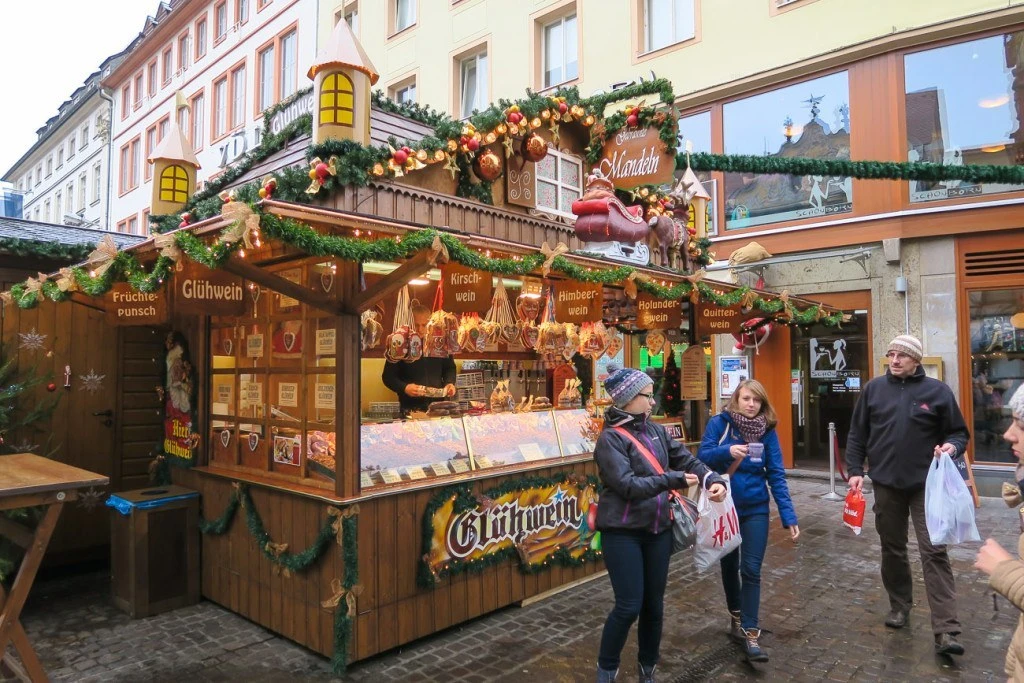
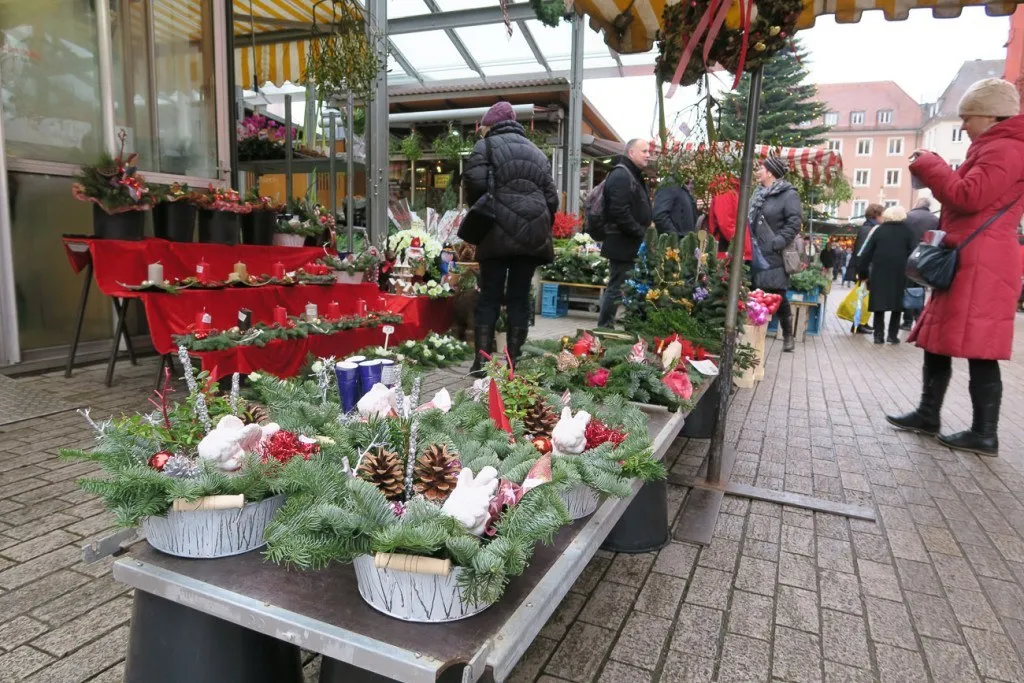
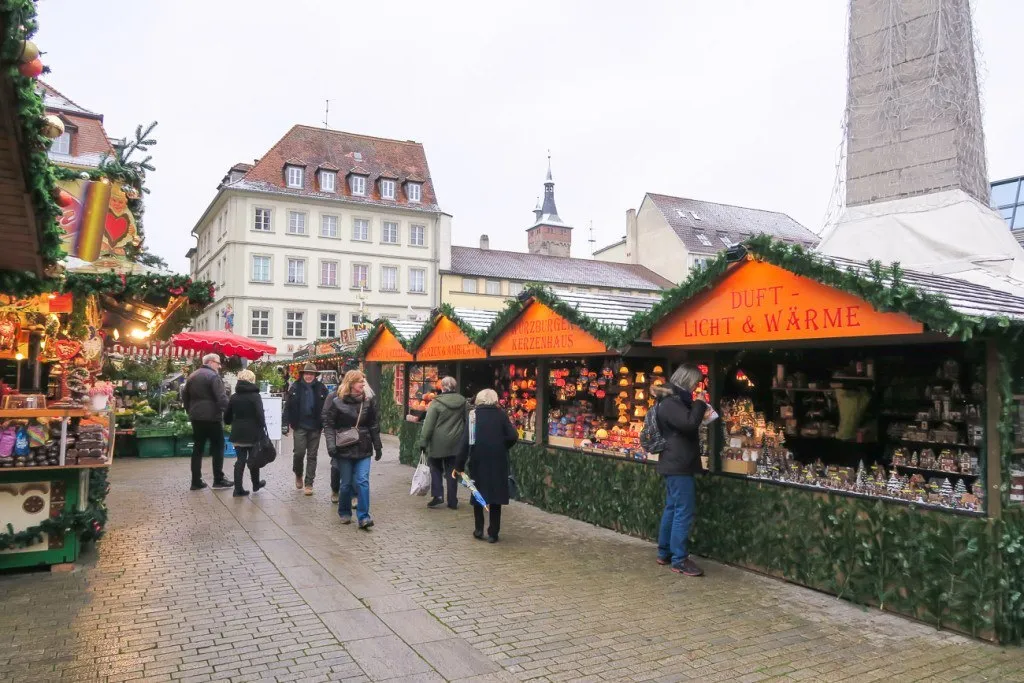
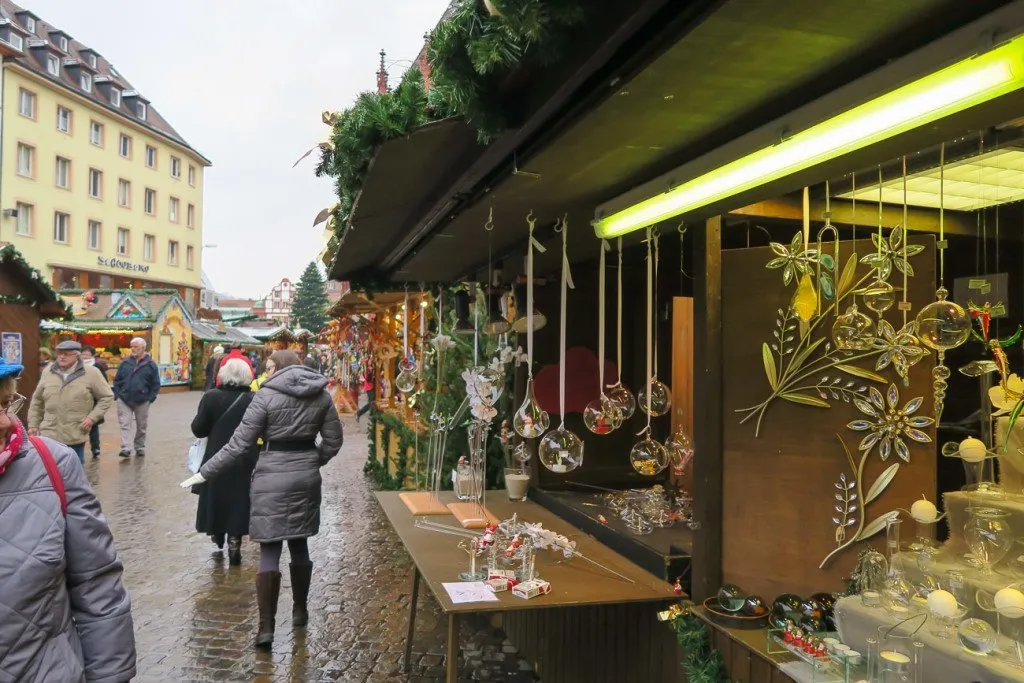
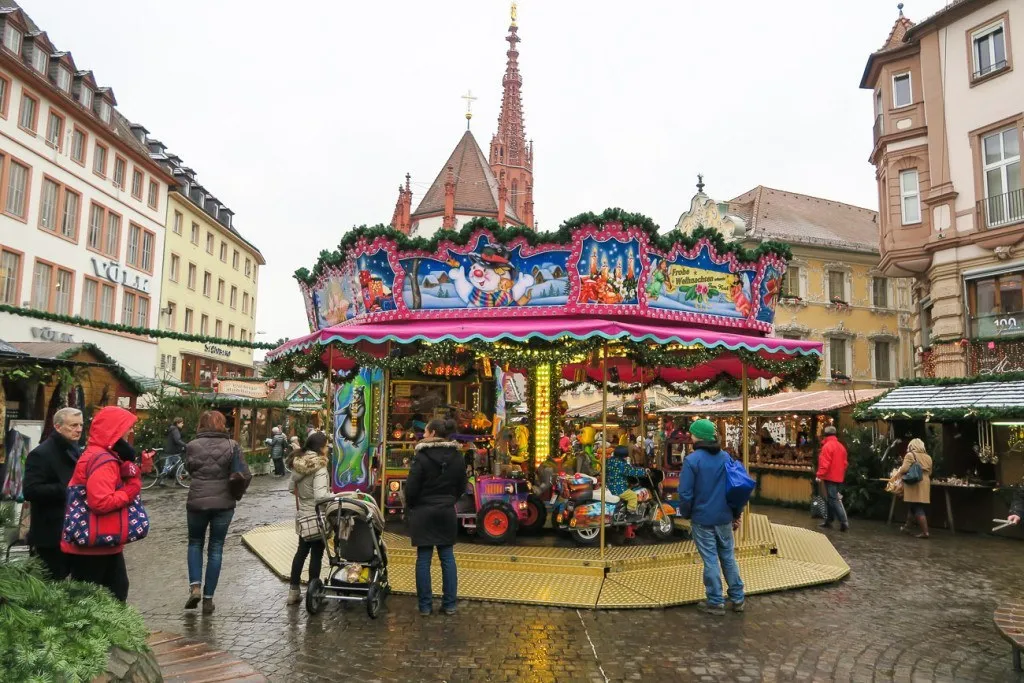
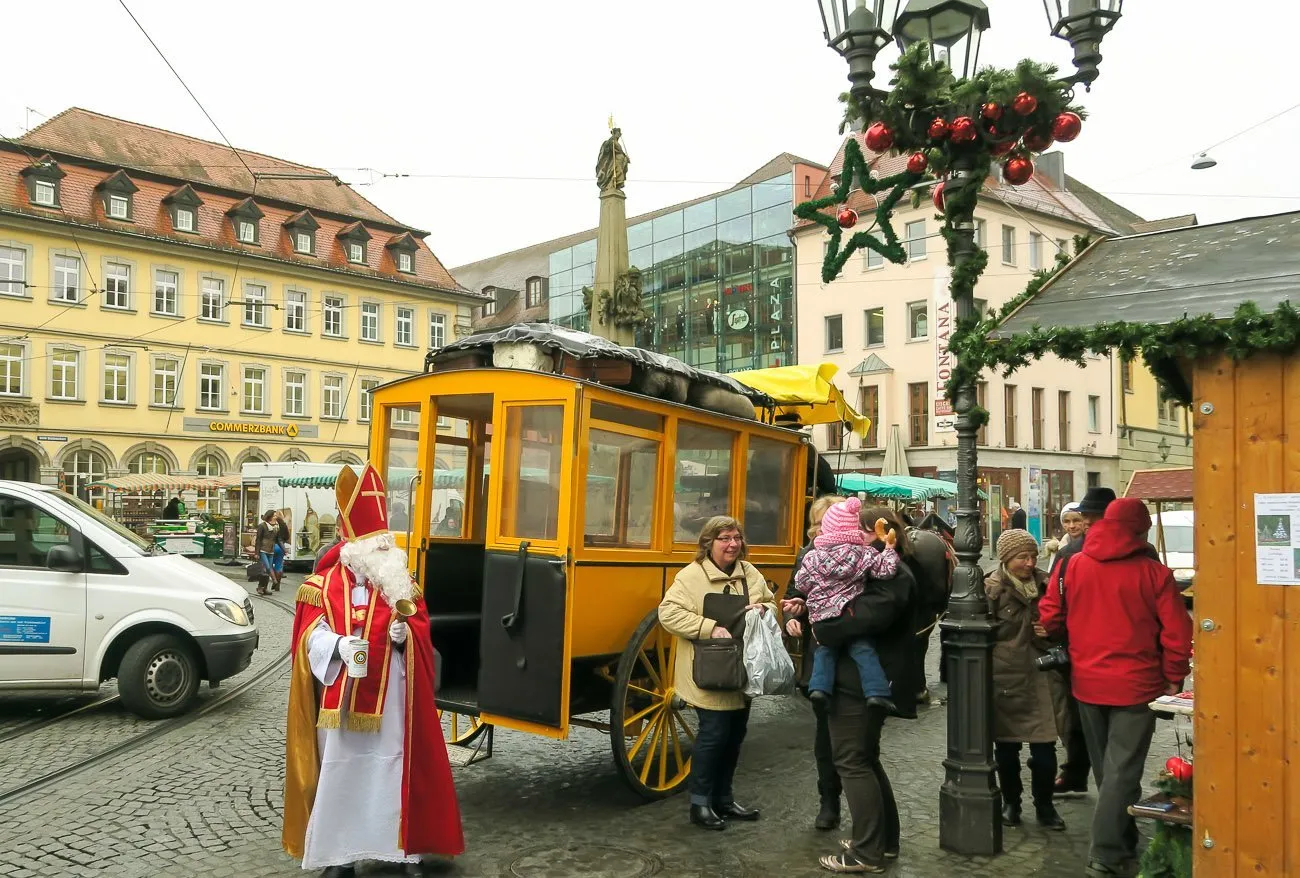
Every Christmas market in Germany has a carousel for the kids. The Chapel of Mary can be seen behind the one here. Despite the cold, I quite enjoyed wandering Würzburg’s market and shops. It’s a hard town to get lost in. I even ran into Saint Nicholas.
I also popped into the Town Hall to see the replica of what the city looked like after the 1945 bombing. It’s quite staggering.
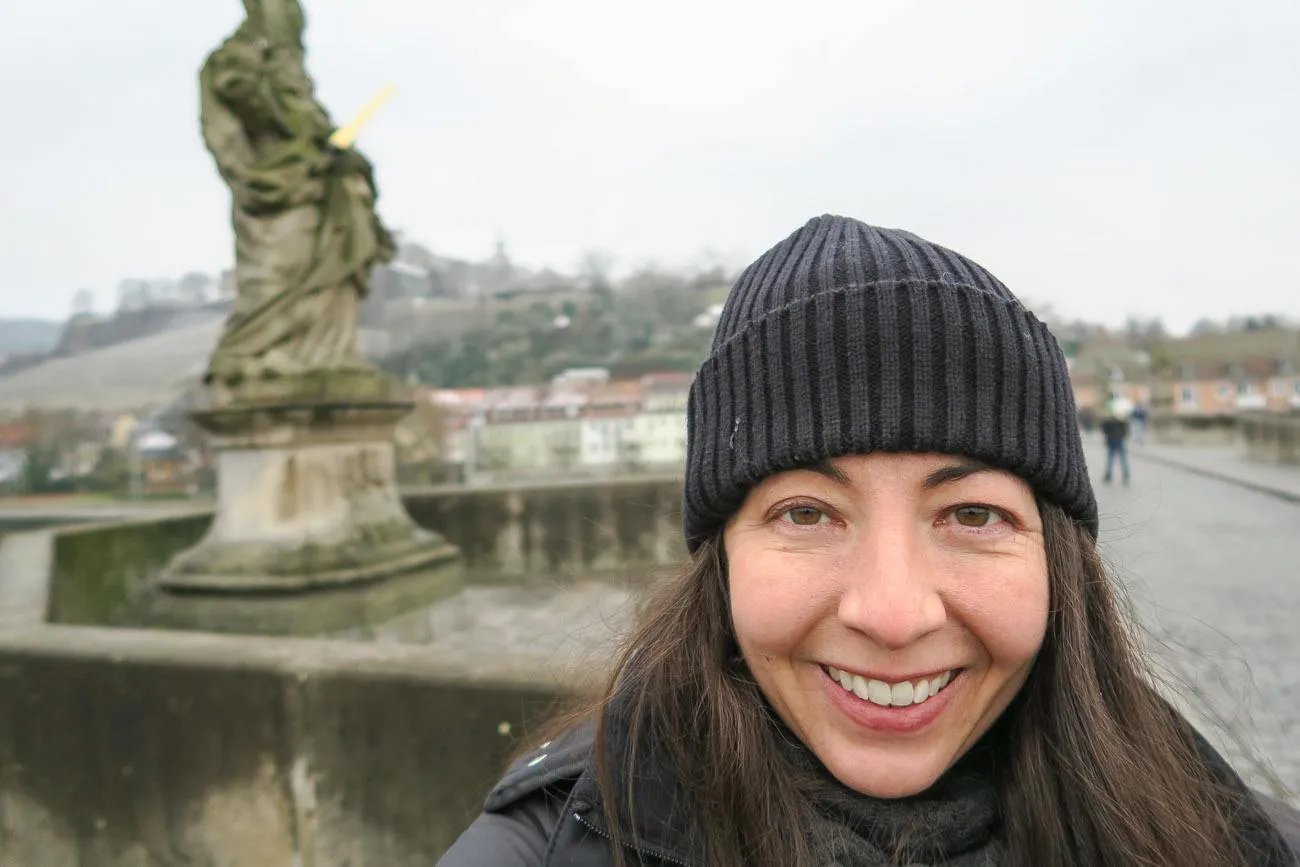
It took just a few minutes to walk back to the boat, but the view from this bridge over the Main River provided a number of photo opps.
If you’re not doing this by river, Würzburg is a very worthwhile day trip from Frankfurt, at just under 90 minutes away by car.
Rothenburg: The Ultimate Christmas Town
The tasteful decorations lining Rothenburg’s cobblestone streets, combined with the stunning Christmas market, create a picture-perfect holiday scene. The town is home to Germany’s Christmas decor maven, Kathe Wohlfahrt, who some say is responsible for catapulting the holiday to a pretty much year-round celebration.
Maybe it’s the gluhwein, but everyone from locals to tourists seemed in good spirits. It’s surprisingly quiet for such a popular destination, and it’s one that is easy to fall in love with. The town feels like stepping into a Disney movie, probably because Rothenburg is the inspiration for the village in Pinocchio.
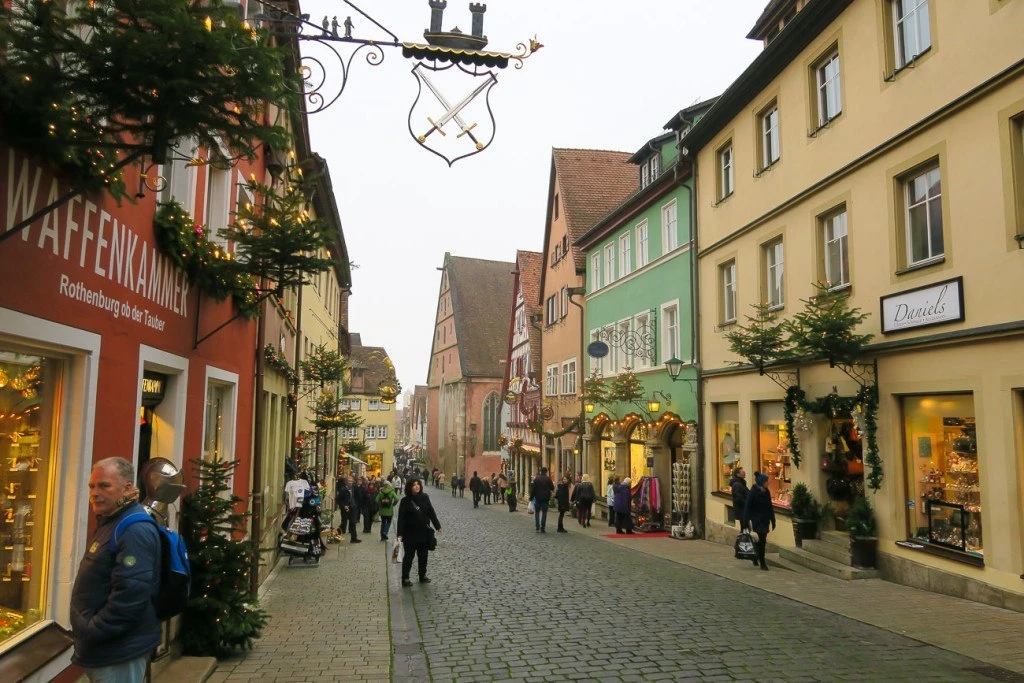
(The hanging signs over each store, cafe, or service provider date back to the Middle Ages, when most people couldn’t read. The iron sign with swords pictured above is actually an armor shop.)
About Rothenburg
Rothenburg is a walled city located on a plateau overlooking the Tauber River, hence its official name of Rothenburg ob der Tauber (Red Fortress above the Tauber). Its rich history dates back to the Middle Ages. The city was saved from destruction during World War II: to preserve the town’s beauty and historical significance, the Allies offered the town’s military commander the opportunity to surrender peacefully (against Adolf Hitler’s wishes), and he agreed. To speed up repairs from the war damage the town did sustain, Rothenburg solicited donations from around the world and thanked donors with commemorative bricks that can still be seen today in the town’s wall.
Our guide said that this is one of the most photographed streets in Germany.
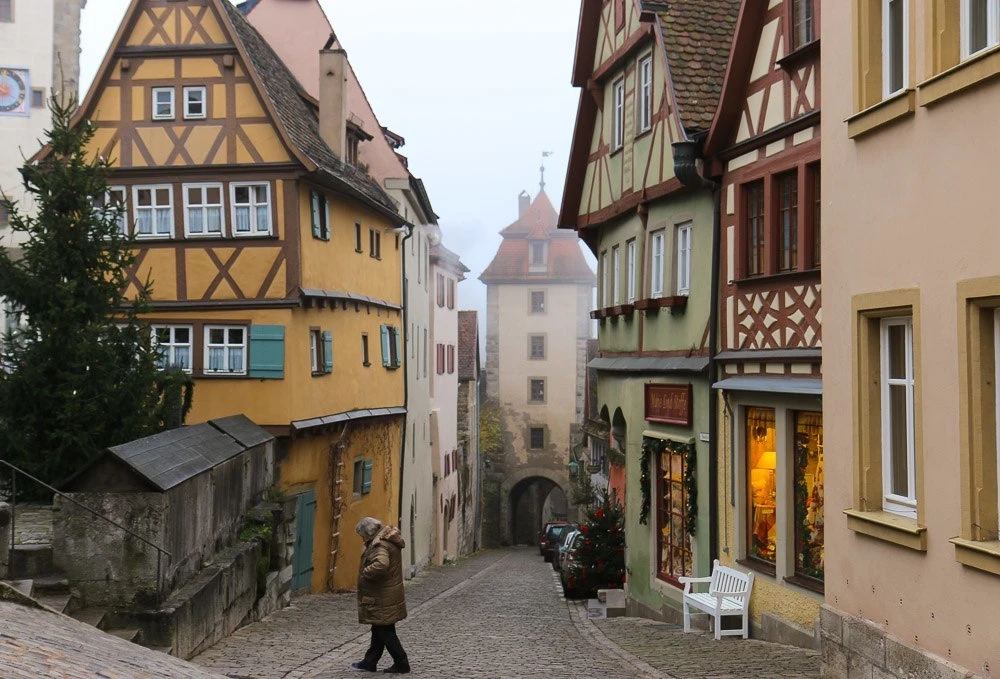
The narrow streets prevent major road traffic, which accommodates tourism quite well. It’s the kind of town you could wander for ages, finding little shops and cafes around corners without getting too lost because it’s not that big. Our ship docked on the Main River at Kitzingen, where we boarded a bus to Rothenburg. The journey took an easy 45 minutes or so and was well worth it.
Kathe Wohlfahrt Store(s) and Christmas Museum
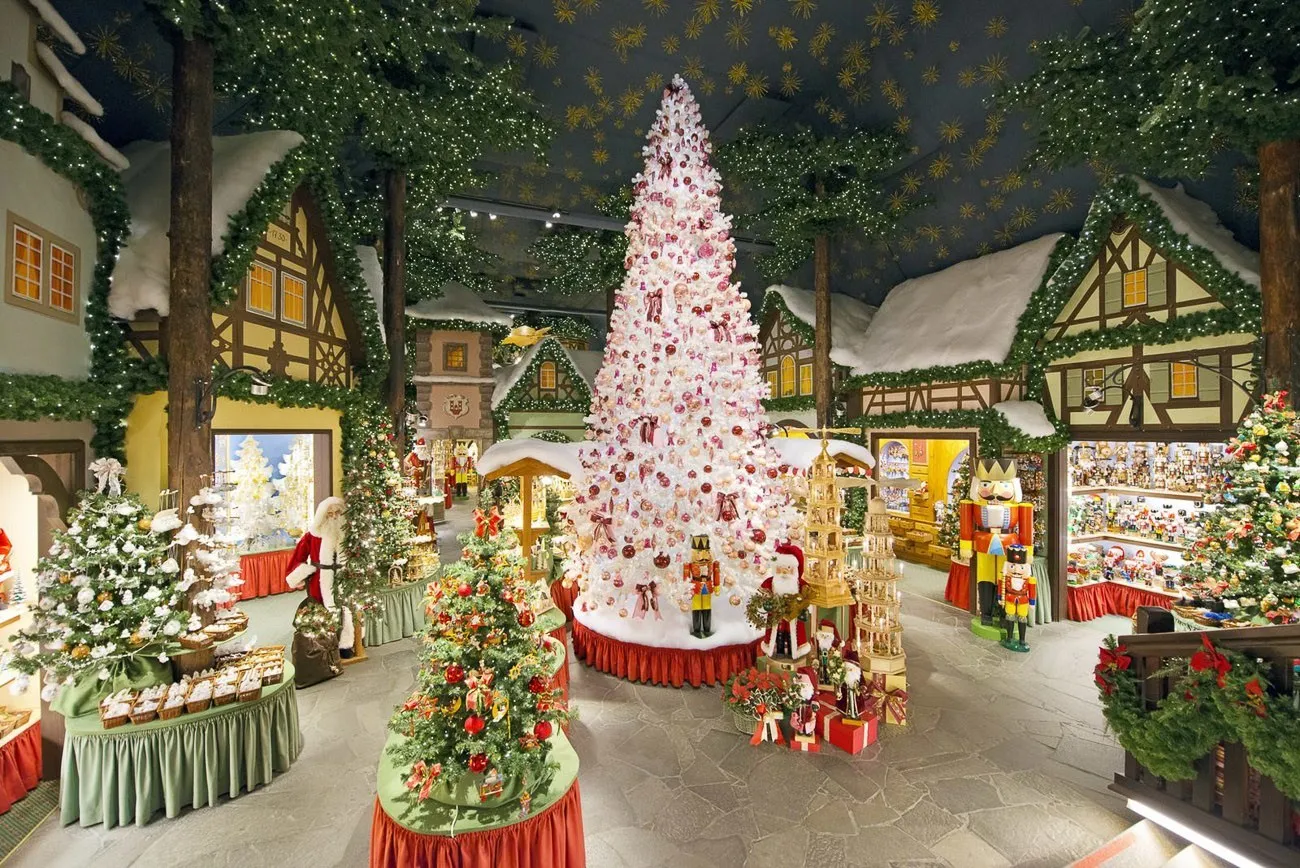
Stepping into the main Kathe Wohlfahrt store is overwhelming, in a good way. I spent an hour inside marveling at more stunning Christmas ornaments and decorations than I’d probably ever seen in one spot. They don’t allow photographs inside. The store prepared my VAT refund forms, which was helpful, and English was not a problem. Electronic decorations also come with voltage options.
Upstairs inside the store is a small Christmas Museum. You’ll pay a small fee to enter, but it’s worth spending a few minutes browsing the history of Christmas as well as trees (behind glass) filled with beautiful centuries-old ornaments demonstrating how they’ve evolved throughout the years.
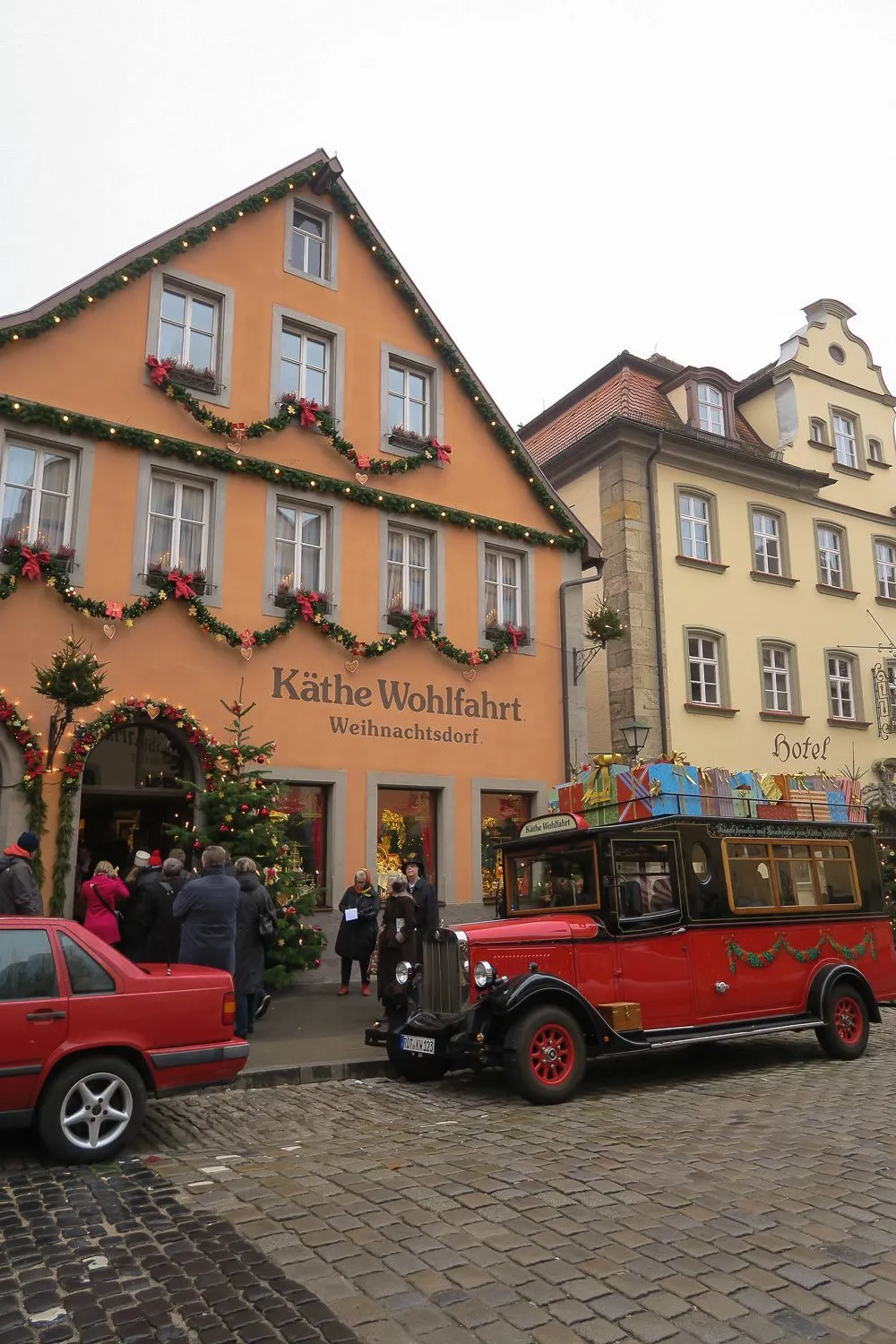
Go directly to this store as soon as it opens to avoid crowds. There is even another Kathe Wohlfahrt store across the cobblestone street to ease crowding, not to mention several others sprinkled around town.
Rothenburg Christmas Market (Reiterlesmarkt)
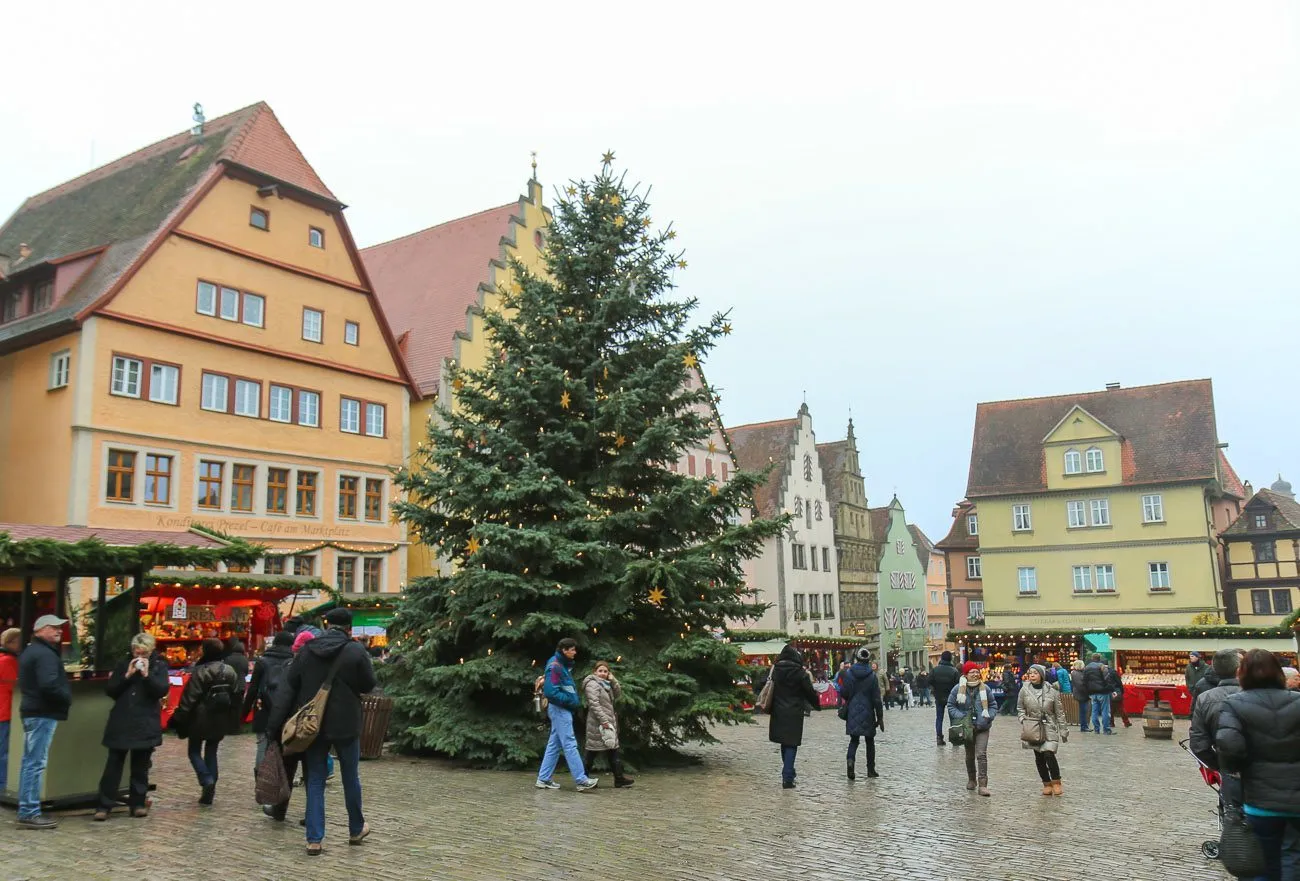
The Rothenburg Christmas Market is just steps away from the main Kathe Wohlfahrt store and much less overwhelming, despite the tourists, than the Nuremberg Christkindlesmarkt. Perhaps it’s because the stalls are spread throughout the town square and in various nooks and crannies. I liked how approachable each booth was; the vibe here is pretty relaxed.
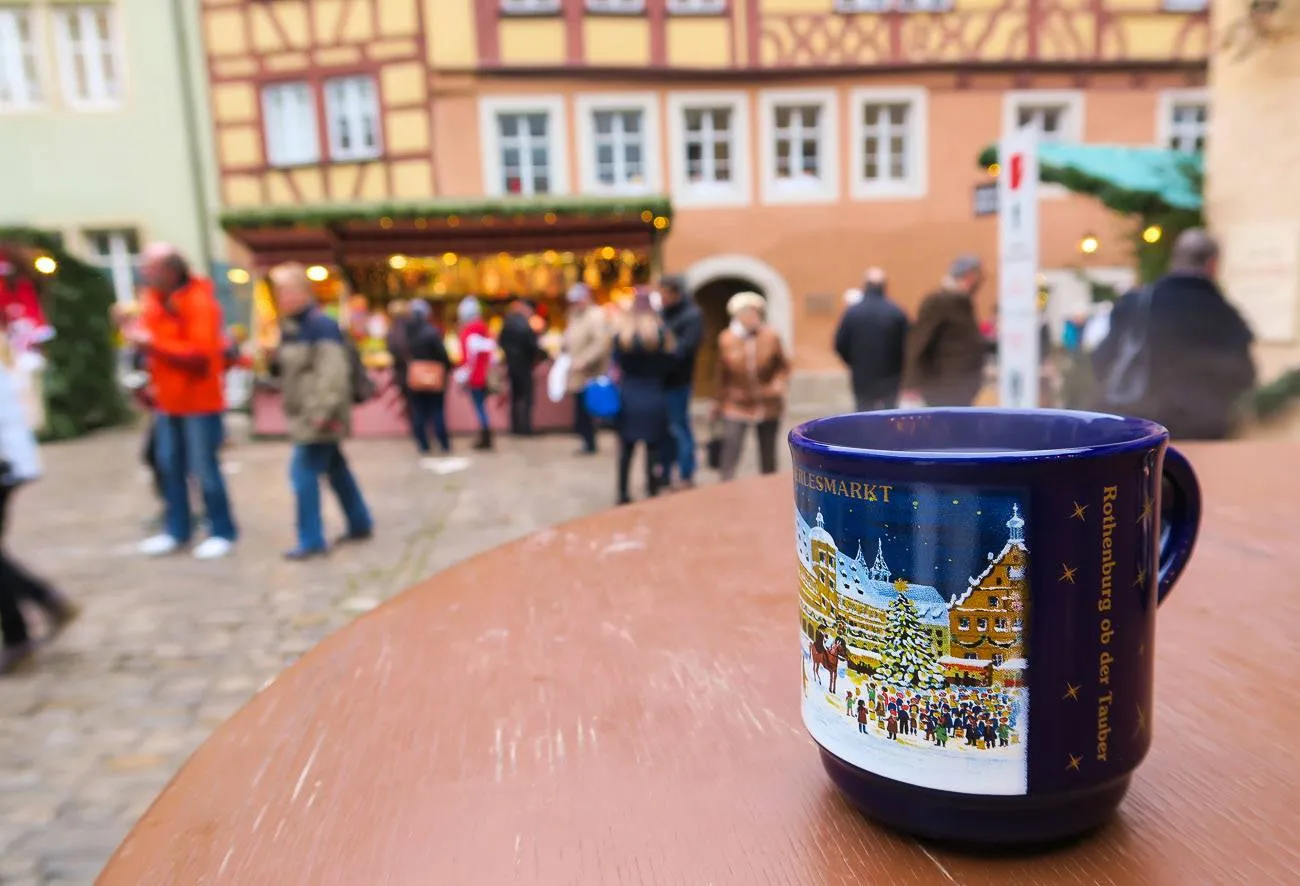
Of course, I drank gluhwein and took home the mug as a souvenir.
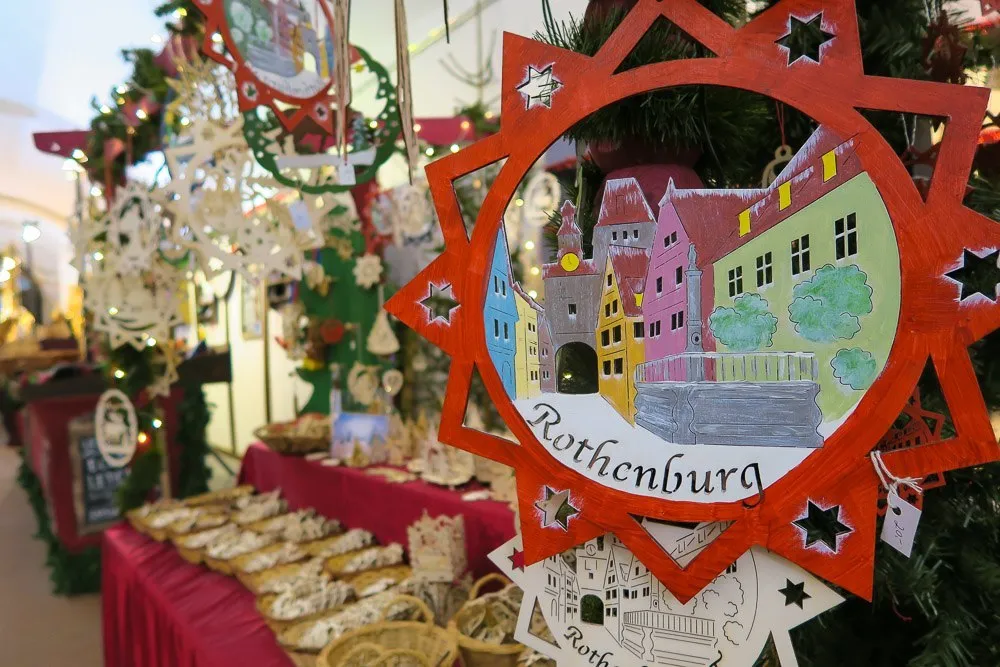
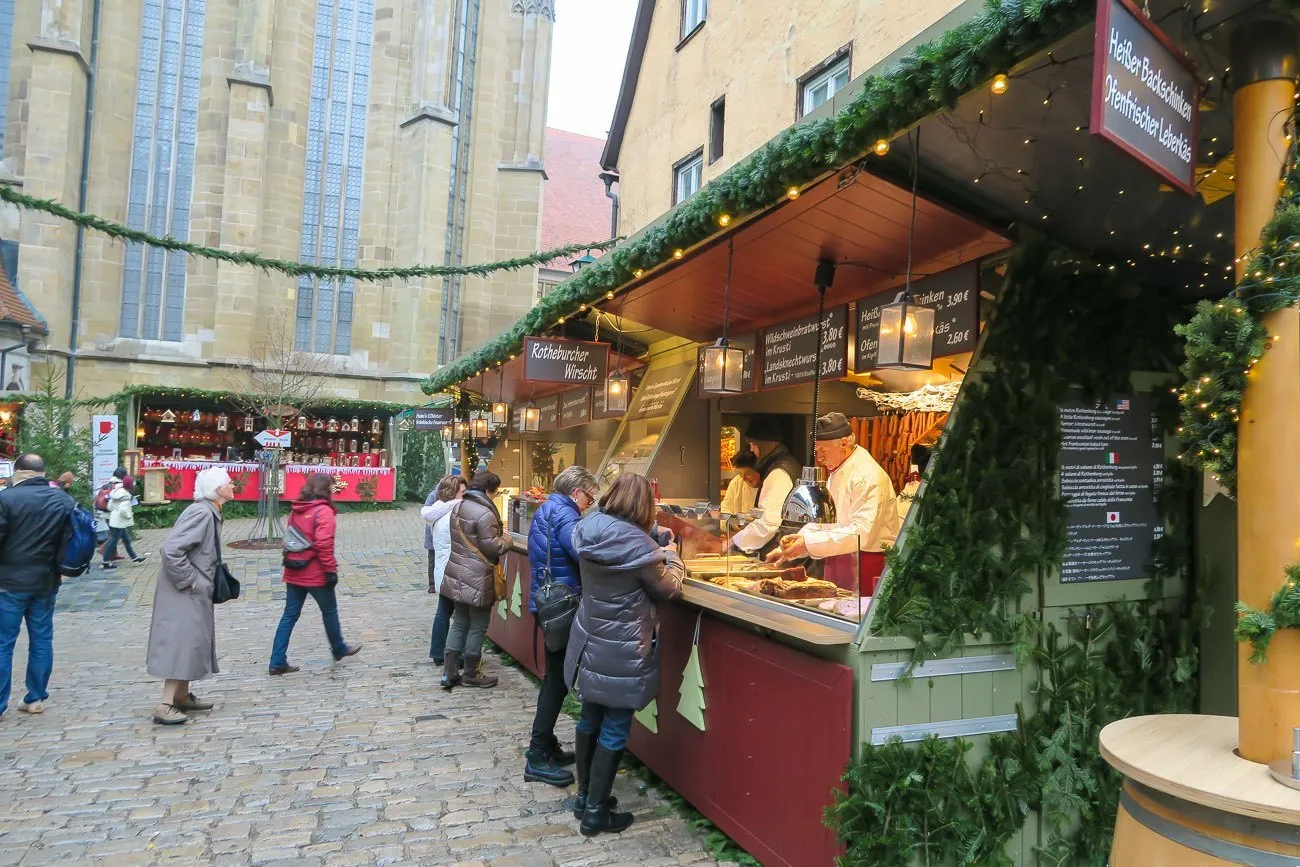
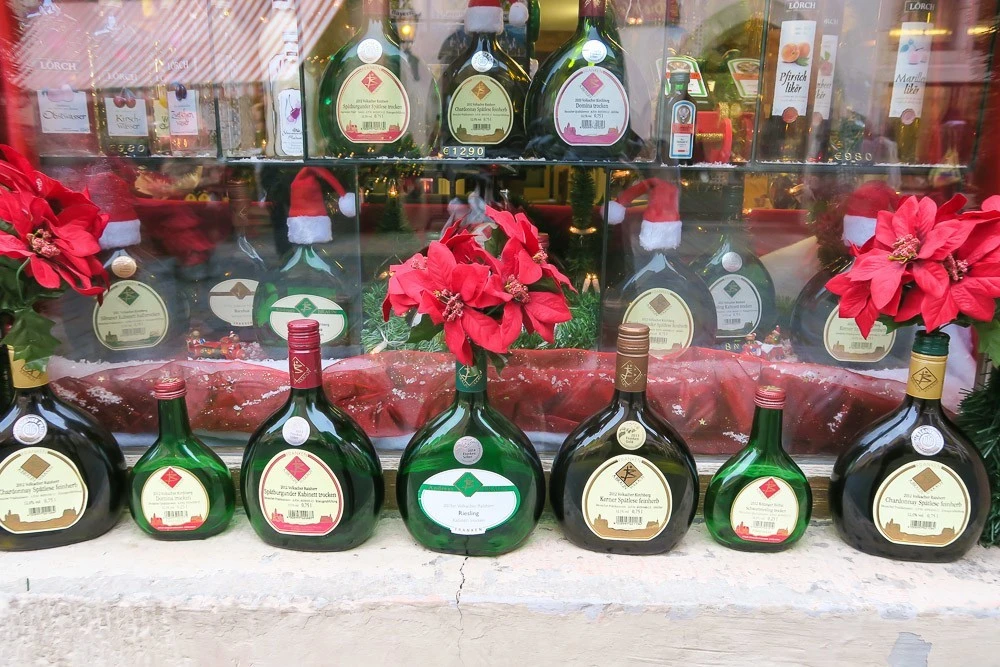
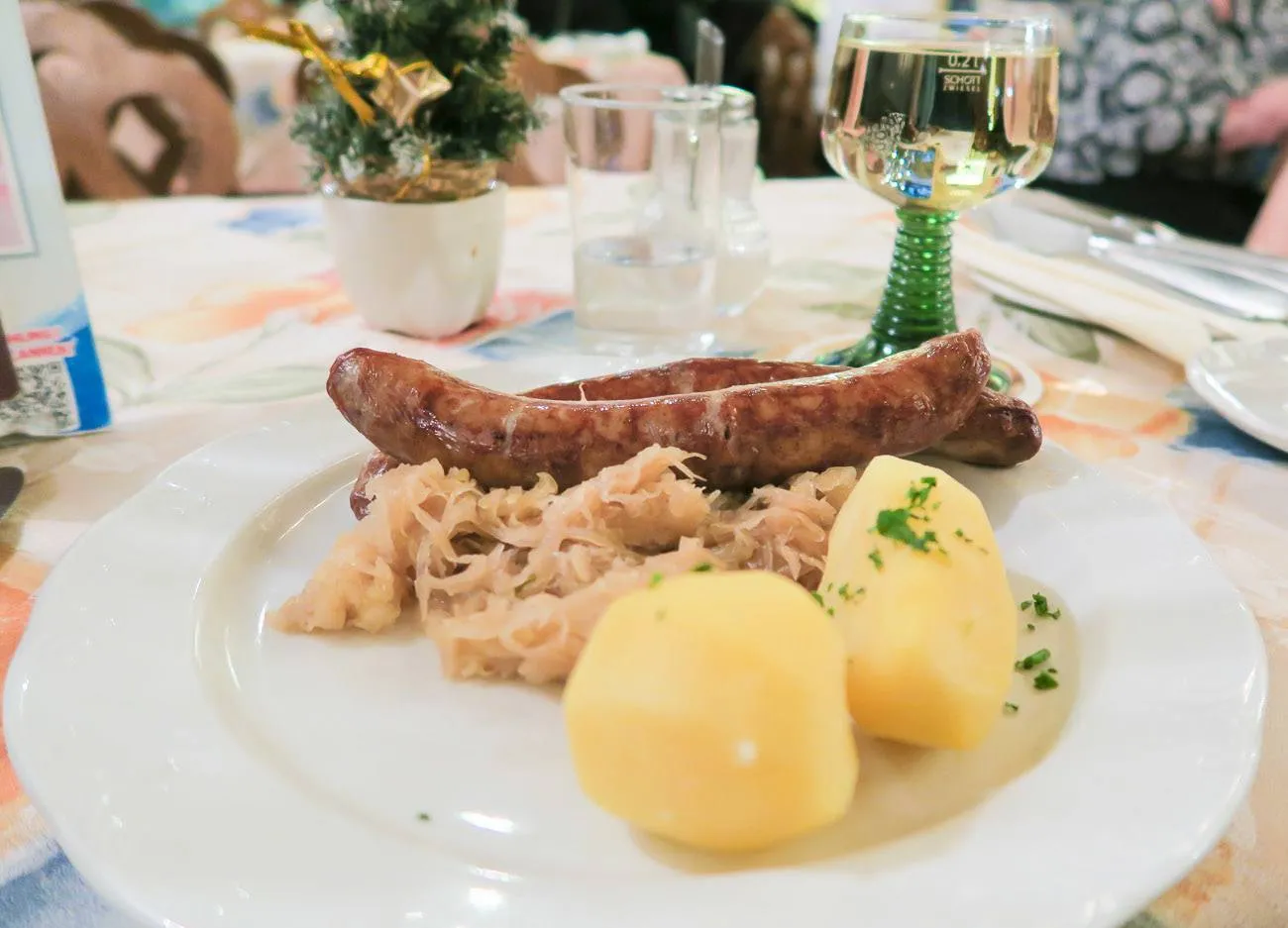
Unlike the other markets where I grabbed a sausage on the go, I chose a local sit-down restaurant for lunch here because my feet were exhausted from power shopping. We’d passed a number of shops selling Franconian wine, which comes in a flat-bottomed bottle called a Bocksbeutel that keeps it from tipping over, so I wanted to try a glass. It was paired with Franconian sausage, of course.
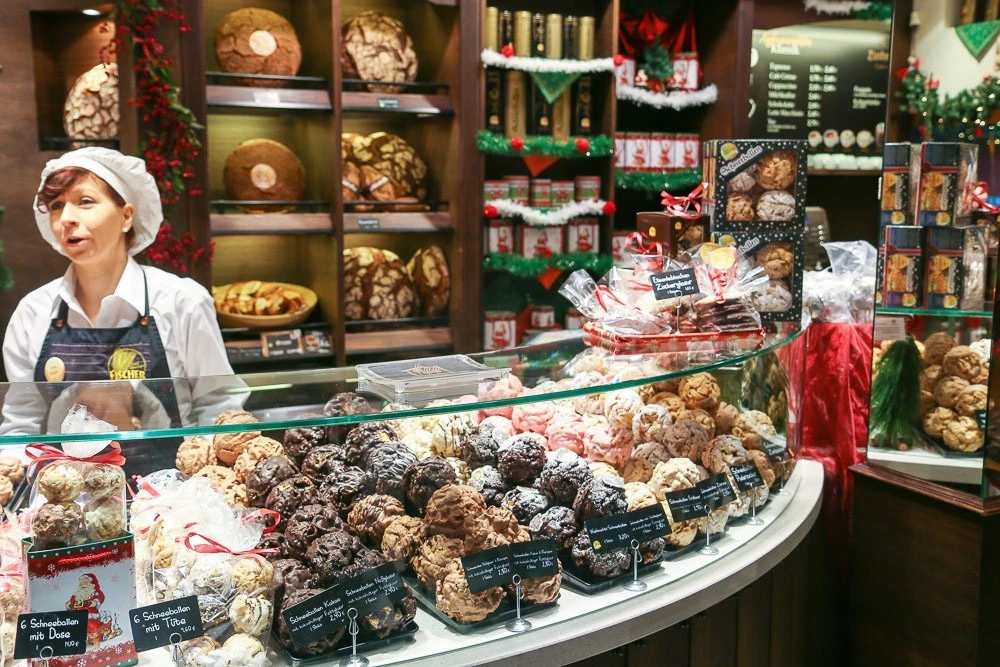
Rothenburg is famous for a centuries-old dessert called a schneeball (snowball), which is sliced shortcrust pastry dough rolled into a ball and deep-fried in a special shape-preserving device, then dusted with powdered sugar, dipped in chocolate, or covered with other toppings. They’re a bit bigger than my fist but also come in mini versions. Both delicately crumble after you take a bite. Do yourself a favor and eat a schneeball if you’re ever in Rothenburg. I bought a big tin to take home because they keep for several months.
Shop the Many Local Shops
Plan time to wander. I looked at bookstores, home decor shops, a huge stuffed animal store (great for kids’ souvenirs), luggage, and even that armor retailer. Though tourists were visiting the markets, it was so easy to browse these little local shops. This town heaves with character and Christmas happiness while lacking major chain stores and coffee shops. “Shop local” definitely applies here.
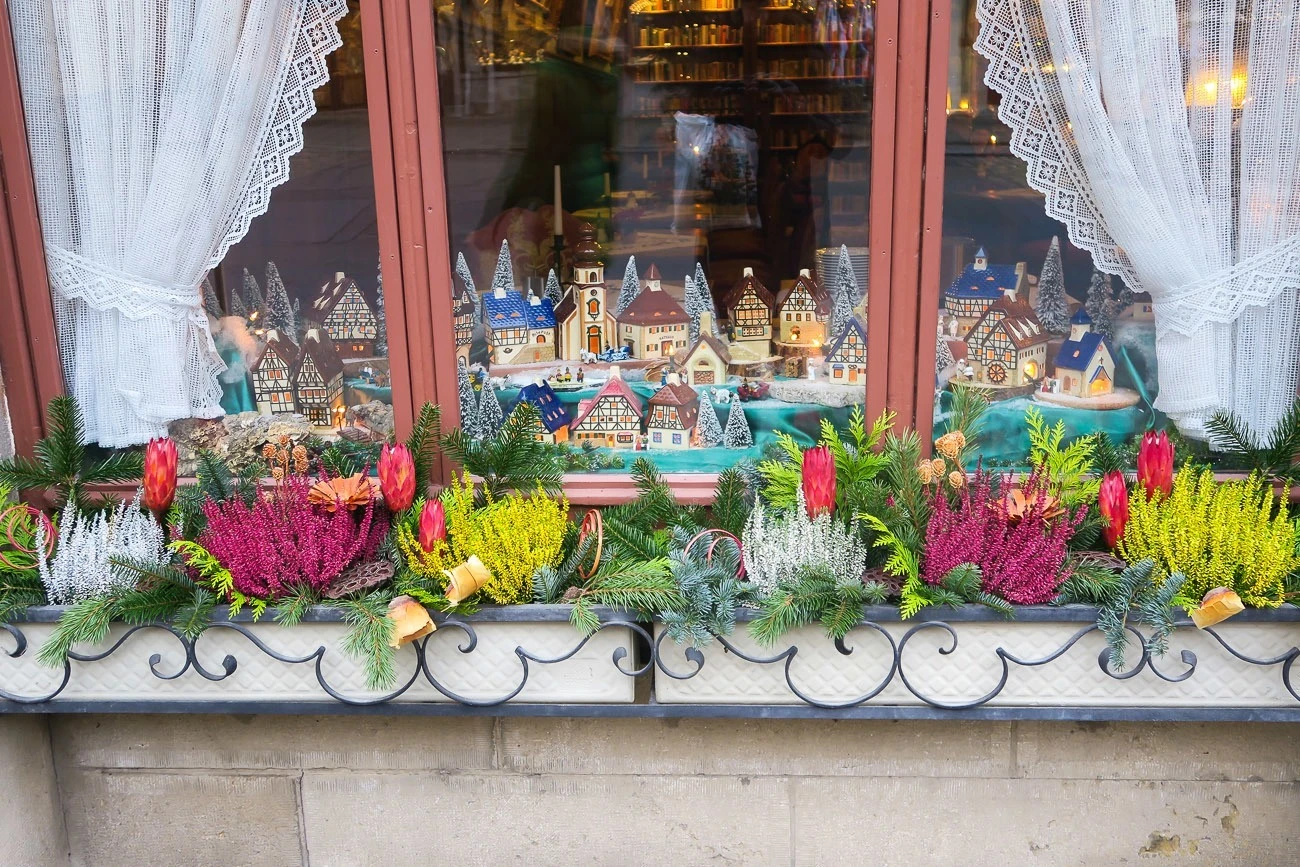
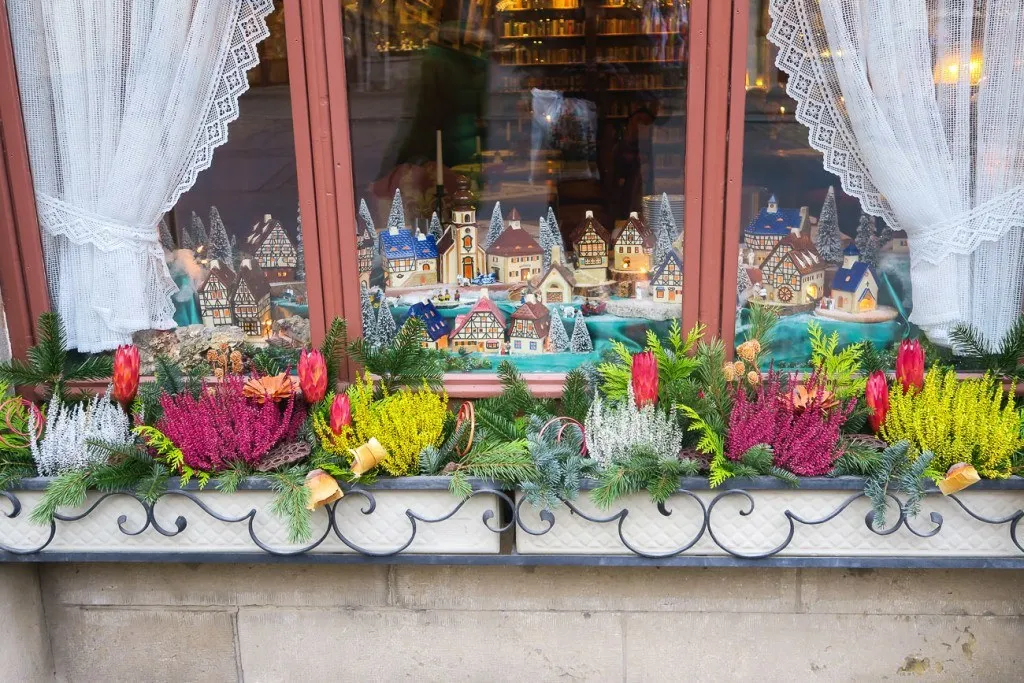
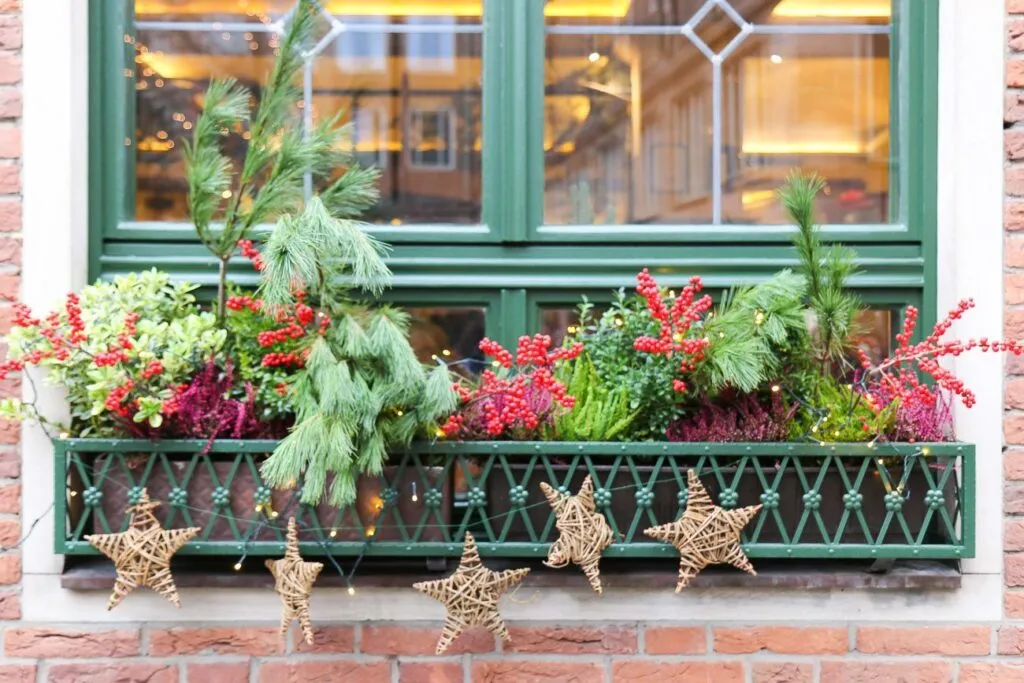
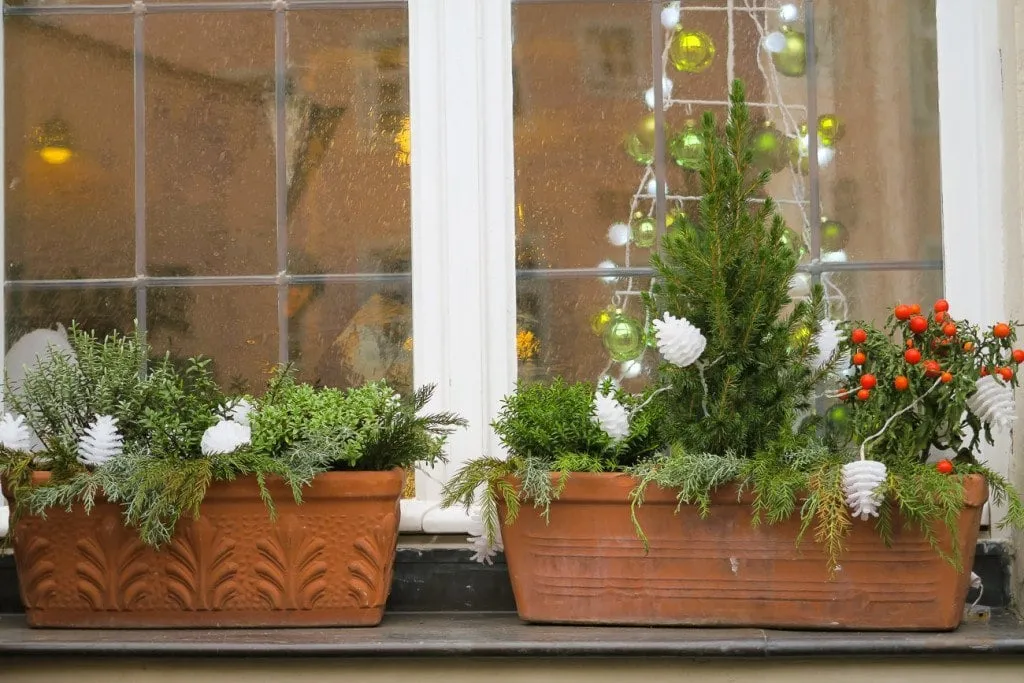
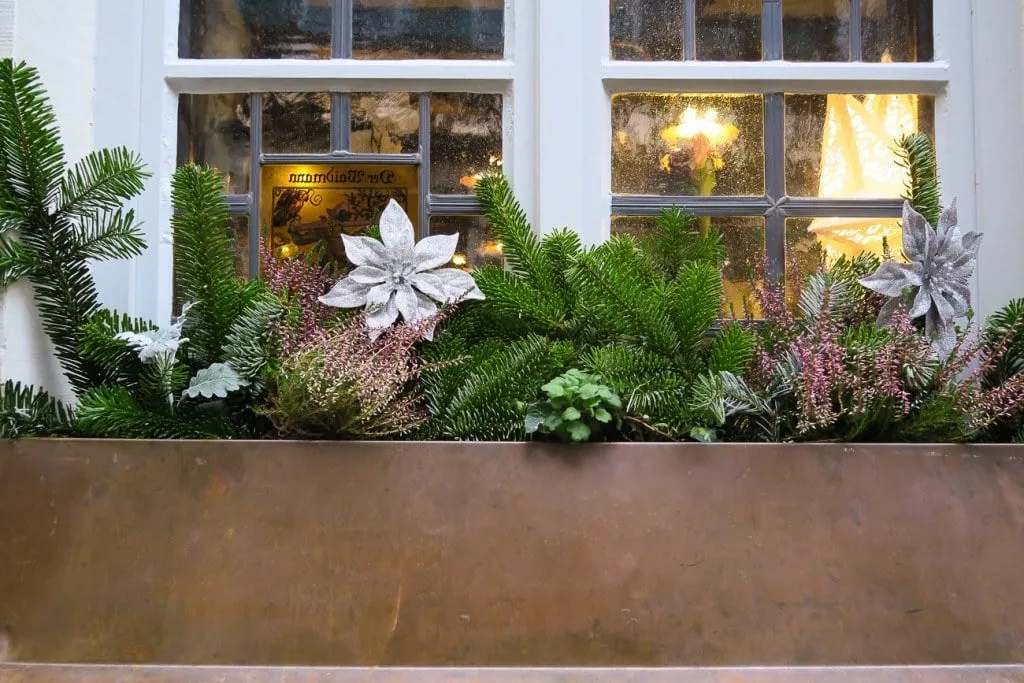
Rothenburg, our third-to-last stop, is where I started photographing the holiday-themed window boxes I’ve collected in a gallery further down this guide.
I adored Rothenburg because of its small-town charm, love of Christmas, medieval history, and lovely people. Go, if you can, at any time of year. Everyone on our river cruise raved about this stop in particular. Totally wiped out from a full day shopping, I ended the day with dinner (always four courses) delivered to my stateroom.
Bamberg: History, Beer, and a UNESCO Old Town
Bamberg, Germany, is an interesting combination of four fabulous things: history, shopping, jovial beer drinking, and eating (mostly sausage for me). I was looking forward to the Bamberg Christmas Market, but the city offered up so much more. I signed up for a brewery tour in this over-1000-year-old Bavarian college town and planned to do some exploring afterward. I loved every minute.
Note: the tours offered on Uniworld river cruises vary, so a brewery tour might not be an option on every departure.
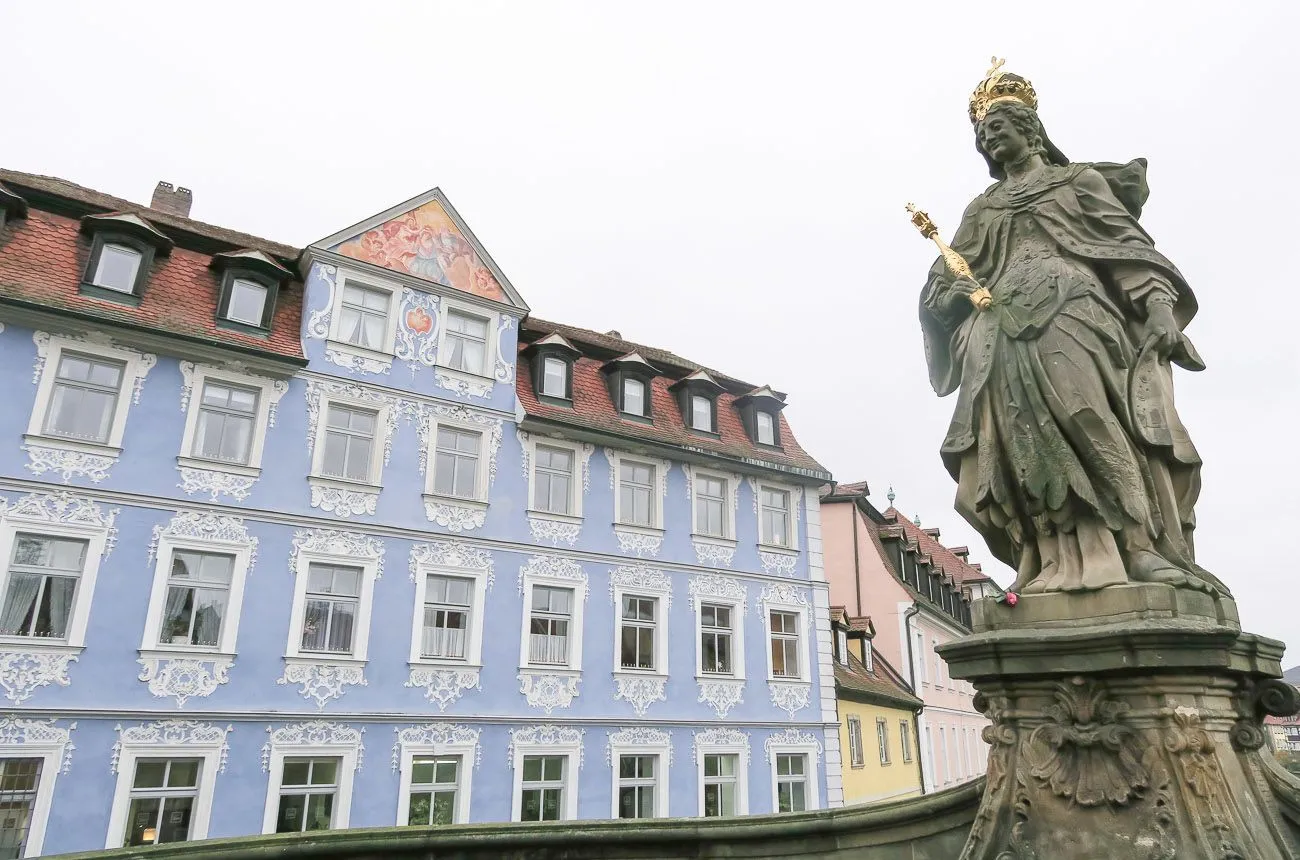
The entire town of Bamberg is designated a UNESCO World Heritage Site: an outstanding example of a medieval town with architecture that influenced central Europe from the 11th century onward. Like a lot of German towns, Bamberg is very walkable, and I managed to pack a lot into one day.
Bamberger Dom (Bamberg Cathedral)
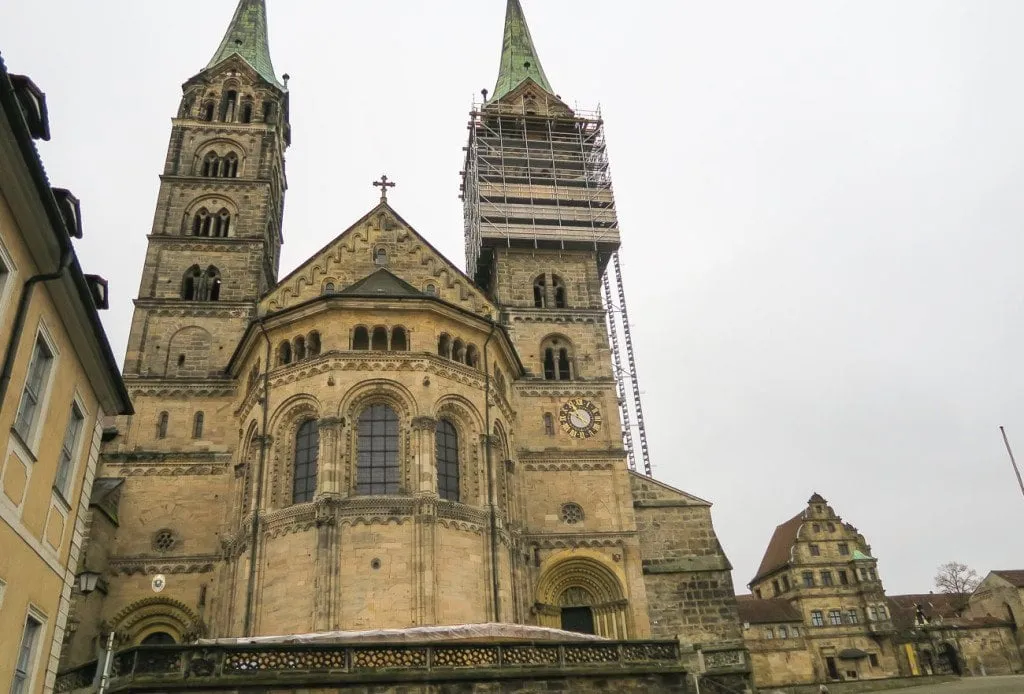
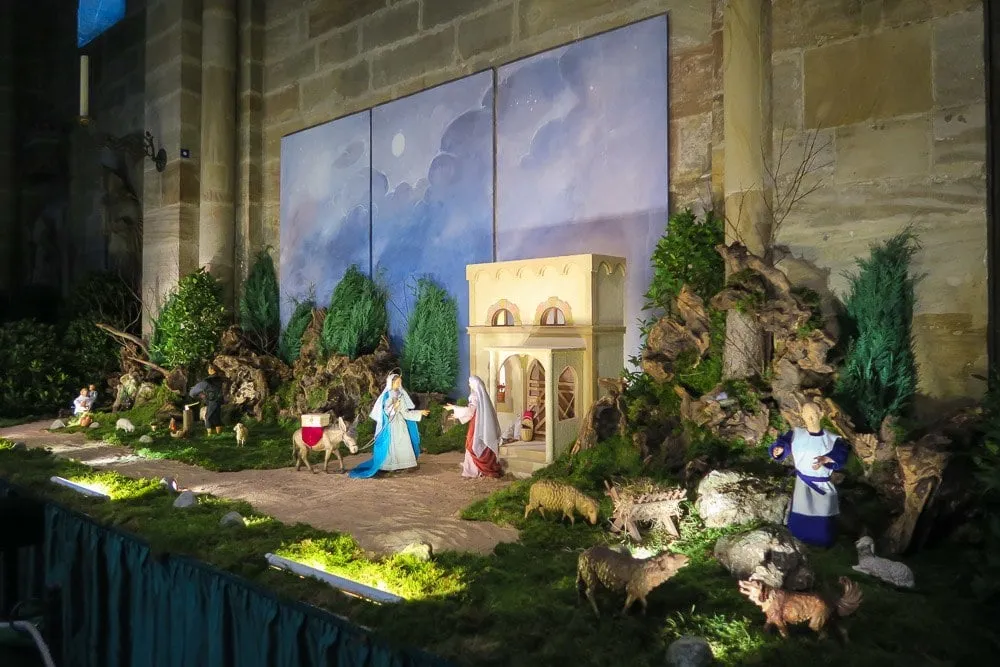
We started by walking from the bus stop near the Hotel Messerschmitt up to the Bamberg Cathedral, stopping to view interesting architecture and historic points along the way. The 13th-century cathedral was founded in 1002 by emperor Henry II. He and his wife Cunigunde of Luxembourg are both entombed inside, along with Pope Clement II, whose tomb is the only papal burial outside of Italy and France. The cathedral burned down twice but has remained intact since 1237. A number of magnificent sculptures adorn it inside and out, and because it was Christmas time, a giant nativity added to the scenery.
Fun fact: scenes from The Three Musketeers (2011) were filmed here, and local Bambergers were able to participate as extras.
Bamberg New Residence and Rose Garden
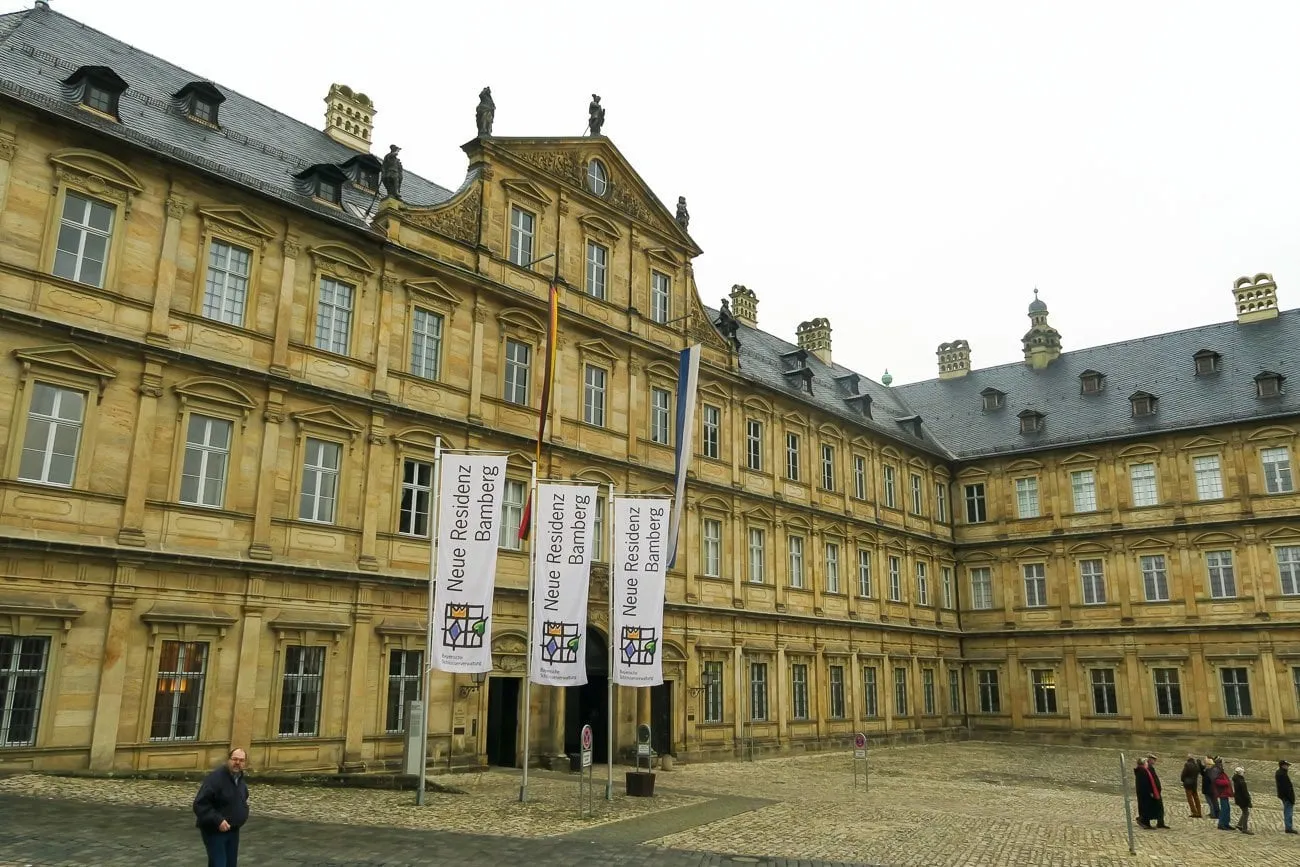
Both are located right next to Bamberg Cathedral. Pressed for time, we didn’t go inside and there were no blooms in the garden that time of year (the roughly 4,500 roses across 70 beds are spectacular in season). The Renaissance residence was built in two stages: the first in 1602 by Prince Bishop von Gebsattel, the second between 1697 and 1703 by Leonhard Dientzenhofer.
The Old Town Hall (and Little Venice)
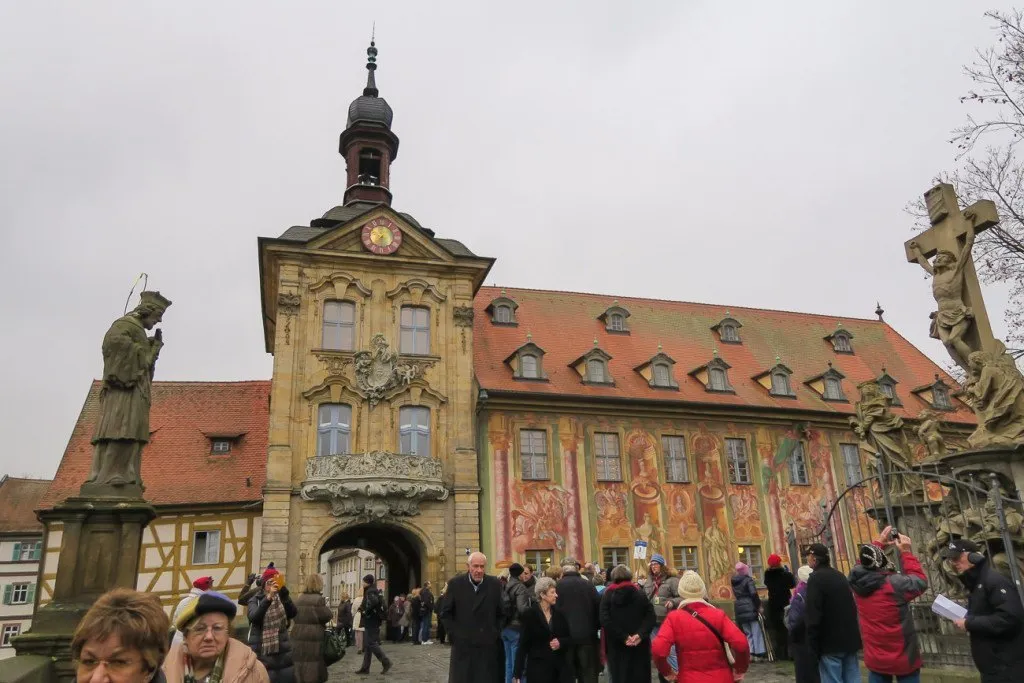
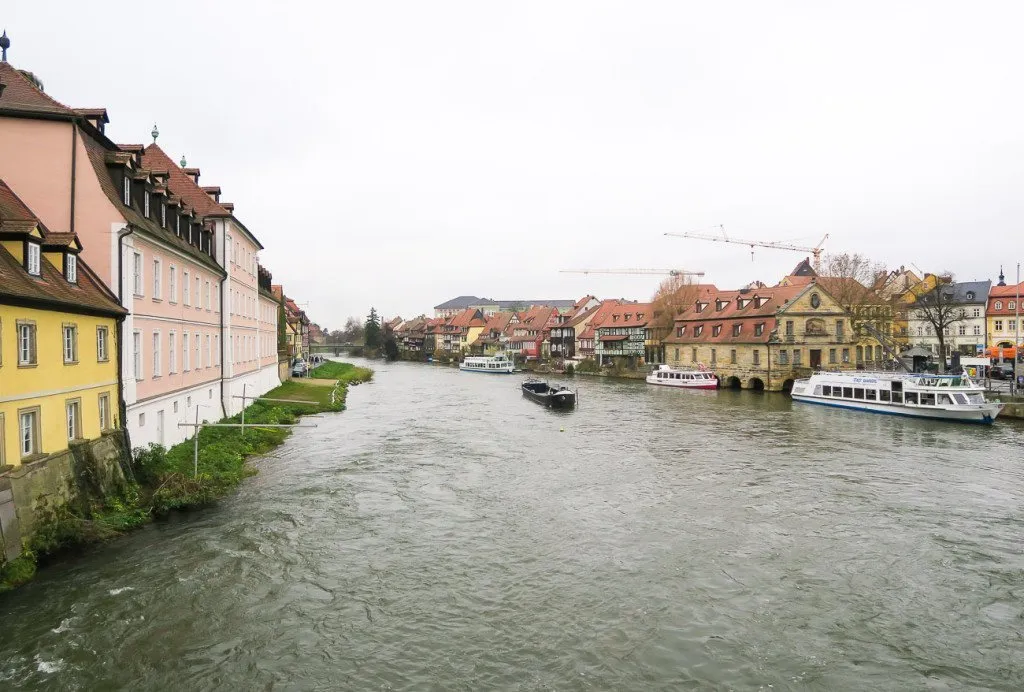
Less than a five-minute walk from the Cathedral. Legend has it that Bamberg’s bishop didn’t give citizens any land for a town hall, so one was literally staked into the river Regnitz. It’s accessible via a bridge and offers a lovely view of what’s referred to as Bamberg’s Little Venice. Inside is the Ludwig Collection of 18th-century tabletop animal tureens, plus the Rococo Hall where the municipality’s receptions and ceremonies take place.
The Breweries
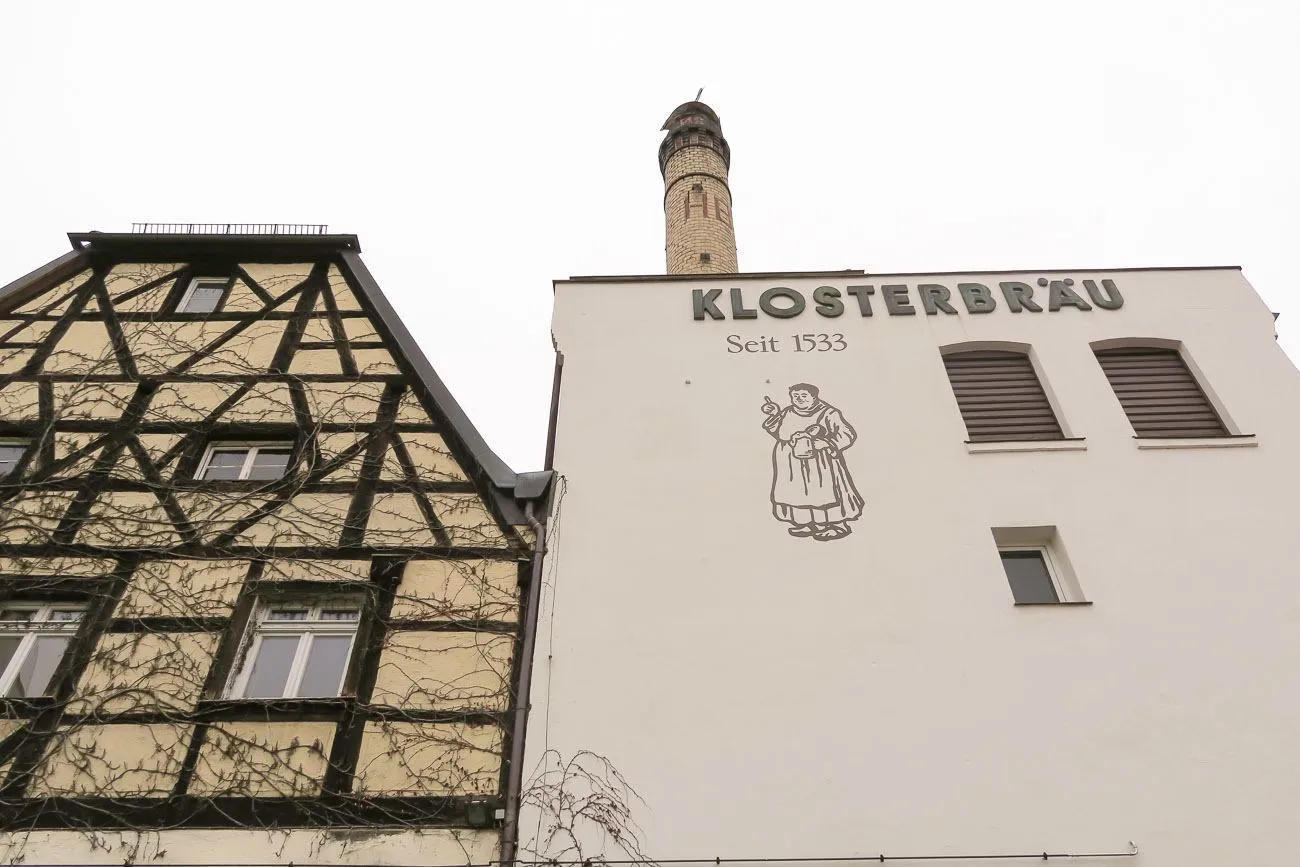
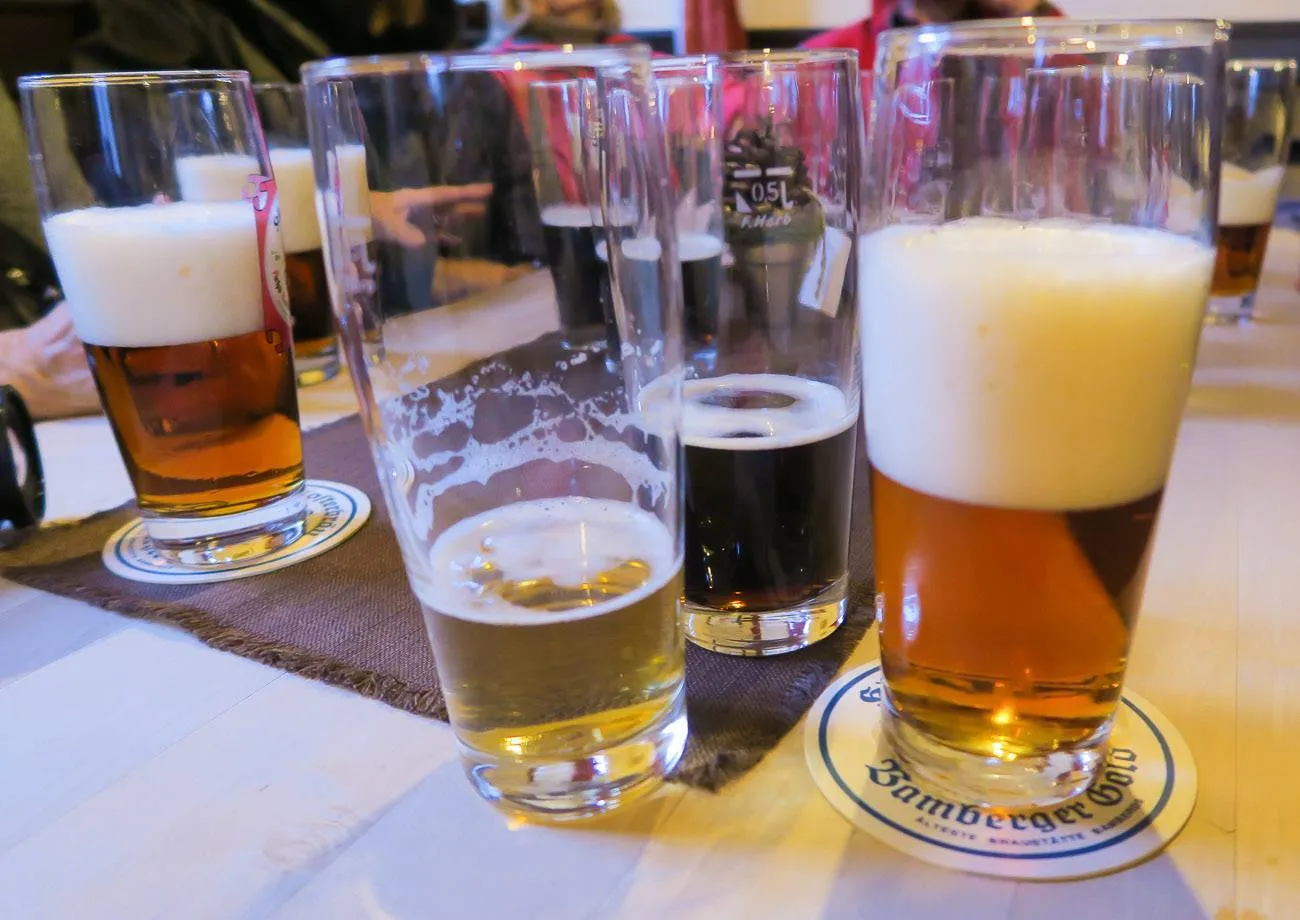
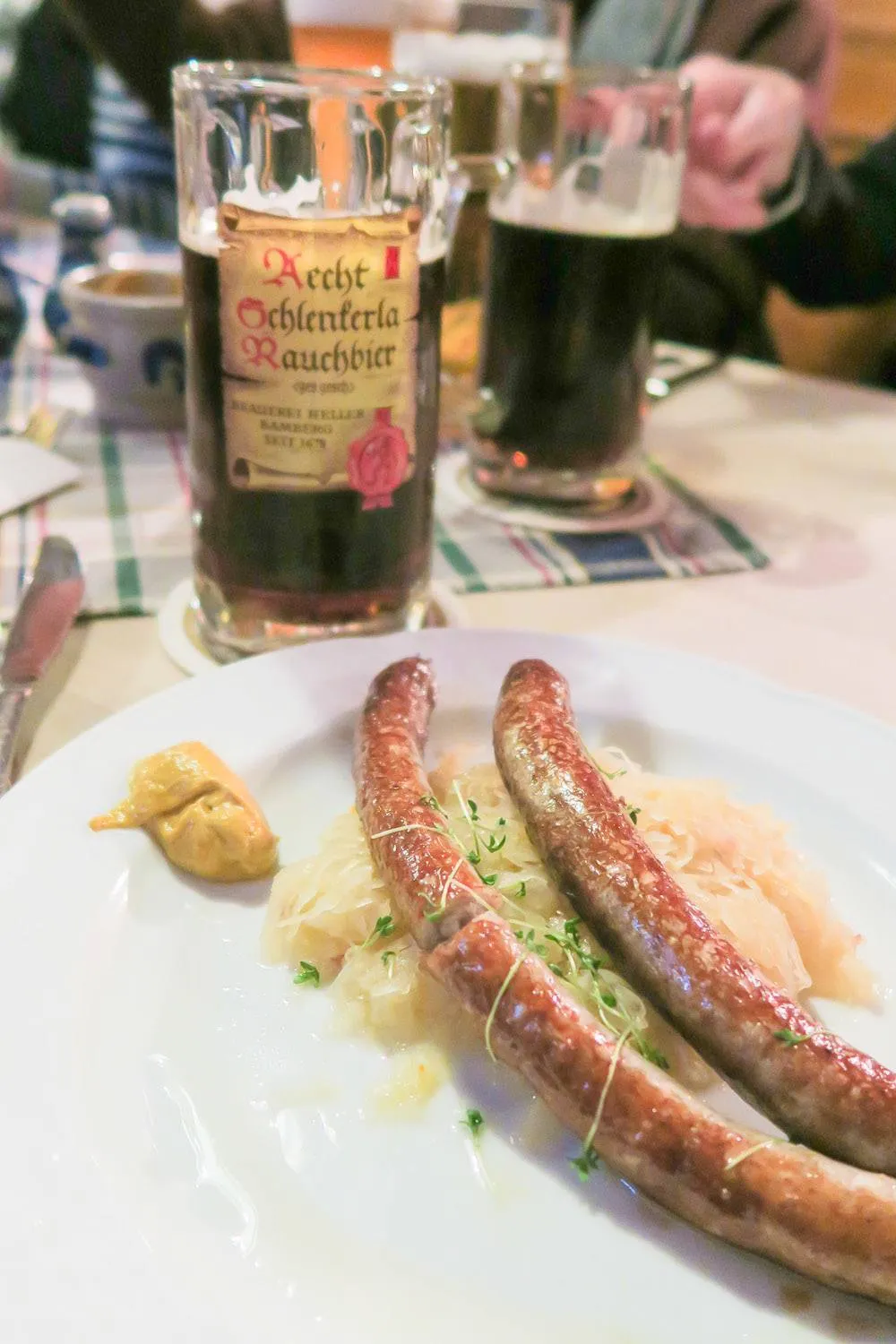
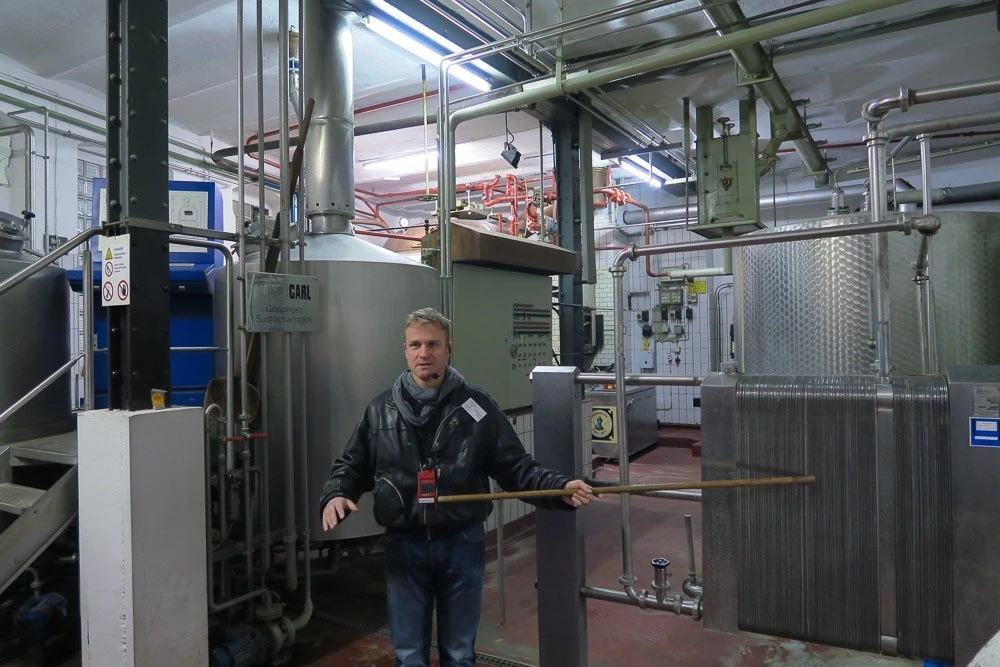
Bamberg was a microbrew capital centuries before the craft became trendy. Take a beer tour or plan to stop into at least one brewery: Bamberg has the world’s densest concentration of breweries. We took a behind-the-scenes tour of Klosterbräu, where they’ve been brewing here since 1533; the Pilsner is the most popular, but I liked all four beers they poured. Bamberg is also famous for a smoked beer called Rauchbier, malt dried over an open flame that gives the beer its smoky flavor. If you want to try it, the best place is at the historic Schlenkerla brewpub, serving it for over two centuries. This is where I downed a pint, and though it smells unlike any other beer I’ve had, it was surprisingly good, especially with a much-needed sausage and sauerkraut.
Shop the Boutiques
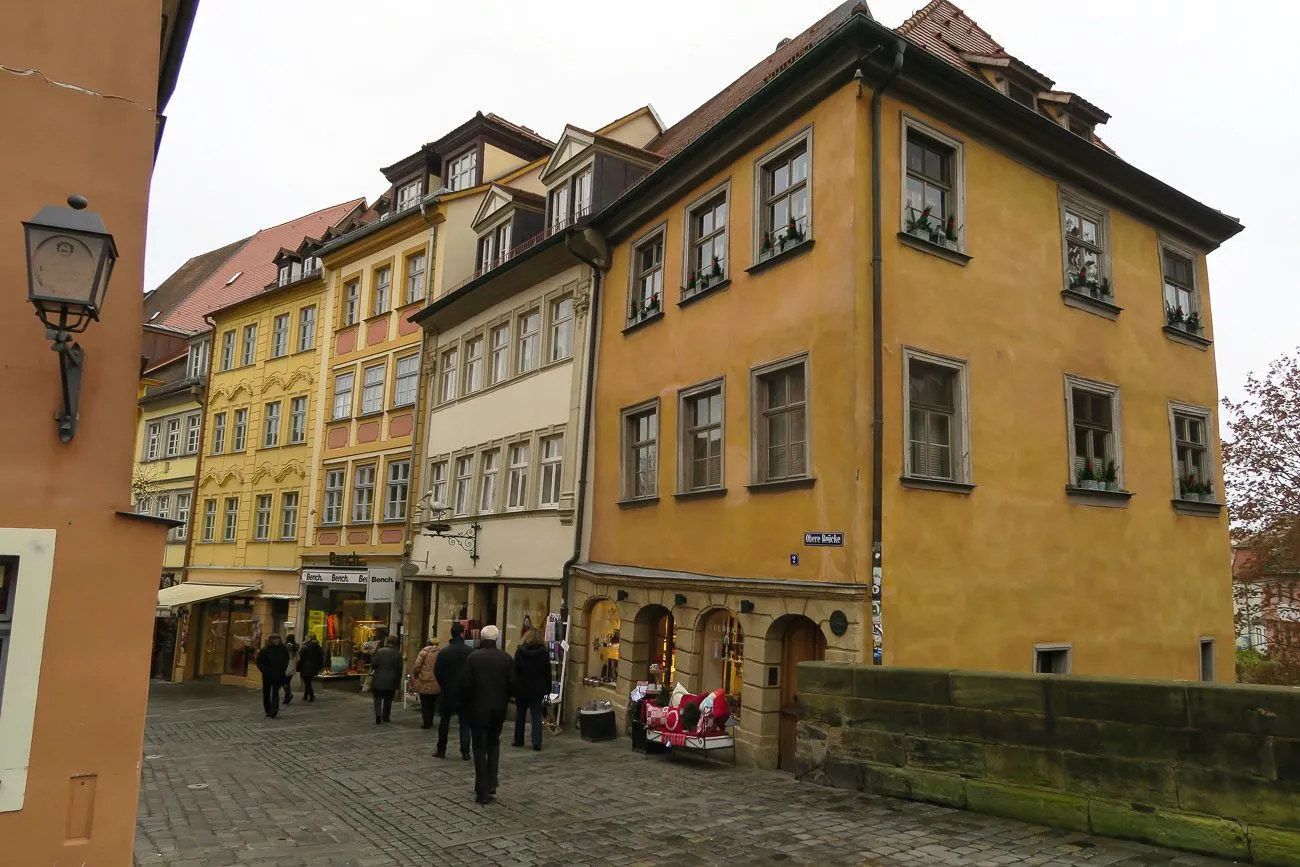
Stuffed into old Baroque buildings are various stores ranging from popular brands to boutiques full of German-made decor. I bought the most stuff here out of all our stops, ranging from German toys to pretty paper. There’s also a year-round Kathe Wohlfahrt store here, in addition to the Bamberg Christmas market.
The Bamberg Christmas Market
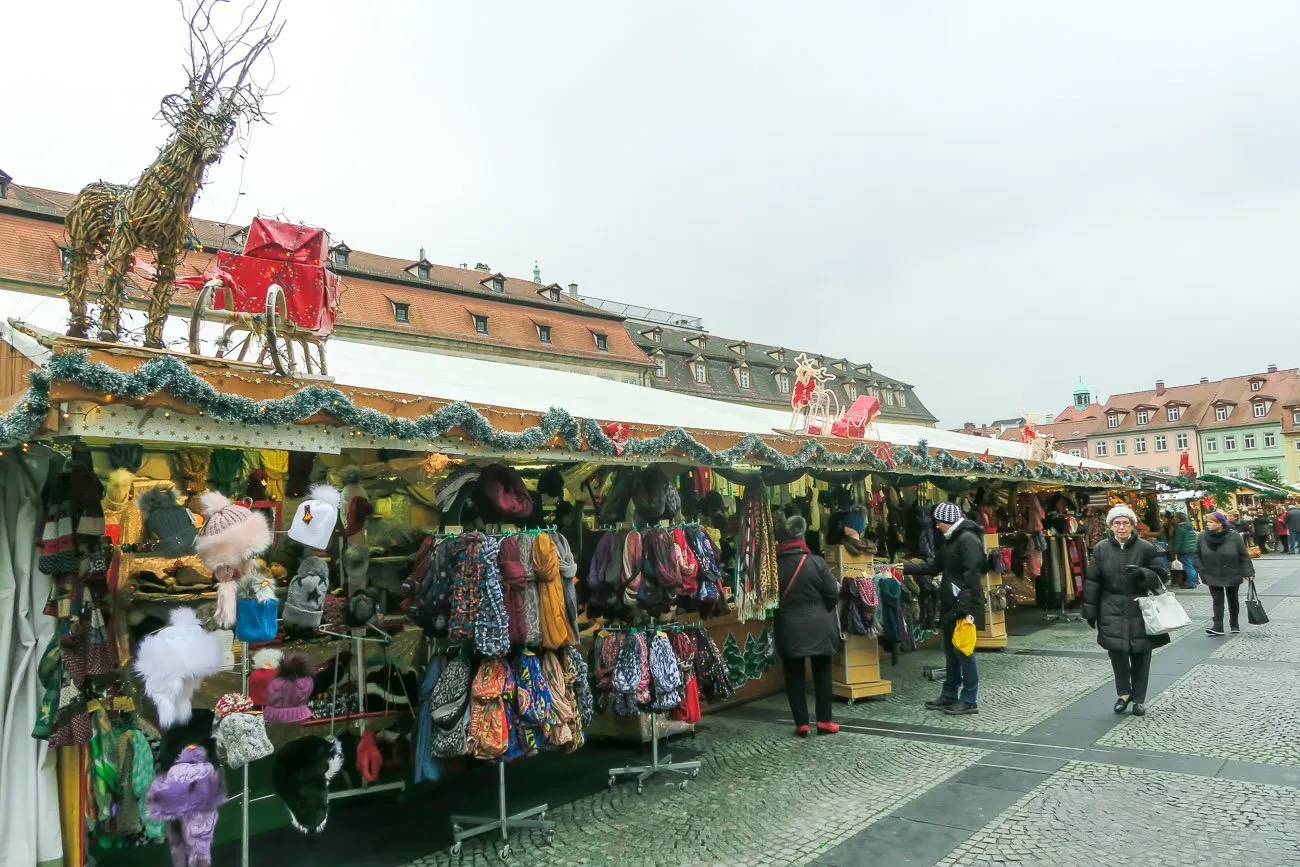
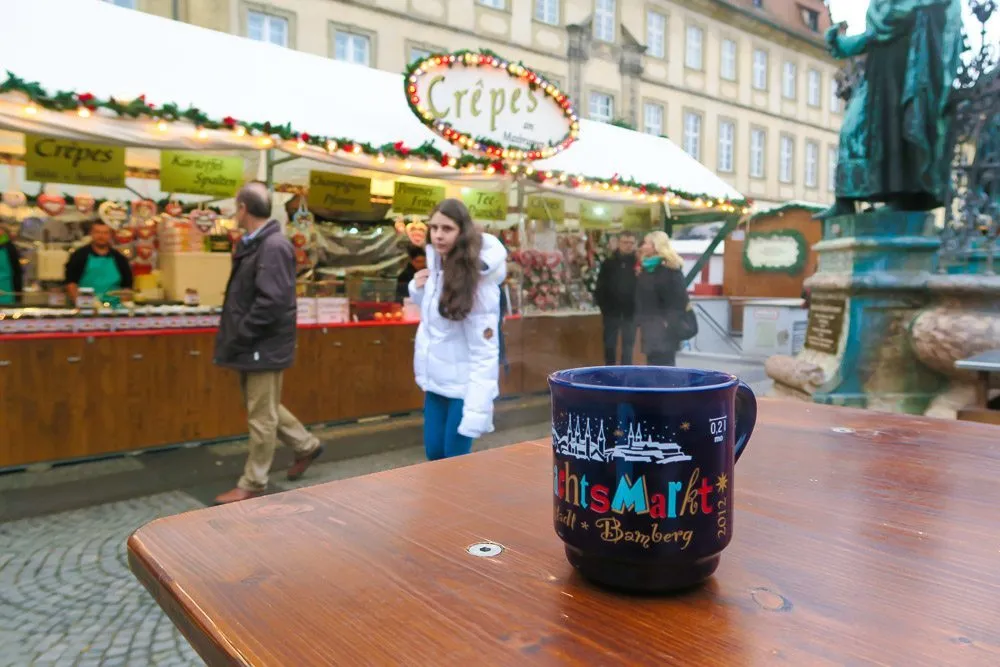
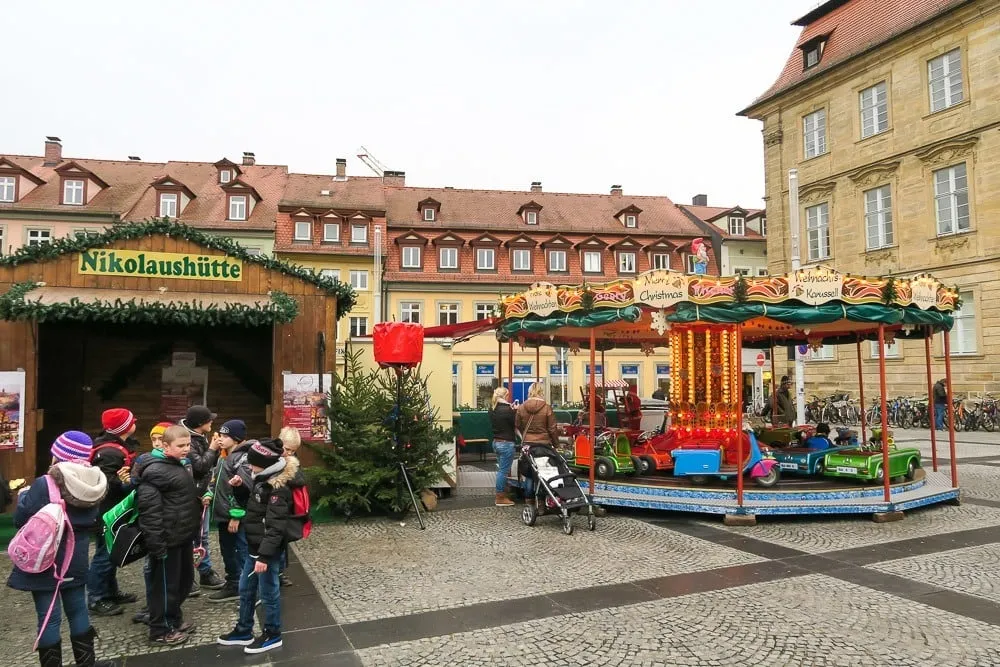
The medieval Christmas market in the Alte Hofhaltung is actually four markets in one: the traditional market on Maxplatz, another featuring medieval cultural programs in the courtyard of Geyersworth Palace, and two focused on local arts and crafts. I found many of the same items here as in the other markets, though there was more of an emphasis on knitwear, which I sorely needed given the low temperatures. It’s easy and low-key to browse, and the market borders brand-name stores like H&M so you can experience a little bit of old and new.
Nativity scenes are quite a big deal in Bamberg. There’s a Krippenweg (Nativity Walk) that links over 40 churches, museums, and public spaces displaying Nativity and New Testament scenes, some carved hundreds of years ago. I was also quite taken with the Christmas window boxes that line the narrow cobblestone streets here (more on those below). I would certainly return and add even more breweries to the list.
Nuremberg: The Grand Finale at Christkindlesmarkt
As we ventured down the cobblestone street to the Nuremberg Christmas Market, I marveled at its size. With about 180 stalls, Christkindlesmarkt buzzes with contagious energy and draws over two million visitors every year.
Germany’s most famous Christmas market was the last stop on my Uniworld cruise. While each of the six cities we visited was different, Christkindlesmarkt was the perfect place to swoop up items I’d meant to buy, at reasonable prices. If you can visit only one Christmas market in Germany, this should be it. The local government closely monitors vendor products to ensure they’re both a good fit for shoppers and that quality is present, so you can feel good about what you buy here.
Eat Bratwurst (of Course)
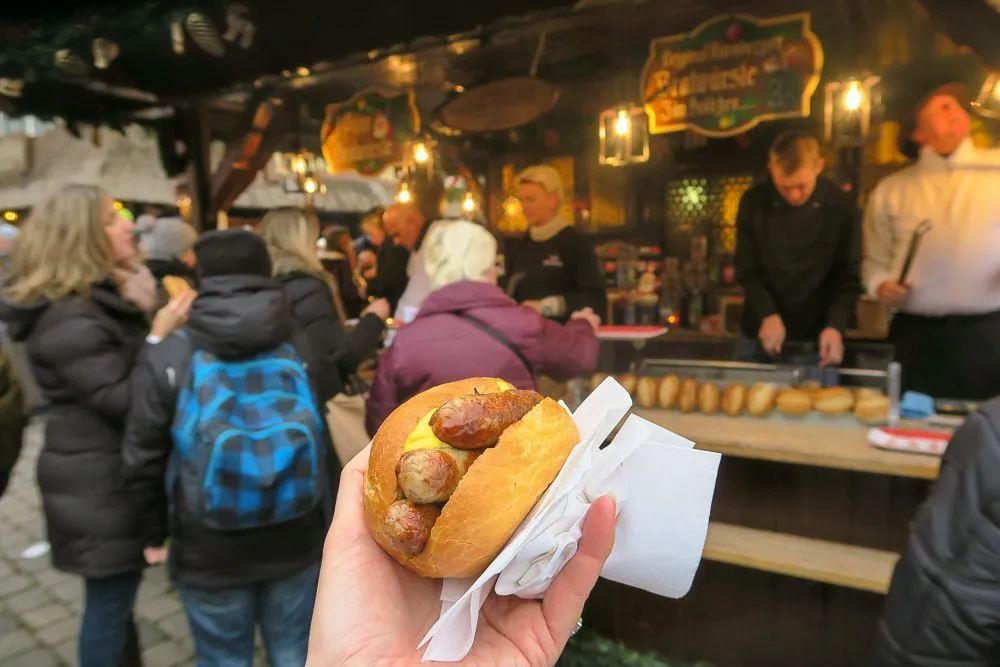
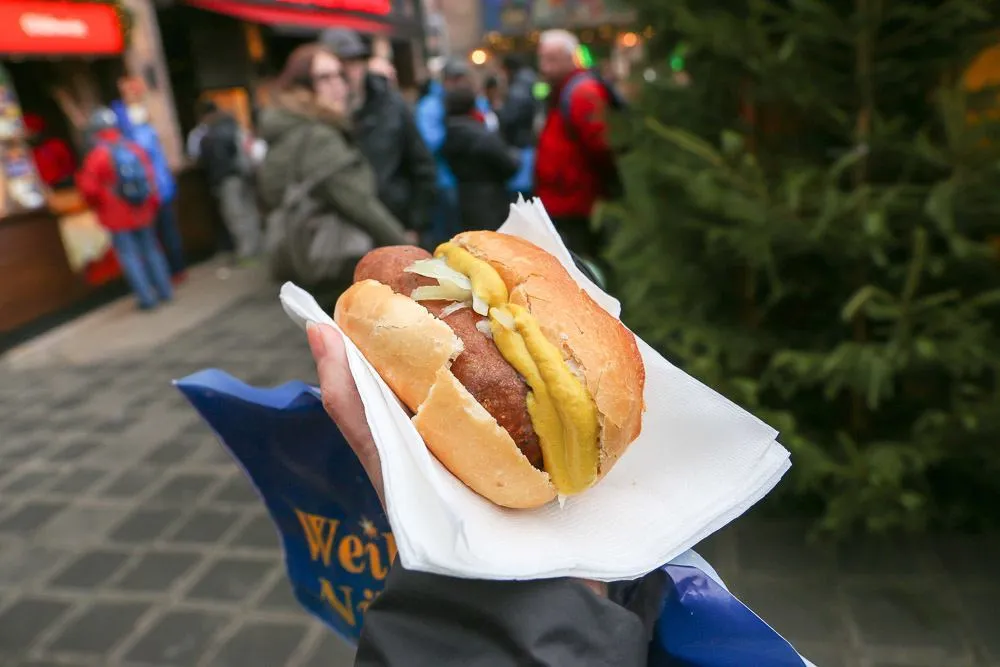
I adopted a “When in Germany…” point of view, meaning I tried the regional sausage at every single market. Much unlike other markets (some specialized in giant foot-long brats), Nuremberg’s version includes three incredibly flavorful sausages about the size of my index finger, placed side-by-side in a roll, topped with a good dose of mustard, another condiment Nurembergers do particularly well.
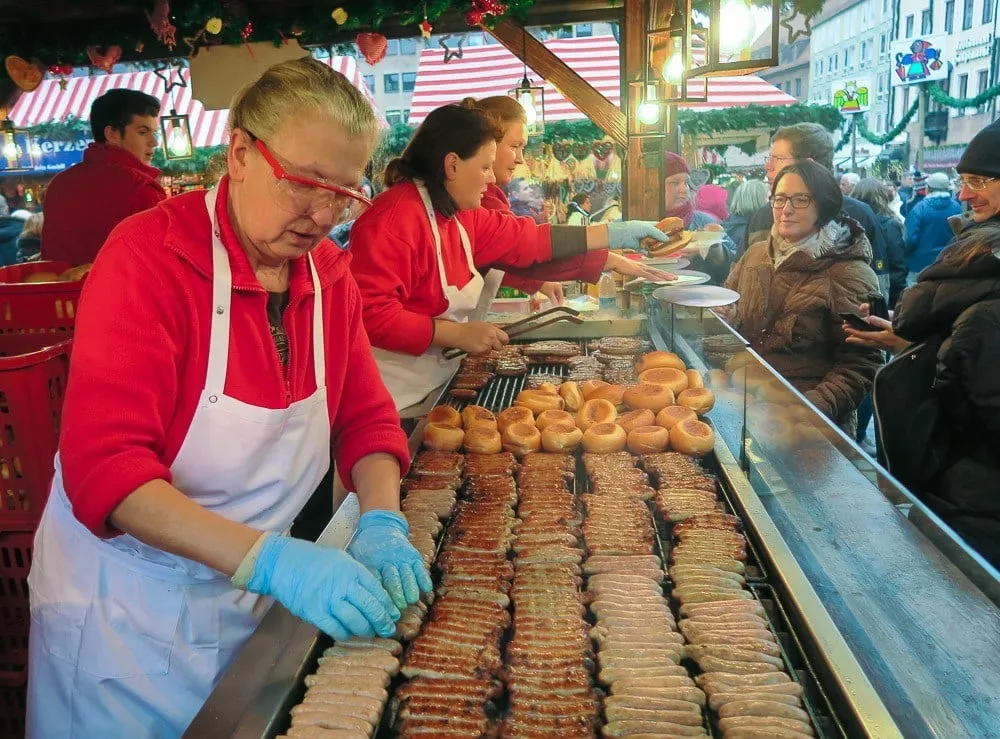
The other sausage our cruise manager described as a must-try is the German hamburger, or fleischkuechle. It might have been my favorite of the whole trip. I left with mustard all over my jacket and camera. Totally worth it.
Drink Gluhwein
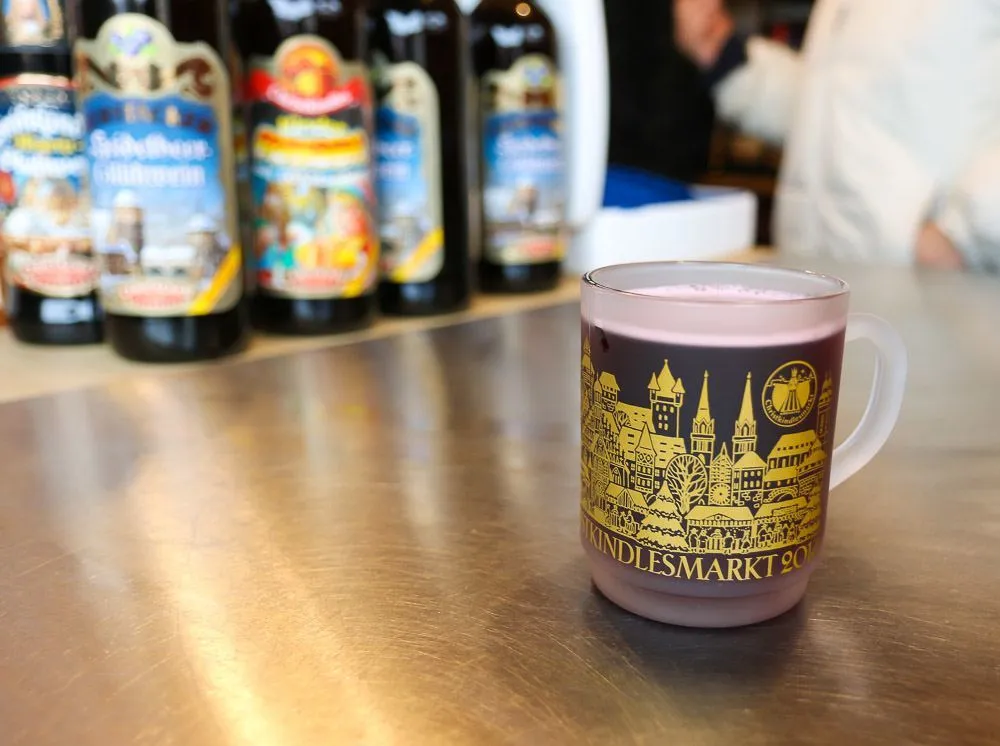
While collecting gluhwein cups makes for a fun souvenir, the drink has a practical purpose too. Winter in Germany is cold, and even the best shoes and gloves can’t prevent that damp cold from penetrating deep into your body. Gluhwein mitigates cold faster than stepping inside a warm department store. Non-alcoholic and other flavored versions are available. Just do it, even if it’s morning.
Buy Nuremberg Gingerbread
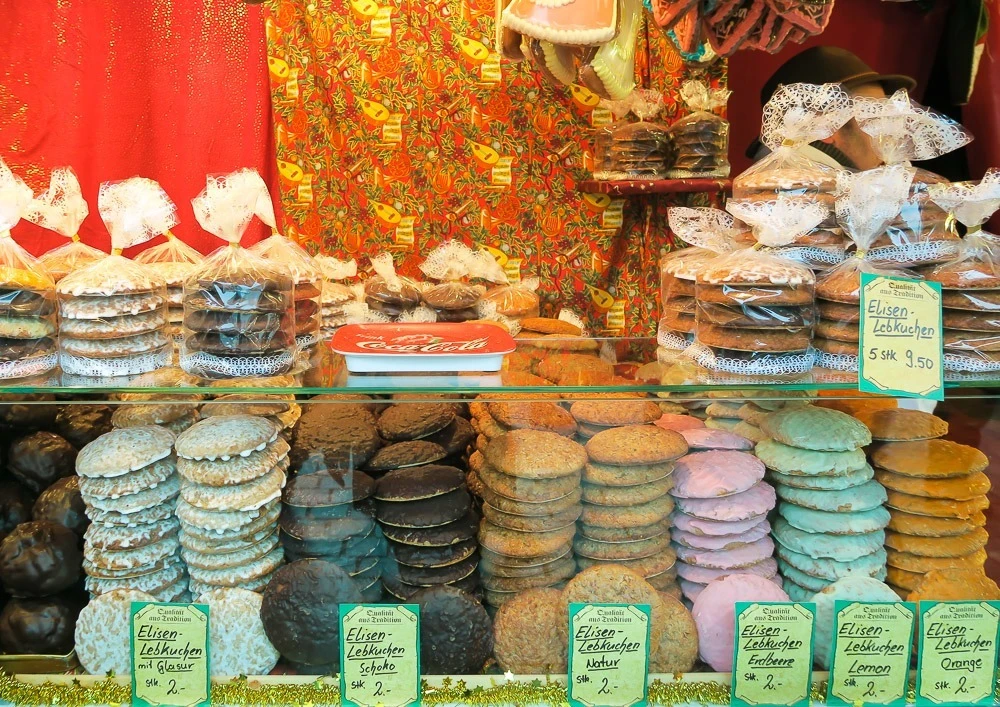
Nuremberg gingerbread, or Elisenlebkuchen, seemed softer and sweeter than other versions I tried around Germany. The city is famous for gingerbread, which has been baked there for over 600 years, and it comes in a mind-boggling array of flavors. I opted for several sampler packs from sellers with the longest lines, figuring more people in line equals better gingerbread. Our guide also said that selecting a good tin is almost as important as the gingerbread itself; decorative tins make it easier to transport gingerbread home and are often collected each year by locals.
Look for the Gold Angel (Rauschgoldengel)
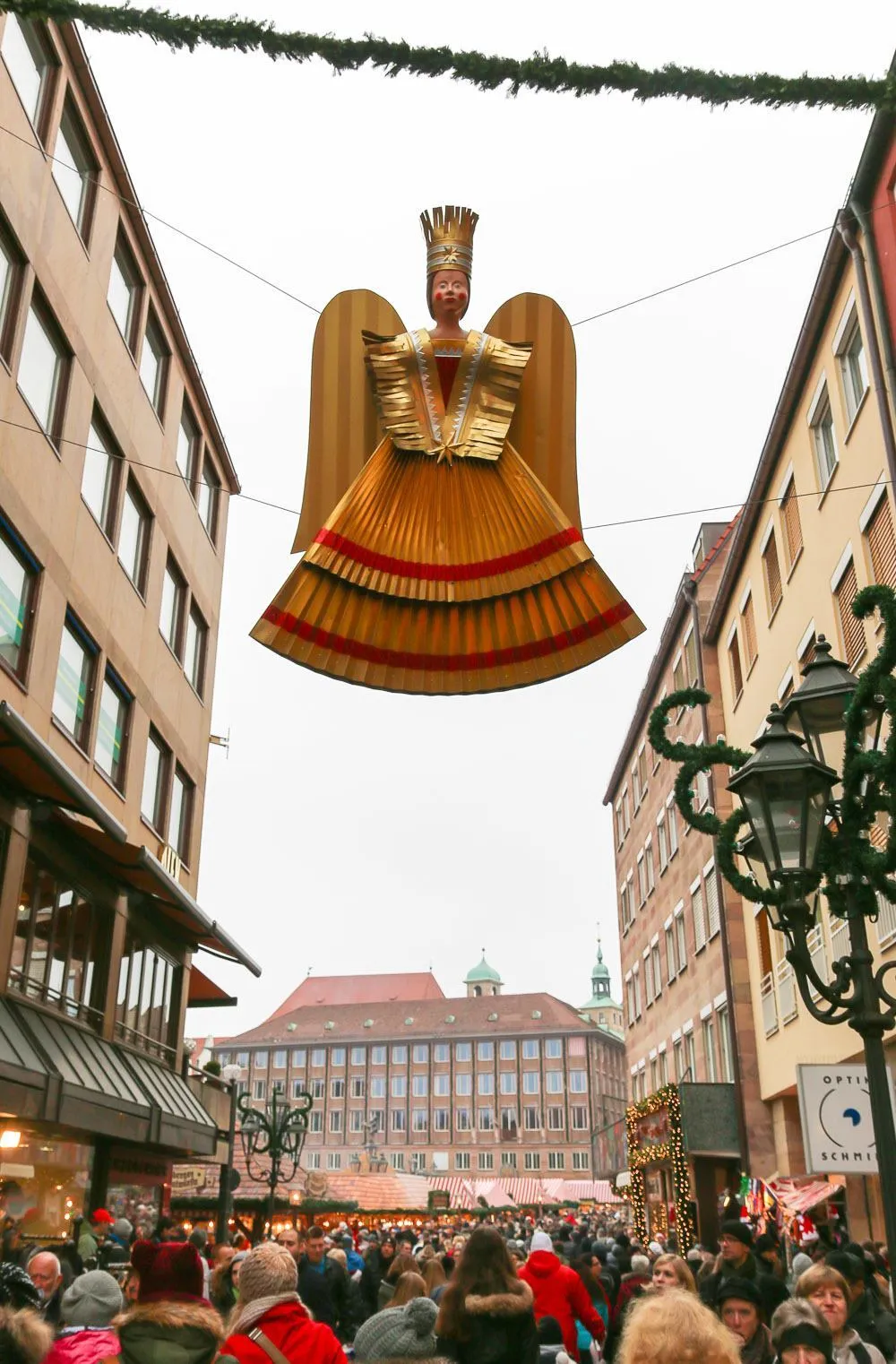
The gold angel symbolizes the Nuremberg Christmas Market and is suspended in the sky at some of the entrances, with the largest at the southern entrance. The angel is said to watch over the market and is modeled after the Christkind, the traditional German Christmas gift giver.
Shop for Ornaments, Souvenirs, and Kids’ Gifts
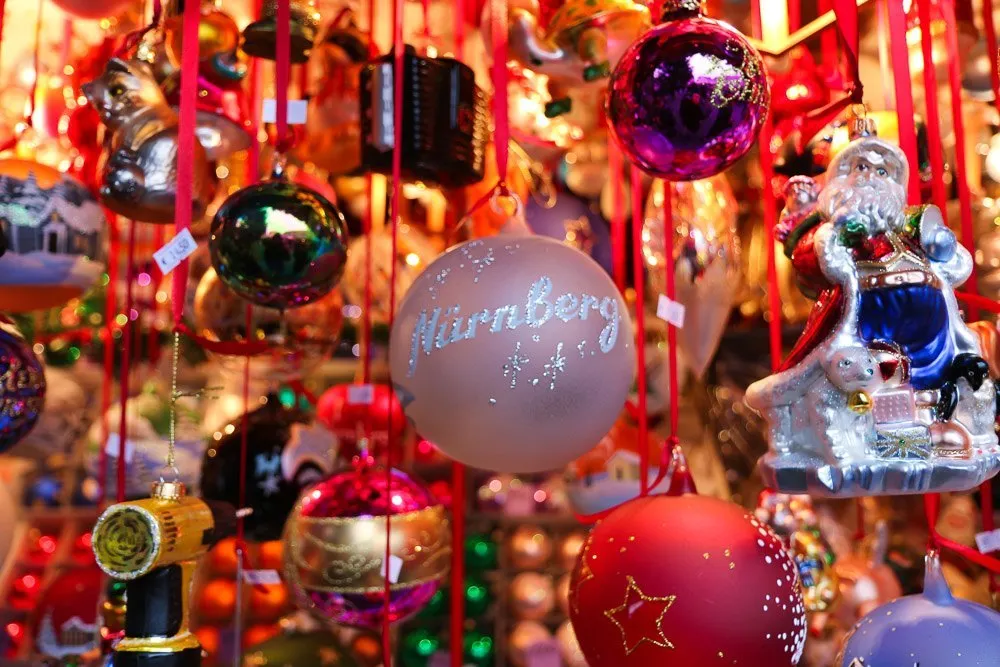
Newlyweds or those celebrating a first Christmas away from home should probably book a flight to Nuremberg just to stock up on decorations. I’ve never seen so many ornaments in one place, from glass to hand-carved wood.
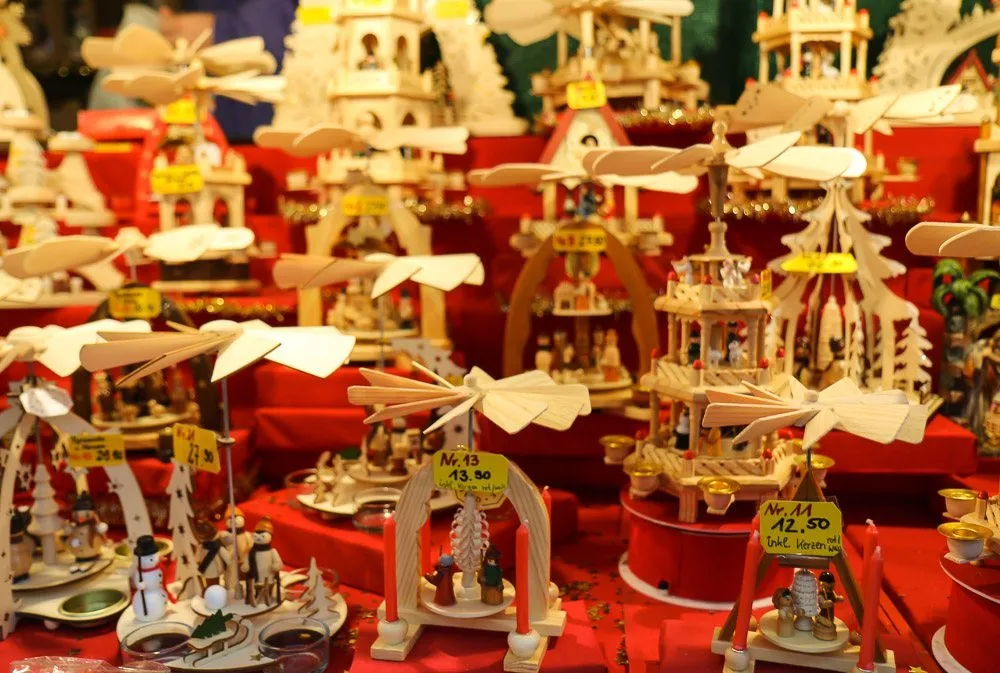
This market was dense with beautiful German Christmas decorations made by local artisans. Christmas pyramids, thought to be the predecessor of the Christmas tree, make excellent souvenirs. Most vendors also provide boxes by request.
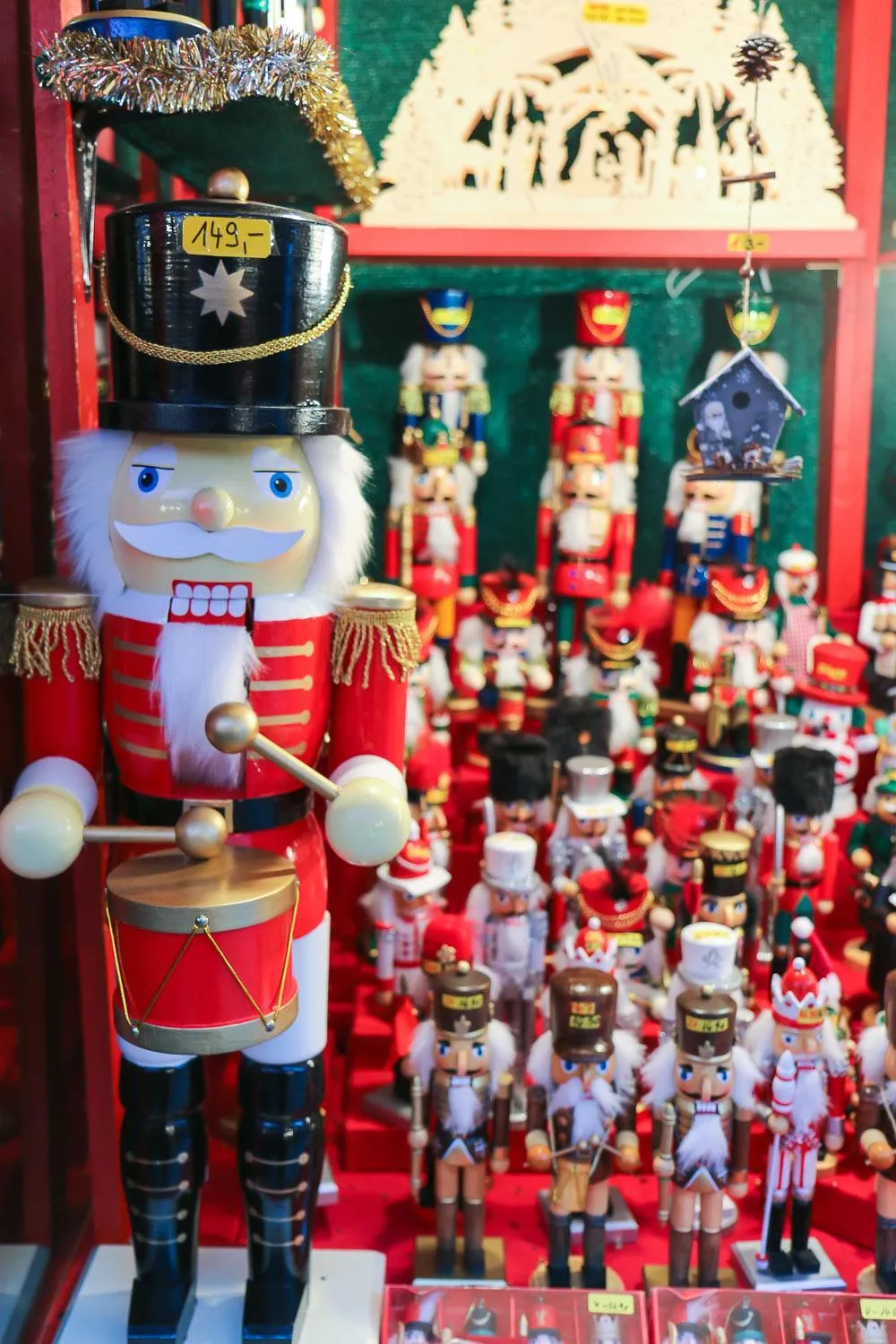
You could opt for nutcrackers that cost hundreds of euros, but if you’re looking for a nice souvenir, this market is a great place to score one without breaking the bank.
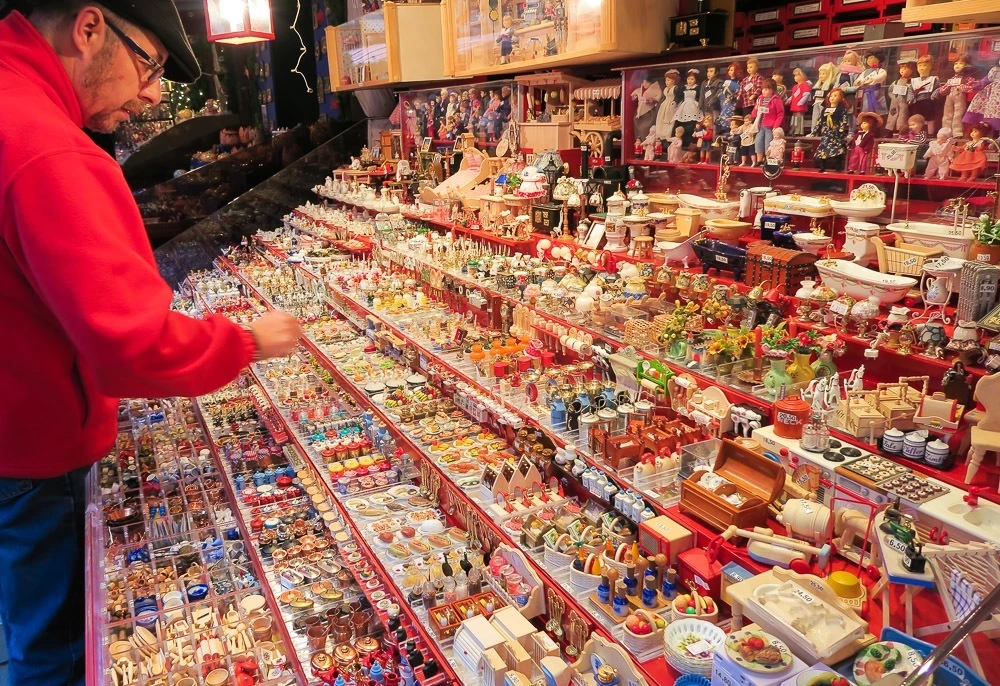
Oh, how I wish we had a dollhouse after seeing perfect miniature everything in Germany. Other gifts for kids included beautiful wooden toys, wooden puzzles, dolls, and then some. The kids also have their own Christmas market, the Kinderweihnacht, full of fun things to do and trinkets (though most of the toys and gifts await in the main market). Don’t worry, gluhwein is available there too.
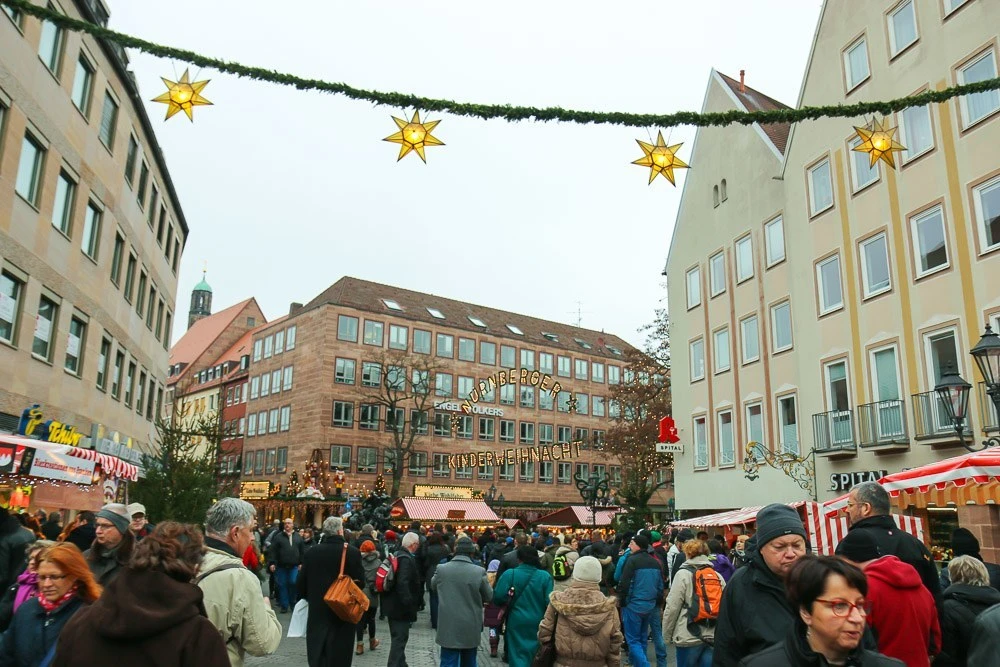
Watch the Männleinlaufen at Noon
Männleinlaufen is a mechanical clock on the Frauenkirche church that commemorates the Golden Bull of 1356. The clock was installed in the church in 1506. At exactly noon, what feels like the entire market comes to a standstill, with everyone facing the clock, watching the Holy Roman Emperor appear with the prince-electors surrounding him. It’s one of the most famous clocks in the world.
Spin the Brass Rings on the Schöner Brunnen
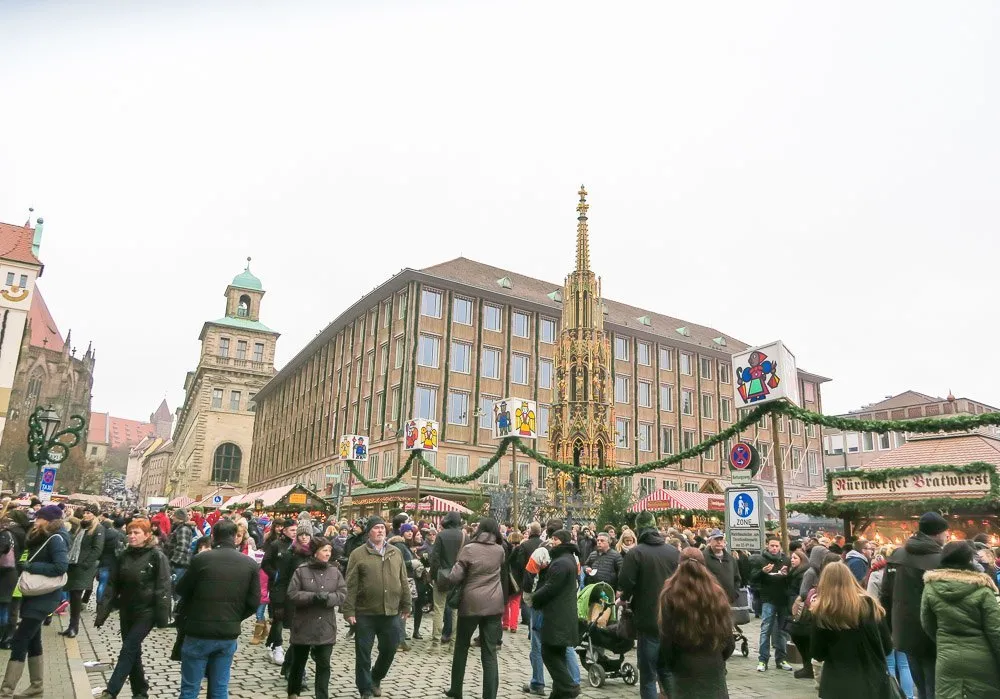
It was far too crowded for me to do this (there was shopping to do), but you’re supposed to spin the brass rings on the Schöner Brunnen (beautiful fountain) because it will supposedly bring good luck and guarantee your return to Nuremberg. It’s an excellent meeting spot too if you get separated from your group. The giant fountain has 40 colorful figures representing the world view of the Holy Roman Empire: philosophy, the seven liberal arts, the four Evangelists, the four Church Fathers, the seven Prince-electors, the Nine Worthies, Moses, and seven Prophets.
Explore the Market of Sister Cities
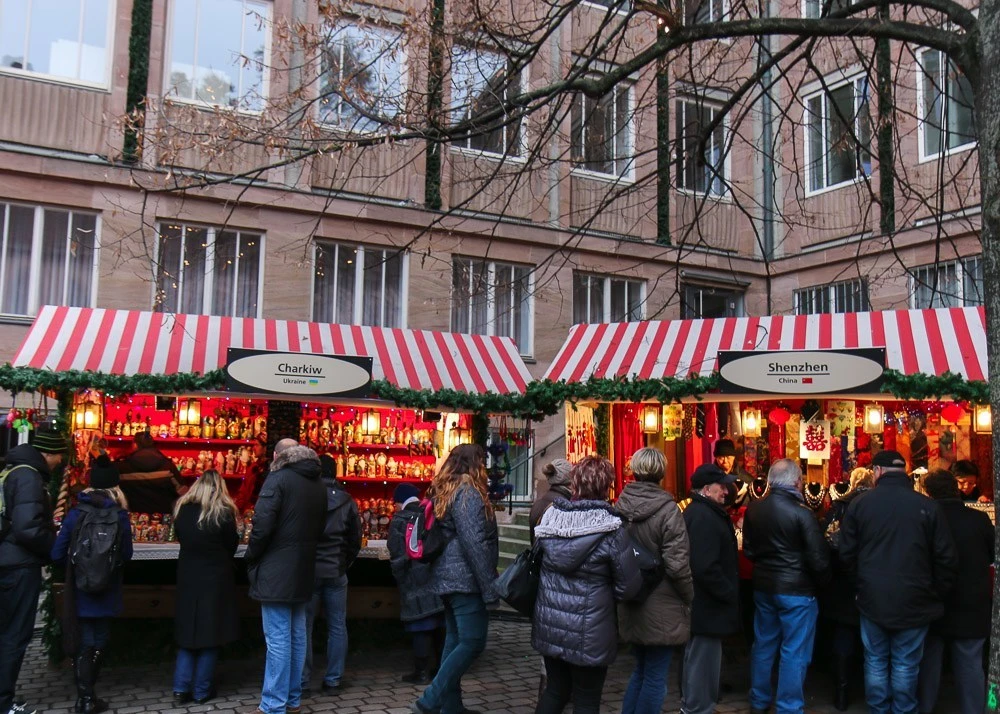
Connected to the main market via a corridor, and usually a bit less crowded. After World War II, Nuremberg strove to mend international relations through various outreach programs, including this market, with booths for sister cities like Atlanta, Glasgow, Krakow, Prague, and more. The Atlanta booth, memorably, was stocked with Jim Beam, Jack Daniels, Blow Pops, Reese’s Peanut Butter Cups, and Slim Jims.
Other Things to Do in Nuremberg
Before visiting the Christmas Market, we took a short bus tour of the city, passing sites like the Documentation Center Nazi Party Rally Grounds, St. Rochus Cemetery (consecrated in 1519 to bury plague victims), and Nuremberg Castle. Nuremberg’s role in World War II as the site of Nazi conventions and, ultimately, the Nuremberg Trials can’t be ignored, and I wish I had planned for an extra day to visit more sights. The Christmas Market alone is so big it can consume a full day.
A quick 15-minute bus ride from the market back to the River Queen ended the day. I scurried around the ship taking photos and chatting, soaking up every last moment on board right up until the last (of many) glasses of German wine at the spectacular Farewell Dinner. The next morning we disembarked in Nuremberg for the flight home, with the option to extend into Prague.
Cruising the Christmas Markets
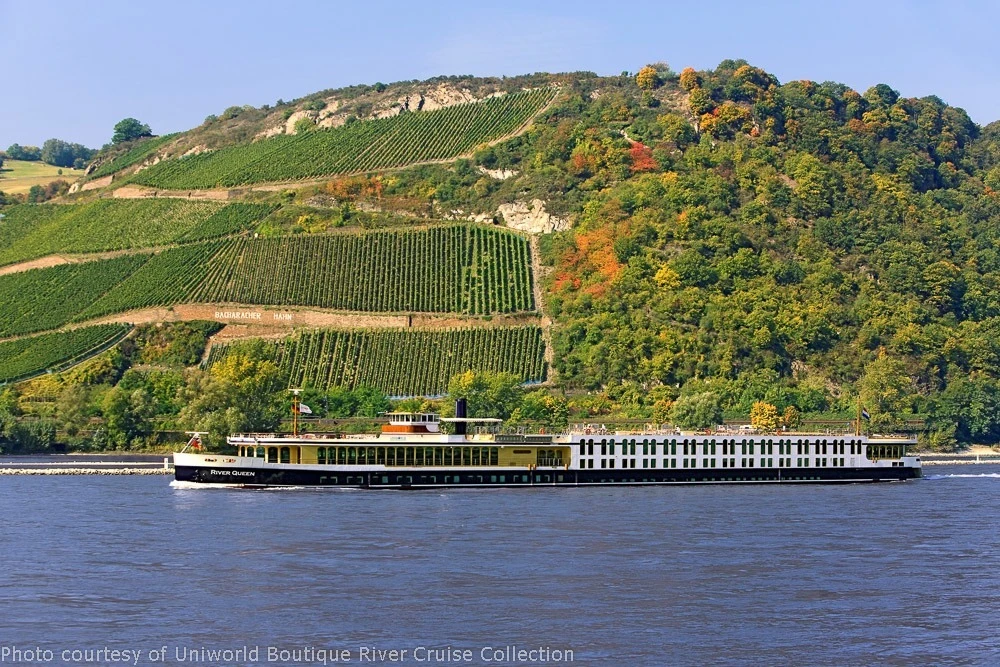
Uniworld won the Readers’ Choice Award for best “Culinary Cruise Line” in the SAVEUR Culinary Travel Awards the year I sailed. The chefs get off the boat at different ports of call in search of inspiration and local ingredients, and meals onboard are included in the price. All of Uniworld’s European itineraries include opportunities to explore centuries-old culinary traditions, including hands-on cooking experiences and private wine tastings, plus fantastic food and wine onboard.
My category 1 cabin looked something like this, or this.
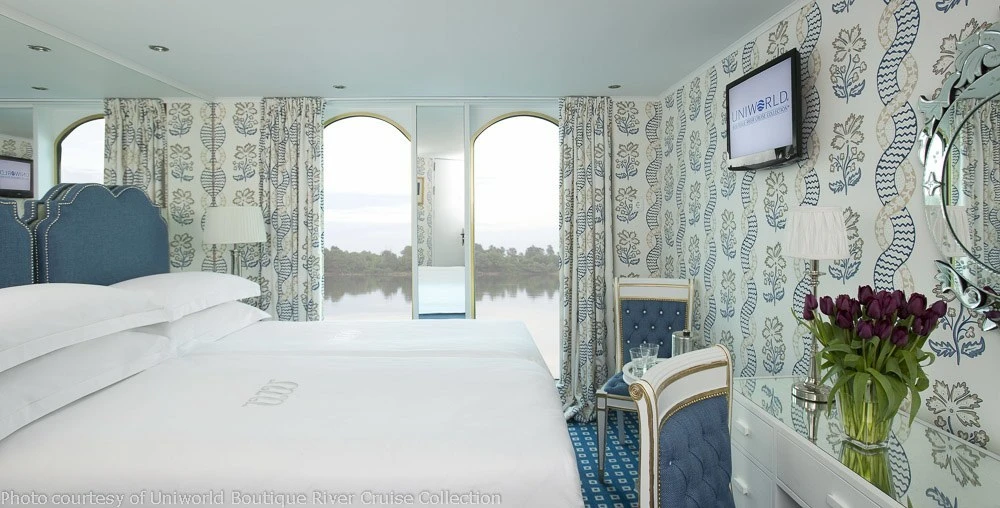
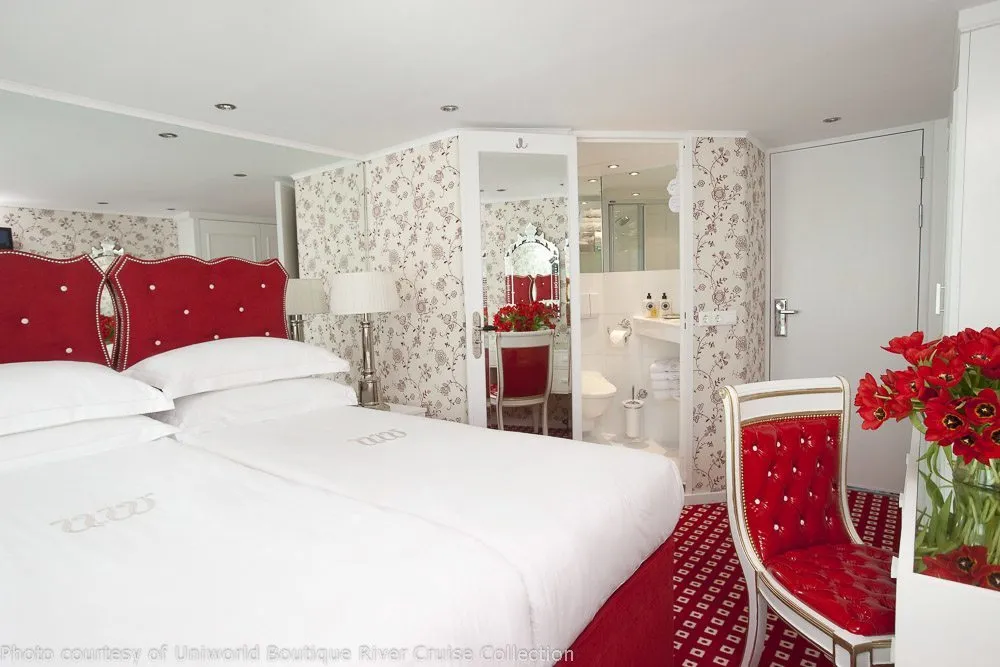
When I wasn’t out filling the extra suitcase I inevitably needed, I was having a cocktail in the lounge. The ship has free WiFi too.
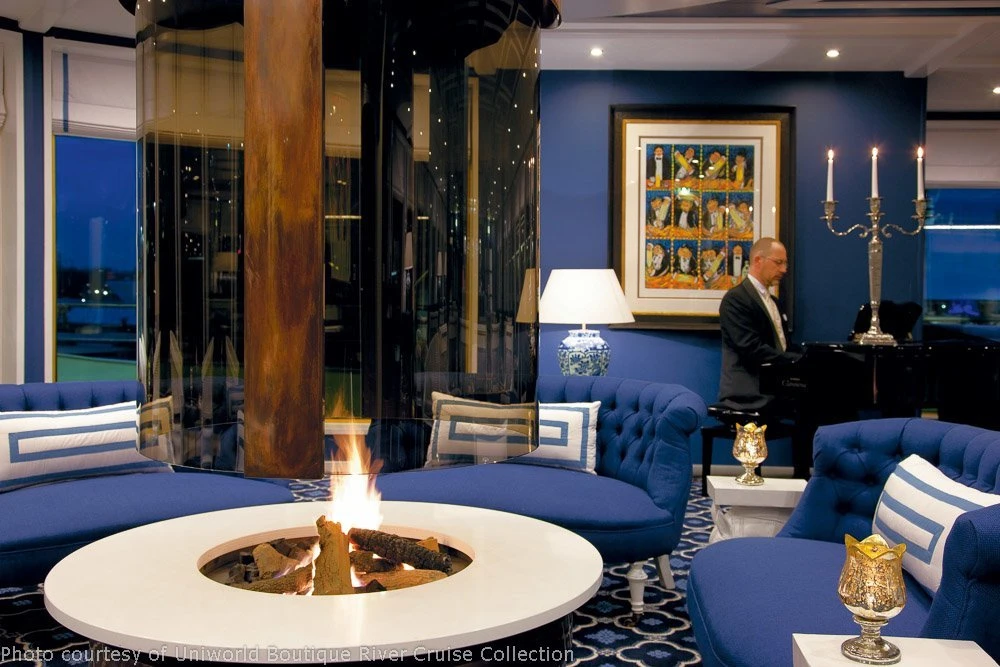
There is no tipping onboard the River Queen (it’s included in the rate) and no ATM on board, so the only cash you’ll need is for the markets themselves. The charismatic cruise manager gave a nightly update on the following day’s schedule, and there’s a house musician who plays piano during cocktail hours and in the evenings. It’s the kind of trip where you arrive, get fed, and fall asleep in luxury linens, ready to do it all again the next morning.
I book river cruises like this one for clients regularly, and Christmas markets sailings are some of my favorite itineraries to plan. If a Germany river cruise is on your list, I can help you choose the right ship, cabin category, and departure date, and handle the details so the only thing you have to think about is which gluhwein mug to bring home. Uniworld is a Virtuoso partner, so a booking through me comes with Virtuoso amenities, and I watch their semi-annual cruise sales for the best fares.
The Christmas Window Boxes of Germany
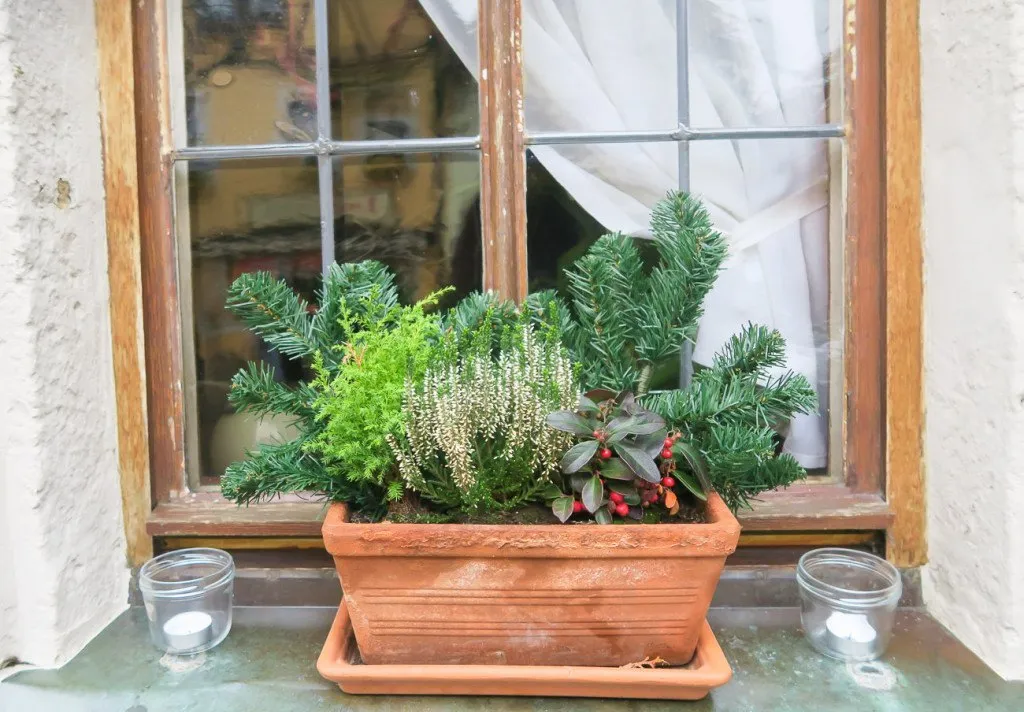
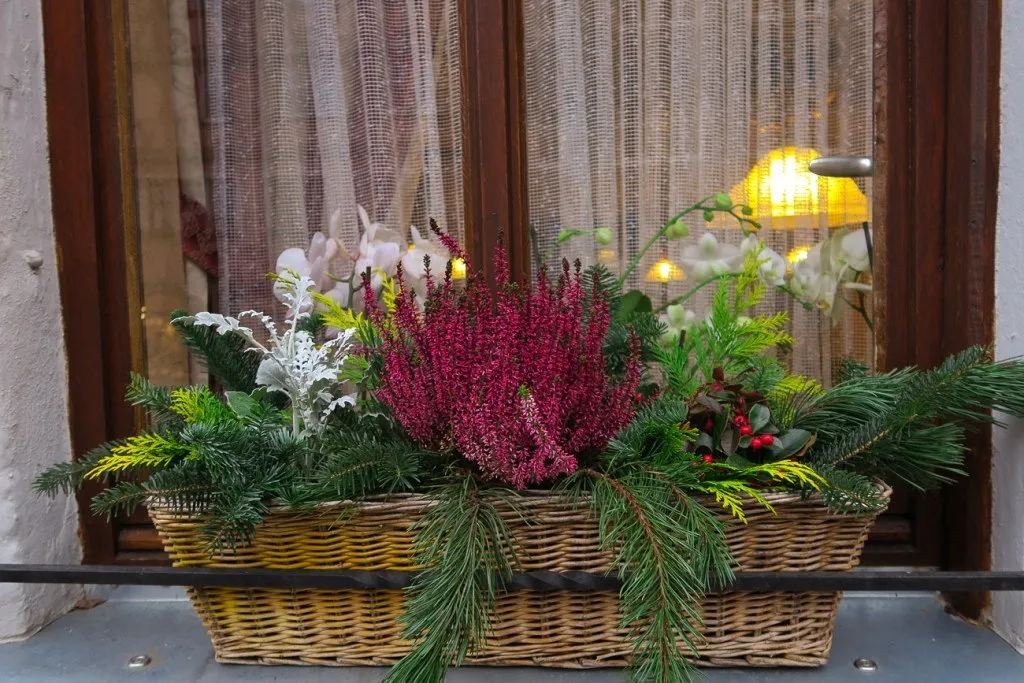
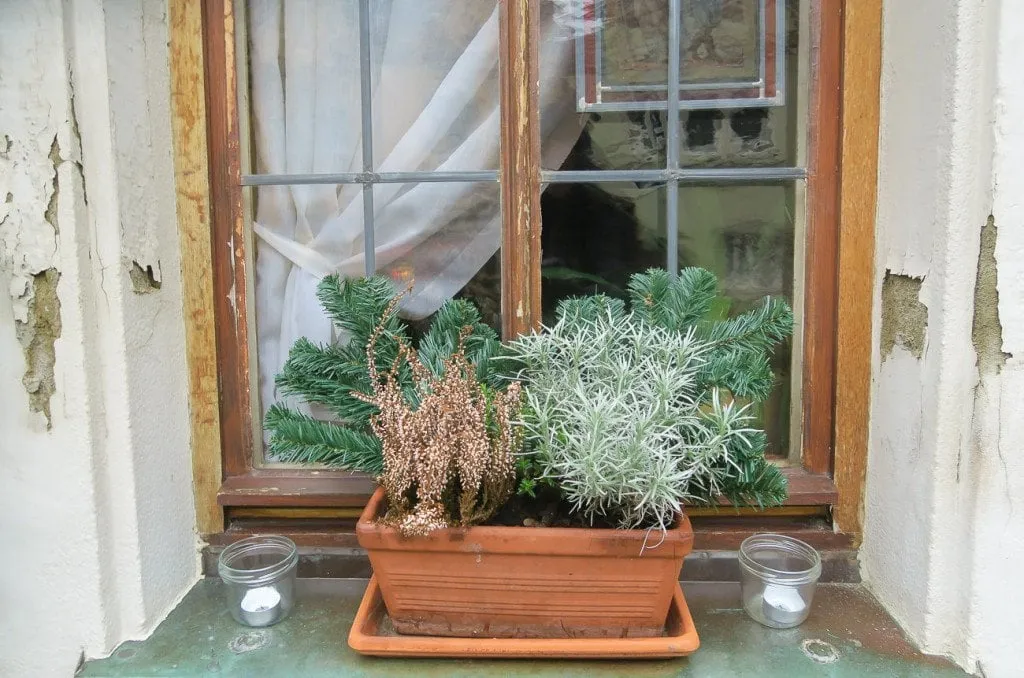
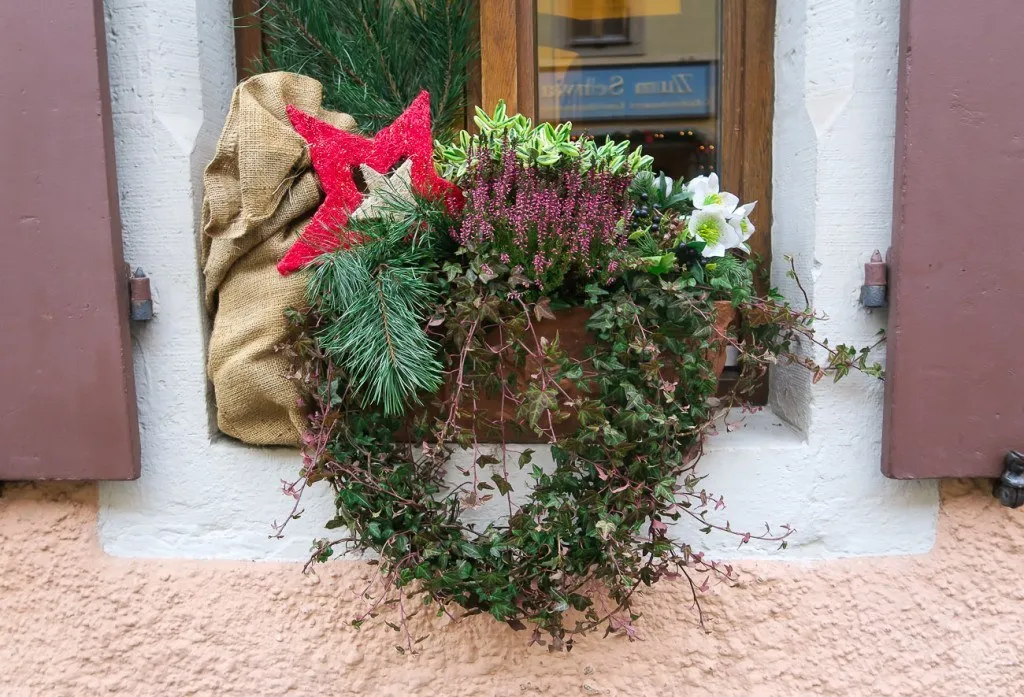
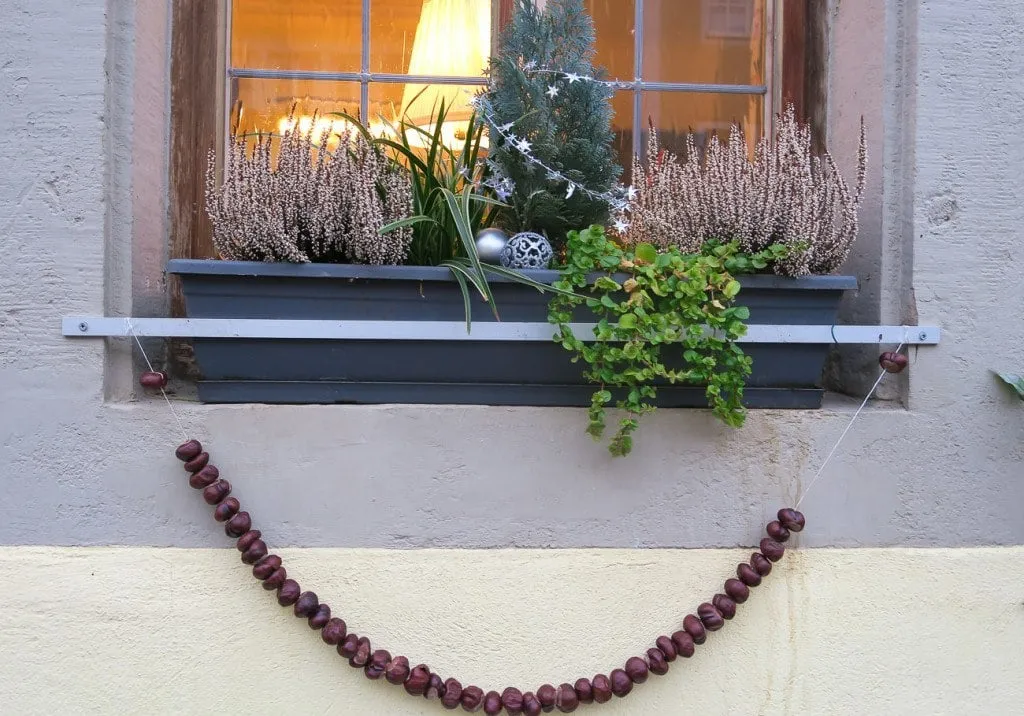
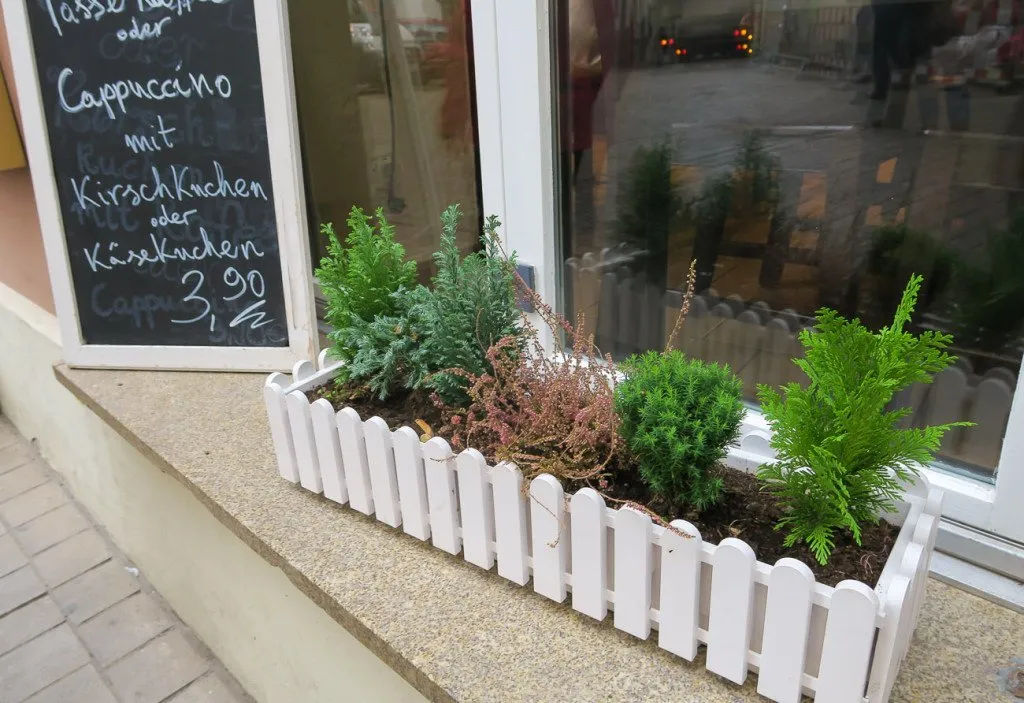
One of my favorite small details from this entire trip: the gorgeous Christmas window boxes I started noticing halfway through the itinerary. Window boxes date back centuries to the Roman Empire, which planted mini gardens in terracotta planters. Originally they served as extensions of or substitutes for a garden, housing herbs for medicines and food; as that need lessened, they became decorative, and in true Roman style, many were (and still are) incredibly lavish. The idea of window baskets traveled with settlers to America and remains popular in places like England, Italy, Holland, and Germany. Most of these photos were taken in Rothenburg, a town that revolves around Christmas.
Planning Your Own Germany Christmas Markets River Cruise
When to Go
Celebrations in Germany start on November 11, and there are many long-standing traditions, foods, and other details that are so interesting to learn about if you’re coming from the U.S. Our week’s temperatures ranged between 30 to 40°F, which is cold but manageable, though the damp air exacerbates the cold. Our cruise manager said there is usually snow and much lower temperatures at points during the season. Markets typically open in late November and run until just before Christmas, with exact dates varying by city and year.
What to Pack
As an Amazon Associate, I earn from qualifying purchases.
- A warm hat
- Leather gloves (knit won’t cut it)
- Wool socks
- Boots (people in tennis shoes that aren’t leather were uncomfortable)
- Shoe inserts for added warmth (the cold from the cobblestones can penetrate any sole)
- Scarves
- A long, thicker coat
- Crossbody bag (there are pick-pockets, the markets are crowded, and you won’t want to maneuver small stores with a bulky backpack)
- Jeans
- Thermal tights or underwear if you tend to run cold
- Sweaters (even though the boat has lovely heating, seats near the windows are cold)
- A MiFi if you want WiFi in your own room (the boat has internet in public areas)
- Heavy facial moisturizer (cold weather plus a long-haul flight is rough on skin)
- Workout clothes for morning yoga and the fitness center
If you forget something, there are plenty of department stores near the ship in Frankfurt where you can buy necessities (remember, you get a VAT refund at the airport if spending a certain amount). You don’t need to pack snacks, since there’s incredible food on the ship at almost all times, or toiletries, since full-sized bottles of a nice bath line are typically in each bathroom. You also don’t need voltage converters, as there are UK, U.S., and European plugs in the staterooms.
Getting There and Away
Frankfurt airport is modern, clean, and very easy to navigate. You don’t need to fill out a landing card to enter Germany. There’s an ATM right after baggage claim for those who prefer to exchange currency that way, usually the cheapest option. A Uniworld representative typically waits right outside baggage claim to transfer you to the ship.
On the return, some guests take the train from Nuremberg back to Frankfurt, which is easy to do and often less expensive than flying out of Nuremberg, since it’s a small airport with limited direct connections. Plan your international connection accordingly.
What to Buy and Eat, Overall
Across all six market stops, the throughlines are gluhwein (mulled wine, usually with a cup deposit you can keep or return), bratwurst and other regional sausages, gingerbread (lebkuchen), stollen, hand-blown glass ornaments, wooden toys and pyramids, and knitwear. Every market has a carousel for the kids. Budget a little extra cash for market purchases; card acceptance is spottier at the stalls than in shops and restaurants.
FAQs About a Germany Christmas Markets River Cruise
What is the route for this river cruise?
The Classic Christmas Markets cruise sails the Main River between Frankfurt and Nuremberg (in either direction), stopping along the way in Wertheim, Würzburg, Rothenburg, and Bamberg, with excursions to each city’s Christmas market.
Which Christmas market is the best one to prioritize?
If you can only choose one, make it Nuremberg’s Christkindlesmarkt, Germany’s oldest and most famous. Rothenburg is my personal favorite for atmosphere and small-town charm.
Do I need to speak German?
No. English is widely spoken at the markets, shops, and on board the ship.
Is a river cruise the best way to see the Christmas markets?
It’s one of the easiest ways to see several market towns in a short trip without repacking and re-checking into hotels along the way. If you’d rather build a custom land-based itinerary instead, I can help with that too.
Have you been to the Christmas Markets in Germany? Which stop is on your list?






I’m sold! Any chance you have room in your suitcase? : )