
You’ve booked flights, a hotel, and non-refundable tickets or a sightseeing pass but unusual San Diego weather is in the forecast. Should you still visit San Diego Zoo in the rain?
If you’re willing to get a little wet, you may have a more exclusive and active animal experience in ways that don’t usually happen in sunshine. Believe it or not, I know some annual passholders and Zoo staff members who strongly prefer less crowded rainy days because some animals love rain and mud.
Key Takeaways
- Open rain or shine: the Zoo says it is open every day of the year, including all holidays, no matter the weather.
- No rain checks or refunds: the Zoo does not refund or exchange tickets for inclement weather or a closed habitat.
- You may have time: our discounted 1-Day and 2-Visit tickets are valid for one year from the date of purchase, so a washout does not have to be spent today.
- Parking is no longer free: the Zoo began charging for parking in January 2026, and it is first-come, first-served.
- Some things close: the Zoo can close habitats, tours, and entertainment for weather without notice, and it posts the day’s closures at the main entrance. The San Diego Zoo app carries them too, which I recommend checking in good weather as well.
- The #1 thing to bring is extra socks: put a few pairs in a dry Ziploc bag to avoid sloshing around in your sneakers.

1-Day Pass — Use My Exclusive 2026 Promo Code
Skip the ticket line and go straight to the gate with a mobile or printed ticket. Valid for one year from the purchase date.
Adult (12+) $70 $78
Child (3–11) $60 $68
Save $8 per ticket with my promo code
Tap to copy your $8-off code:
Why San Diego Zoo Is Doable in the Rain
The Zoo is situated in Balboa Park, and the fact that it’s also a botanical garden gives it a rainy-day advantage.
- Natural umbrellas: bamboo groves, large ficus trees, and fern canyons cover long stretches of the forested pathways, which is enough in a drizzle and not enough in a downpour.
- Indoor spaces: the Reptile House, the Hummingbird Habitat, and the two buildings at Wildlife Explorers Basecamp are fully enclosed, which is where you go when the rain gets heavier.
- Covered dining and shops: you can also seek refuge in some of the covered dining and retail areas, though the seating can be wet because most dining patios are open air.
- Paved paths: nearly all walking paths are concrete or asphalt, which drain well, partly thanks to the hilly terrain.
- The app is your guide: you can see the map and the day’s closures in the San Diego Zoo app in real time.
Exit and Re-Entry
If a heavy shower rolls in and you’d rather wait it out, you can leave and come back the same day. Get a hand stamp on your way out and hold onto your original ticket, because the turnstiles want both. Balboa Park’s indoor museums are a short walk away.

What to Bring When It’s Raining
Here are some things to consider packing:
- a compact travel umbrella
- extra socks
- extra clothes for the kids in case they get wet
- rain coat or poncho
- rain cover for your stroller or wagon
- plastic bags for your wet socks or anything needing protection from rain
- a small towel (microfiber dries quickly) for wiping down slightly wet surfaces or your phone lens
- snacks and refillable water bottles as some of the smaller snack stands may close
- an extra poncho or garbage bag for seating, because many people use them to cover wet benches
- an external battery for your phone because you will rely more heavily on the Zoo’s app to alert you of closures and to find indoor sanctuaries
Wear shoes with good grip because while the terrain is paved, there can be slopes and slippery spots. You will see a lot of people in rain boots (hopefully comfortable ones for all the walking).
It’s a good idea to collapse your umbrella when you don’t need it as they can spook some animals.
Parking Now Costs Money
If you have been to the Zoo before, this is the thing most likely to trip you up. The Zoo started charging for parking on January 5, 2026, in alignment with the City of San Diego, and the lot is run by ACE Parking on a first-come, first-served basis. Parking is not included with any ticket, ours or anyone else’s.
- Cars and motorcycles: $16 per vehicle, per day.
- Oversized vehicles: $44 per vehicle, per day.
- City of San Diego residents: $8 per vehicle and $22 per oversized vehicle, per day, with advance registration. Worth doing before you leave the house.
- Members: complimentary, after registering the vehicle through the Zoo’s member parking portal, which is linked from its plan your visit page.
- Active-duty U.S. military: register the vehicle at a ticket booth window when you arrive.
- Overflow: additional paid parking is available throughout Balboa Park.
There is also a free satellite shuttle from the Inspiration Point lot, one mile south at Park Boulevard and Presidents Way, which uses the bus lane and skips the Park Boulevard traffic. It runs on select days only, and it does not start until 11 a.m., so it is no help to an early arrival. Member parking is not complimentary there either.
Arriving early is the difference between parking near the entrance and walking in from the far end of the lot, and that walk matters more in the rain than it does on a dry day.
Ride the Guided Bus Tour First

Does the San Diego Zoo bus tour run in the rain? It typically does, and they are not going to run it if conditions are not safe. The Zoo does not publish a weather rule for it, so check the app for the day’s hours of service before you count on it, which is what its own bus tour page tells you to do. When it is running, it is the best thing on the property in bad weather.
- What it is: a narrated, 35-minute round trip on the double-decker buses. It is included with every admission ticket and with membership, it boards near the Zoo entrance, and there is no reservation. First come, first served.
- Where to sit: you’ll sit on the lower deck, which is roofed, and they will close the side windows in poor weather. You’ll stay dry and comfortable while the driver takes you around the grounds.
- Why do this first: you get to see a lot of animals from the dry comfort of the bus. If the rain gets heavier later or you decide to cut the day short, at least you’ve seen the Zoo from the tour. It also helps you plan the rest of your visit by showing you which animals are active and which areas you may want to explore further.
- If you prefer Spanish: the Zoo runs a Spanish-language tour at 1 p.m., booked at the Tours & Memberships window at the entrance.
I personally still enjoy this bus because no two rides are ever the same and there’s always something new to learn about the Zoo or animals from the narrator. Parents use it as a time to rest kids’ legs, take power naps (kids and babies do sleep on it), and snack.
Where to Go When It’s Raining
The Zoo conveniently has clusters of indoor exhibits or heavily sheltered areas, and most are along Front Street near the entrance. Here are some smart stops that maximize animal time and minimize getting soaked.
Wildlife Explorers Basecamp (Former Children’s Zoo)
This area is a fun rainy-day refuge for younger kids, and it comes in two halves. The four nature play areas are outdoors, and one of them, Wild Woods, is a waterfall grotto built to soak you. The two buildings are the ones to head for in the rain.
- Cool Critters Reptile House: an underwater-themed building with a moving river of light overhead, plus a rare Fijian iguana, a South American lungfish, an axolotl, a Chinese giant salamander, and microscope stations the kids can actually use.
- Spineless Marvels Invertebrate House: a two-story greenhouse of butterflies, grasshoppers, bees, and other invertebrates, with dark caves to explore and an entire leafcutter ant colony to inspect.

Why it’s great: it’s engaging, educational, and completely covered. Kids can easily spend an hour here with the creepy-crawlies and interactive exhibits while you wait out a rain squall. There are also restrooms and the Busy Bee Café nearby. And because the play areas get children wet by design, Basecamp has full-body dryers you can pay a few dollars to use.

Reptile House
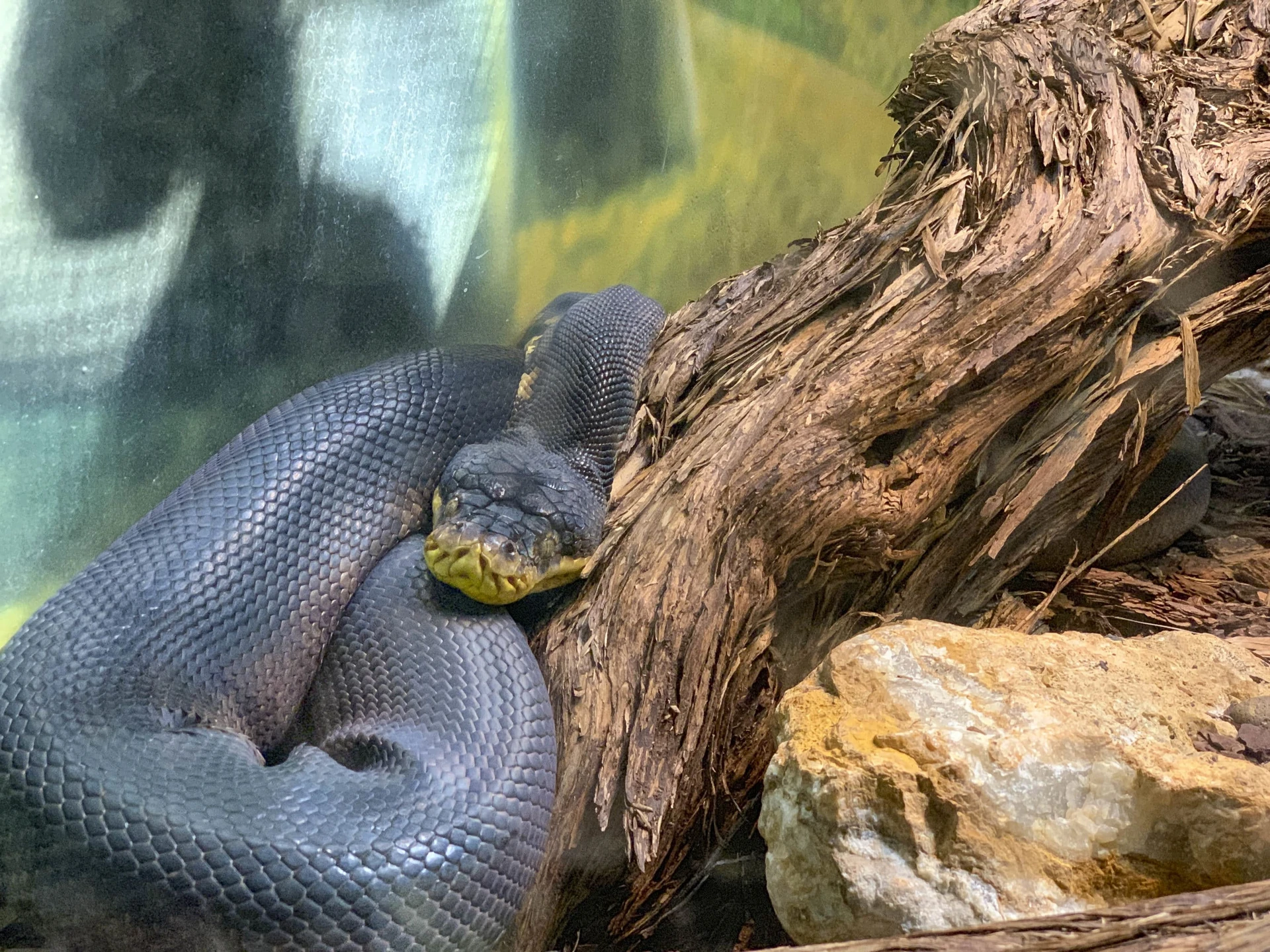
This historic building near the Zoo entrance is fully enclosed, and it’s actually kept toasty warm for the reptiles. By the time you’ve seen the giant pythons, geckos, and everything in between, you’ll have warmed up and dried off a bit. It might be busy here as the building itself isn’t huge. First Aid and the Mothers’ Room are next door, which is worth knowing with a baby on a cold day.
Hummingbird Habitat
Right next to the Reptile House is a small, enclosed walk-through aviary full of gorgeous hummingbirds. The Komodo dragons are adjacent and definitely worth stopping by in case they’re out.
Lost Forest Trails (Hippos, Monkeys, Tigers)
You’ll see the flamingos when you enter the Zoo. To the left of them, use Monkey Trail to start your way into Lost Forest, one of the best areas to explore when it’s raining. Dense trees and even bamboo provide natural cover, and several trails here offer sheltered views and indoor experiences. You could spend a whole day on these trails alone.
Lost Forest Trails Worth Visiting in Wet Weather:
- Fern Canyon Trail: A scenic, shaded downhill path past waterfalls, birds, and aviaries. Not stroller-friendly.
- Hippo Trail: Ends at a dry, enclosed hippo viewing cave, where you can watch them swim from indoors.
- Monkey Trail: Features monkeys, birds, and lush canopy cover with overhangs near exhibit areas.
- Tiger Trail: Loop through mangrove-like habitats with tapirs and Malayan tigers with partial shelter available.
- Treetops Way: Leads uphill to Bashor Bridge and elevators and connects Lost Forest to the mesa and dining spots.
Tip: Elephant Odyssey is on the other end of Bashor Bridge!
Scripps Aviary
You’ll find big walk-through bird aviaries in the Lost Forest area. They are outdoors, but completely netted over the top, and feel like stepping into a rainforest thanks to the myriad of lush tropical plants that can catch drizzle. Some birds love fluttering about, singing, and bathing in puddles when it rains. There’s also the Parker Aviary just off Treetops Way.
What Closes When It Rains
The Zoo publishes no rain rule to plan around. Habitats, tours, restaurants, transportation, and entertainment can all “change or close without notice and without liability” for weather, and even the Guided Bus Tour and Skyfari, both included with admission, are included “subject to availability.”
What you get instead is the closure list posted at the main entrance, and the same list in the app. Check both before you build your route.
Two things are most likely to go.
Skyfari Aerial Tram
The Skyfari is the gondola that normally zips you over the treetops from one end of the Zoo to the other, and its published schedule is daily from 10 a.m. to close. It can close in bad weather. If it’s just light rain with no wind, they sometimes keep it running, since the gondolas are covered, but wind or lightning will shut it down.
Plan to walk: the grounds are hilly, and the Zoo warns about steep grades in parts of them. Africa Rocks has some of the steeper ones. Everything is paved, and I don’t find the walk too difficult, but Skyfari is what normally saves people the climb. When it’s down you can use the elevators instead, and the Zoo runs an on-call shuttle for guests with mobility-related disabilities that you can request from any team member.
The Outdoor Wildlife Presentations
There are three of them every day, and all three are outdoors. Africa Rocks Encounter is on the Africa Rocks Stage, there is one at the Rady Ambassador Presentation Area, and Wildlife Wonders runs at Wegeforth Bowl, the amphitheater, for 15 to 20 minutes. All three land in the middle of the day, so when it is actively raining, expect them to be canceled. Times and any cancellations are on the Zoo’s wildlife presentations page and in its app.
Most other exhibits stay open. Habitats here are designed to let animals step out of sight whenever they want, which is why nobody can promise you a specific animal on a specific day, rain or not.
Best Places to Stay Dry While Eating
Albert’s Restaurant is the best place to eat because it is the Zoo’s only full-service restaurant, it has indoor dining, and it is tucked into the Lost Forest zone where you’re likely to be exploring anyway. There is also a patio with a private waterfall and a full bar.
I like eating here because the food is surprisingly good for a theme park and they serve beer and wine. Two things to plan around. Albert’s serves lunch and closes in the middle of the afternoon, so it is a midday plan and not a four o’clock one. And you should make a reservation on OpenTable as soon as possible, because you won’t be the only person with this idea.

The rest of the Zoo’s dining is counter service with covered patios, which helps in light rain without being fully dry. Where they are matters more than what they serve when you’re trying not to cross the park in a downpour:
- Front Street Sweet Shack: right across from the Reptile House, so it pairs with the driest stop at the front of the Zoo. Shakes, sundaes, and chicken strips.
- Safari Kitchen: also on Front Street, and the one to pick if you want a real meal near the entrance. Burgers, crispy chicken sandwiches, and loaded tater tots.
- Sabertooth Mexican Grill: I like eating here, rain or shine, but know that it is in Elephant Odyssey, up on the mesa at the far end of Bashor Bridge. Worth it if you’re already up there, a long wet walk if you’re not.
- Treetops Bistro: in Lost Forest with multilevel decks, and the closest grab-and-go if you’re working the Lost Forest trails.
- Sydney’s Grill: in the Australian Outback, with the added bonus of being near the koalas. I would duck in to see if they’re out, but they’re probably not moving (they don’t move a ton in normal weather either).
- Hua Mei Café: in Asian Passage, which is where you’ll be if you’ve gone to see the pandas.
And of course, you’re always welcome to bring your own food and sit anywhere you like to eat it. See my guide to San Diego Zoo food policies and where to eat in San Diego Zoo.
Animals: Who Loves the Rain (and Who Doesn’t)
One of the best perks of a rainy zoo day is how the animals respond. Many people assume animals hide from the rain. In reality, plenty of them become more active and playful, and the Zoo says as much itself. The primates are the exception it names, and they are the ones that tend to go off view. While I can never guarantee who you will or won’t see, here are the usuals.
Rain-Loving Wildlife

Elephants (Top Pick)
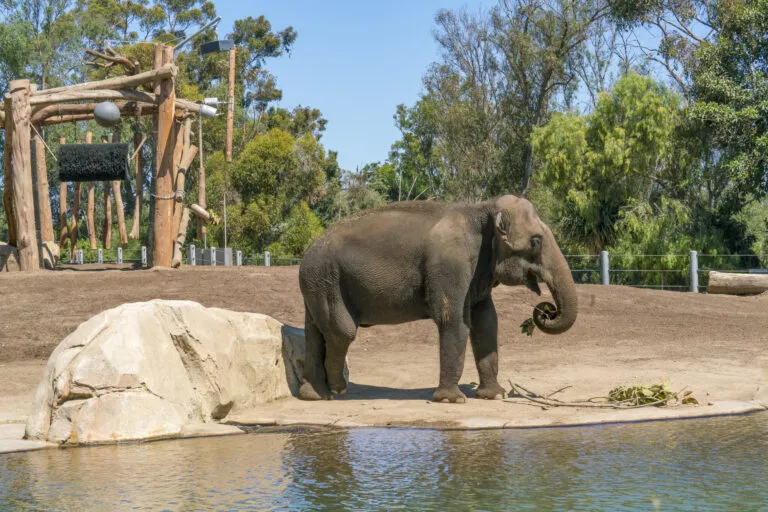
Elephants absolutely love the rain. At both the Zoo and Safari Park, you’ll often see the elephants flapping their ears, splashing in puddles, and coating themselves in mud, which is their version of a spa day.
Tigers
Unlike housecats, tigers don’t mind water. They regularly swim on hot days, and on cooler rainy days, they are more actively pacing and giving visitors a show.
Giant Pandas
These bears are built for cool, wet weather with thick fur that repels water. On a drizzly day, you might still see the pandas, Yun Chuan and Xin Bao, sitting out in the open at Panda Ridge, contentedly munching bamboo. If it truly pours, they can take themselves out of view like any animal here.
Polar Bears
What’s also nice about the Polar Bear Plunge exhibit is that the viewing area is covered. So you can take a seat and hopefully see some of the bears swim in their pool.
Pygmy Hippos
They’re in the water anyway and also in the Lost Forest, so be sure to see them. Their viewing area is also covered.
Rhinos & Giraffes
These safari icons are pretty indifferent to showers and usually keep grazing as usual. This means you’ll still see them out and about. Rhinos also tend to love mud.
Those That Prefer to Hide
Gorillas & Orangutans
These great apes are a lot like us and don’t love getting wet. At the Zoo’s Gorilla Forest, if it’s raining heavily, you’ll likely spot exactly zero gorillas outside. They have comfy heated indoor rooms and outdoor rock shelters. Orangutans are similar and might stay in their treehouse. So temper your expectations for ape encounters in a downpour.
Reptiles (outdoor species)
Animals, such as Galápagos tortoises, or other reptiles with outdoor yards, are usually given access to their heated indoor dens when it’s cold and wet. They often choose to stay inside or remain inactive.
Most other animals will be hit-or-miss. Many will be active simply because it’s cooler. Birds tend to be more vocal. And some animals might hide. It’s a bit of luck, but generally a rainy day yields more action than a hot summer day.
Indoor Shops
On a wet day the shops are shelter. Five of them sit along Front Street, which is flat and close to the entrance: the Kids Store, Zootique, the Roar Store, Mercado, and Front Street Photos. The Kids Store and Zootique are the two big ones, and I do enjoy stopping in for birthday gifts and to browse books.
Sweets & Treats is inside the Kids Store, so you can get a coffee and fresh fudge without stepping back outside.
San Diego Zoo on a Rainy Day FAQ
Is the San Diego Zoo open when it rains?
Yes. The Zoo is open every day of the year, rain or shine, including all holidays. Rain does not close the Zoo. It can close individual habitats, tours, and shows, and the Zoo posts a list of the day’s changes and closures at the main entrance, which is also in the San Diego Zoo app.
What is the San Diego Zoo’s rain policy?
There isn’t one you can plan around. Habitats, tours, restaurants, transportation, and entertainment can all change or close without notice for weather, and refunds and exchanges are not possible for inclement weather or a closed habitat. The Guided Bus Tour and Skyfari Aerial Tram are included with admission “subject to availability,” which is the phrase that covers a weather closure.
Does San Diego Zoo offer rain checks or refunds for bad weather?
No. Tickets are non-refundable and non-exchangeable, and that applies to weather. The better news is timing. Our 1-Day and 2-Visit tickets are valid for one year from the date of purchase, so if you have flexibility you can simply come another day. Check the fine print on what you bought, because a Value Days ticket is only good on the Zoo’s designated Value Days.
A ticket that does expire unused still isn’t worthless. The Zoo will take it in person at a ticket window for 25% off a current 1-Day Pass. But if you’re only in town for dates with rain, your best bet is to put on that poncho and go enjoy the empty park.
Is the Zoo mostly indoors or outdoors?
It’s primarily an outdoor park where you’ll walk between wildlife exhibits. The indoor and covered options are real but limited: the Reptile House and Hummingbird Habitat near the entrance, the Cool Critters and Spineless Marvels buildings at Wildlife Explorers Basecamp, the covered viewing at Polar Bear Plunge and the hippo cave, the Front Street shops, and Albert’s for lunch. Everything else is open-air with covered patios and tree cover.
Will it be crowded if it’s raining?
Not at all, and this is arguably the best part of a rainy visit. On a moderately rainy day, you might feel like you have the whole place to yourself. There will be very few tourists, and the people who will be there are the locals with memberships who know it’s a great time to go.
And with fewer people in front of an exhibit, you get to stand there and watch instead of waiting your turn.
What if there is lightning or a thunderstorm?
The Zoo does not publish a lightning policy. Skyfari is the first thing to go in wind or lightning, and because closures happen without notice, the way you find out is the app, the closure list at the main entrance, and announcements in the park. Check all three during your day.
Where’s the largest cluster of rain-friendly activities?
You can spend an entire rainy day on Front Street near the entrance. At one end is Wildlife Explorers Basecamp, and the other is the Australian Outback. In between, you’ll find the Kids Store and Zootique, the Reptile House, the Hummingbird Habitat, the Sweet Shack and Safari Kitchen, and the Guided Bus Tour, and you can duck into a Lost Forest trail or two from here.
If it weren’t for the polar bears and elephants being good choices for rainy days, I would tell you to stick to Front Street. The other benefit is that Front Street is a flat road.
Photography Perks on Rainy Days
A lot of people practice photography at the Zoo and I’ve heard throughout the years that a rainy day visit can lead to better photos even with just your phone.
Less Glass Glare
Many animal exhibits (think tigers, jaguars, gorillas, etc.) have viewing windows in sheltered areas where raindrops may not obstruct your view. On sunny days, these can have glare, and with cloudy, diffused light, the glare disappears.
Richer Colors & Moods
Cloud cover works like a giant softbox in photography. The colors of the foliage and animals can actually appear more saturated. You also won’t get the harsh shadows that midday sun creates, so it’s possible to capture more animal detail like an elephant’s wrinkles or a gorilla’s face. Plus, the rainy environment adds atmosphere if you know how to catch the actual drops.
Fewer People in the Background
The likelihood of having to erase random people in the background of your photos is reduced on less crowded days.
Final Thoughts: Embrace the Elements
Visiting the San Diego Zoo in the rain requires extra prep and rain gear, but you’ll also enjoy a crowd-free, up-close-and-personal experience with the animals and exhibits.
My advice: If it’s not a thunderstorm or severe downpour, go have the best day ever. Just do not pay full price on San Diego Zoo tickets.