
Children’s Pool Beach (also known as Casa Beach) is one of my favorite La Jolla spots, and I walk here year-round. It’s also one of the top things to do in La Jolla, thanks to the harbor seals that haul out on the sand, especially during pupping season when the beach closes to humans and the seals take it over completely.
There’s a 100-year-old story behind how a beach built for children became one of the only urban harbor seal rookeries in California, and I’ll get into that below. I’ll also cover when to go, where to park, the best spots to watch the seals from, and what to do nearby. All the photos in this post are mine.
From Katie
I believe that knowing its interesting history and what you can do nearby will add value to your visit.
Is the Beach Open?
Children’s Pool closes to people every year from December 15 through May 15 for harbor seal pupping season. You can still watch the seals the whole time from the seawall and the sidewalk above the beach.
The rest of the year (May 16 through December 14), the beach is open with a rope barrier up to give the seals space. Swimming is technically allowed, but I don’t recommend it because bacteria counts run high.
What to Do at the Children’s Pool La Jolla
The main reason why people visit is to see the seals. I’m guilty of this! They are usually there unless it has been raining or very windy, or it’s the time of year when humans can use the beach. You can easily make your visit a half-day or a full-day in any scenario.
Watch the Seals
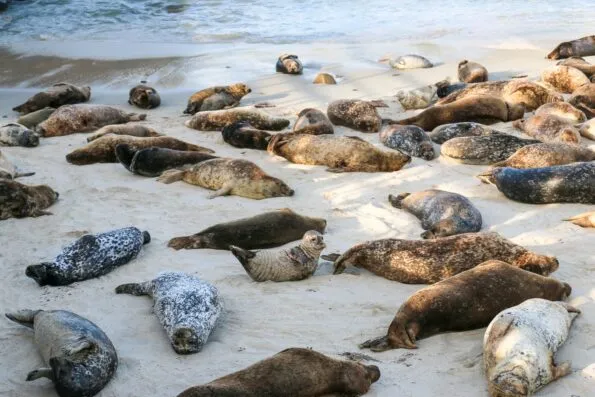
Some people sit on the benches or lean on the wall above the Children’s Pool along Coast Boulevard and watch our seals (some for hours) as they flop around the sand, swim, and talk to each other. There is something rather zen about the entire scene, with birds flying above and the movement of the ocean in the background.
Good to know
Give Our Seals Space
The key word, though, is “watch.” Keep a respectful distance, at least 50 feet, per the Seal Conservancy and NOAA. They are just as cute from afar, and I typically bring a zoom lens for my camera.
When to See the Most Seals
- Most seals on the beach: the last week of April through the first week of June, per the Seal Conservancy.
- Pup births: roughly February 8 through March 8, sometimes right on the sand in front of you.
- Pupping season closure: December 15 through May 15, when you watch from the seawall and sidewalk instead of the beach.
- Summer: seals often leave the beach on hot mornings and return in the late afternoon as the sand cools.
For the full walking route to every viewing spot, plus parking and photo tips, see my guide to the La Jolla seals and sea lions.
Walk on the Seawall
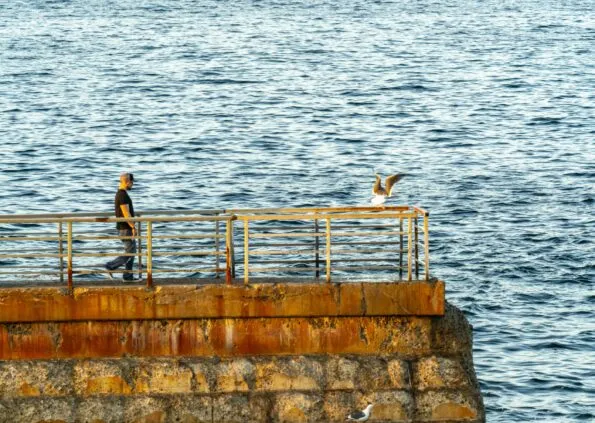
If you walk toward the ocean, just past the lifeguard station, you’ll find the entrance to the seawall. Unless the surf is really big, you can walk on it for a better view of the seals and the ocean.
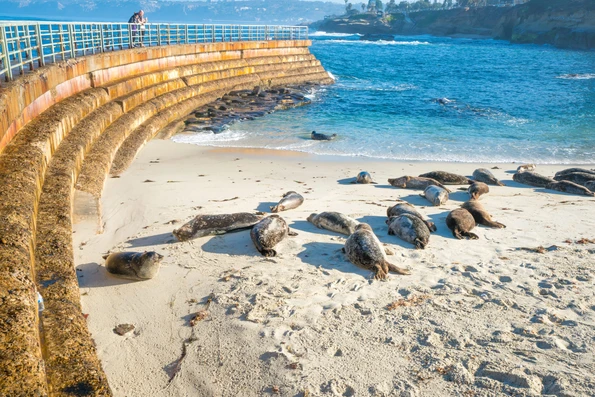
I recommend a walk on the seawall because the views are lovely, but I have some tips.
- The seawall is nearly 100 years old, and it’s an uneven path. Unsteady walkers should avoid it.
- While you gaze at the seals, be mindful of the ocean behind you, as it’s not uncommon for the surf to pound the seawall and startle you with a splash. Be mindful of what you are carrying because it would be easy to drop your phone if this happened.
- Don’t wear a backpack or carry a bulky bag, as it will be hard to pass by others on the seawall. The walkway is narrow.
- Keep a close eye on young children. The fence slats are wide, and as I’ve mentioned already, the tread on the wall is uneven and can be slippery if wet. I really don’t recommend this activity for toddlers or small children who could slip easily.
What to Know About Swimming and Beachgoing
Construction on the lifeguard station at Children’s Pool Beach started in 2013 and was completed in 2016 after a $3 million spend and some delays. Now fully operational, this permanent lifeguard station (one of three in La Jolla) watches over nine blocks of our coastline.
This includes beaches that can still have hazardous currents along the San Diego coastline — the very same problem that Ellen Browning Scripps sought to ameliorate more than 100 years ago with the Children’s Pool (more on this below).
Good to know
About Swimming Here
Now, while you technically can swim at the Children’s Pool, I do not recommend it due to high bacteria counts because of the harbor seals that live here.
A rope barrier prevents people from walking on the beach closer to the shoreline during seal pupping season, roughly December 15–May 15. During this time, it would be hard to access the water anyway.
In the summer, there is a roped-off area to protect the seals, but most of the beach is open for recreational use. People do set up towels and umbrellas, but again, they don’t typically swim here. Lifeguards help make sure that the seals are not disturbed by people.
South Casa Beach
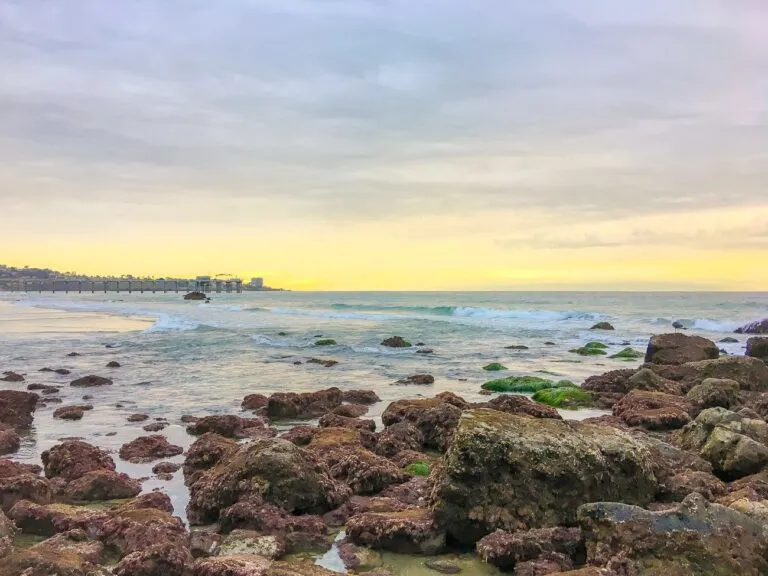
Behind the Children’s Pool lifeguard tower, there is access to a small beach called South Casa Beach. Due to currents and rocks out in the ocean, it’s not a great place for swimming, but you can certainly lay a towel out to soak up some sun. During low tides, this is a great place for La Jolla tide pools.
Walk Along Coast Boulevard
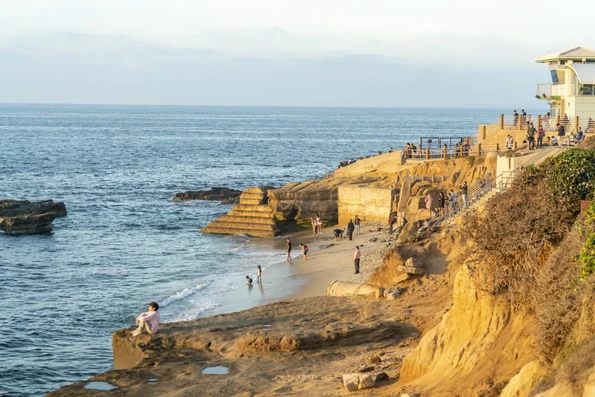
If you are at the Children’s Pool, plan to walk a few minutes along Coast Boulevard from there to La Jolla Cove where our sea lions live. It’s a very pretty, easy, and paved walk.
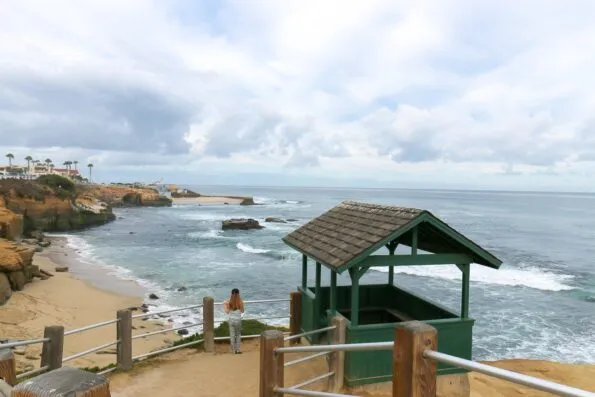
Along the way, you can take a walk down to Shell Beach, where there also may be tide pools and occasionally shells. Or, take a seat in one of our green huts.
You can even walk up to the Cave Store and walk into Sunny Jim, the only California sea cave that is accessible by land.
Grab a Bite
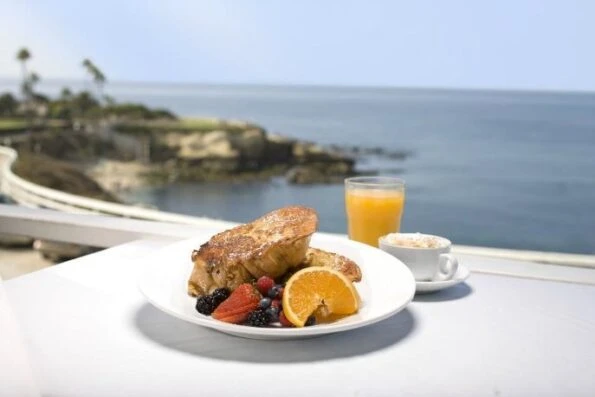
This part of La Jolla is just steps from some of the best La Jolla restaurants. Be sure that you’re parked in a place that will allow for enough time to also have a late breakfast or lunch during your visit. A few suggestions:
- George’s Ocean Terrace: We like the fish tacos and view of the Cove (make a reservation) from the upstairs terrace.
- Cove House: A good breakfast and lunch spot in between La Jolla Cove and Children’s Pool Beach (up Girard a little bit toward Prospect)
- Bobboi Natural Gelato: A few steps up from Cove House awaits the best Italian gelato, made in small batches with exotic flavors like charcoal vanilla and banana kiwi.
A Quick History of the Children’s Pool
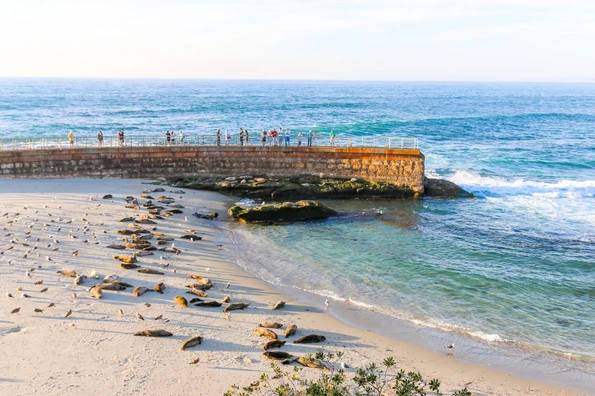
The seawall has a story, and it’s a good one. It explains why this little stretch of sand exists at all, and why it became one of the most controversial beaches in California.
La Jolla’s coast has drawn visitors since the 1870s, but it had a reputation for danger. By the early 1900s, swimmers were being warned away from many local beaches due to hazardous cross currents.
Enter Ellen Browning Scripps
Ellen Browning Scripps, a wealthy La Jolla resident since 1897, had focused much of her life and philanthropy on children. In 1921, she set out to fix the swim problem.
You may recognize her name from local institutions that still bear it: the Scripps Institution of Oceanography, Scripps Hospital, and the land she bought that became Torrey Pines State Reserve. Those are three of her many works in La Jolla.
The Sea Wall Idea
Scripps hired hydraulic engineer Hiram Savage to survey the coast and propose a breakwater that would create a safe swimming area for children. In 1923, Savage submitted his plan: a crescent-shaped breakwater right where the Children’s Pool stands today.
The project then sat in limbo for seven years. Public controversies, permitting, budgeting, and personnel issues all slowed it down. Construction finally began in late 1930.
In May 1931, the new breakwater was dedicated with a public celebration. Scripps had funded the entire project as a gift to La Jolla. She was too ill to attend and died the following year. The Children’s Pool remains one of her many lasting marks on the Village.
Fast Forward to the Harbor Seals
The seals showed up about 60 years later. In the mid-1990s, harbor seals began using the protected beach to give birth to their pups, and they have stayed ever since. To this day, La Jolla residents have strong opinions about whether they should be there. I’m not here to argue one way or the other. They’re here, and this is the practical guide. Visiting the seals is one of the most popular free things to do in La Jolla.
Much of the historical detail above comes from a longer scholarly article: ‘Until Kingdom Come,’ The Design and Construction of La Jolla’s Children’s Pool, by Jeremy Hollins, published in the Journal of San Diego History (volume 51). You can read it online.
Children’s Pool La Jolla Address, Directions, and Parking
Address: 850 Coast Blvd, La Jolla, CA 92037
Pop the address above into your GPS. Once you’re on Coast Boulevard, you can’t miss it.
Parking: It is difficult to find Children’s Pool parking on Coast Boulevard during peak season and weekends unless you arrive before 9 a.m. (the earlier, the better). Street parking is marked as two or three hours, depending on what part of the street you’re on. There are a few residential streets that run parallel to Coast Blvd that you can try.
Alternatively, look out for some of the paid parking lots that are located on Prospect (there is one at the La Jolla Financial Building) and adjacent streets. Walking down to Coast Blvd from the Village is easy.
Good to know
All-Day Parking Discount
I’m an Associate Member of La Jolla Village Merchants Association, and we have a parking discount to share with you. Get $5 All-Day Parking at an Ace Parking lot walkable to the Cove (875 Prospect Street).
See also: Best Things to Do in San Diego with Kids
FAQs About Children’s Pool Beach
Is Children’s Pool Beach open right now?
The beach is open to people from May 16 through December 14, with a rope barrier protecting the seals. It closes for seal pupping season from December 15 through May 15, and during those months you watch from the seawall and the sidewalk above instead.
Can you swim at Children’s Pool?
Technically yes, outside of pupping season, but I don’t recommend it. Bacteria counts run high because of the resident harbor seals, and lifeguards keep people clear of the protected area. If swimming is the goal, pick one of the other best La Jolla beaches instead.
Are the seals always there?
Usually, unless it has been raining or very windy. On hot summer days, they often leave the beach by 8 a.m. and return in the late afternoon when the sand cools down. If the beach looks empty, check Seal Rock just offshore.
When is seal pupping season?
Pupping season runs December 15 through May 15. Births happen roughly between February 8 and March 8, and you will see the most seals on the beach between the last week of April and the first week of June.
How long does a visit take?
Most people watch the seals for 30 minutes to an hour. It’s easy to stretch a visit into a half day by walking Coast Boulevard to La Jolla Cove, stepping into Sunny Jim Sea Cave, and grabbing lunch in the Village.
Does it cost anything to visit?
No. Watching the seals is one of the most popular free things to do in La Jolla. Your only real cost is parking, and I share a $5 all-day parking option above.
Are dogs allowed at Children’s Pool?
No. Children’s Pool is closed to dogs, and I don’t recommend walking them near the seals at all. The sidewalk above is stroller friendly, though, and the views are just as good from up there.