


La Jolla’s seven-mile coastline is one of the most beautiful in California, and what I love about it is the variety. You’ll find wide sandy beaches perfect for families just a short walk from rocky coves where experienced surfers, snorkelers, and tide poolers spend their days.
I’m a longtime La Jolla resident, and I’ve been to every one of these beaches more times than I can count. Each has a different personality, and honestly, a different crowd. In this guide, I’ll walk you through the best La Jolla beaches, share what each one is really like, and give you the parking, dining, and safety details you’ll want before you go.
After all, going to the beach and spotting our famous seals and sea lions is one of the best things to do in La Jolla and a reason why many choose to base their San Diego vacations in my hometown.
Tip: I recommend checking the La Jolla tide chart and surf report before you head out. Low tides are best for tide pooling, especially in winter, and conditions can change quite a bit between beaches that are only a few blocks apart.
La Jolla Beaches at a Glance
Here’s a quick overview of every beach on this list so you can decide where to go. Keep reading for my full breakdown of each one with parking, dining, and safety tips.
| Beach | Best For | Swimming? | Parking | Vibe |
|---|---|---|---|---|
| La Jolla Shores | Families, surfing lessons, kayaking | Yes, lifeguarded year-round | Large lot + street parking | Bustling, family-friendly |
| La Jolla Cove | Snorkeling, diving, sea lion watching | Yes, experienced swimmers | Street + paid lots, tough to find | Iconic, touristy |
| Children’s Pool | Seal watching, photography | No (closed to swimming) | Street parking only | Observational, scenic |
| Black’s Beach | Experienced surfing, seclusion | Yes, at your own risk | Walk-in only, steep trail | Remote, adventurous |
| Marine Street Beach | Local surfing, beach volleyball | Risky, strong surf | Street parking | Quiet, locals-only feel |
| Windansea Beach | Expert surfing, sunsets, photography | No, dangerous shore break | Small lot + street | Scenic, surfer culture |
| Shell Beach | Tide pooling, quick beach walk | Tide permitting | Street on Coast Blvd. | Hidden gem |
| South Casa Beach | Tide pooling, sunbathing | Not recommended | Street on Coast Blvd. | Tucked away, small |
| Wipeout Beach | Secluded sunbathing, walks | No, rip current | Street on Coast Blvd. | Quiet, overlooked |
| Boomer Beach | Sea lion watching (beach closed) | Ocean access only | Street on Coast Blvd. | Closed to foot traffic |
1. La Jolla Shores Beach
Why go: This is the best La Jolla beach for all-day sunbathing, family fun, and a wide range of water sports. In fact, it’s one of the best San Diego beaches, if not the best.
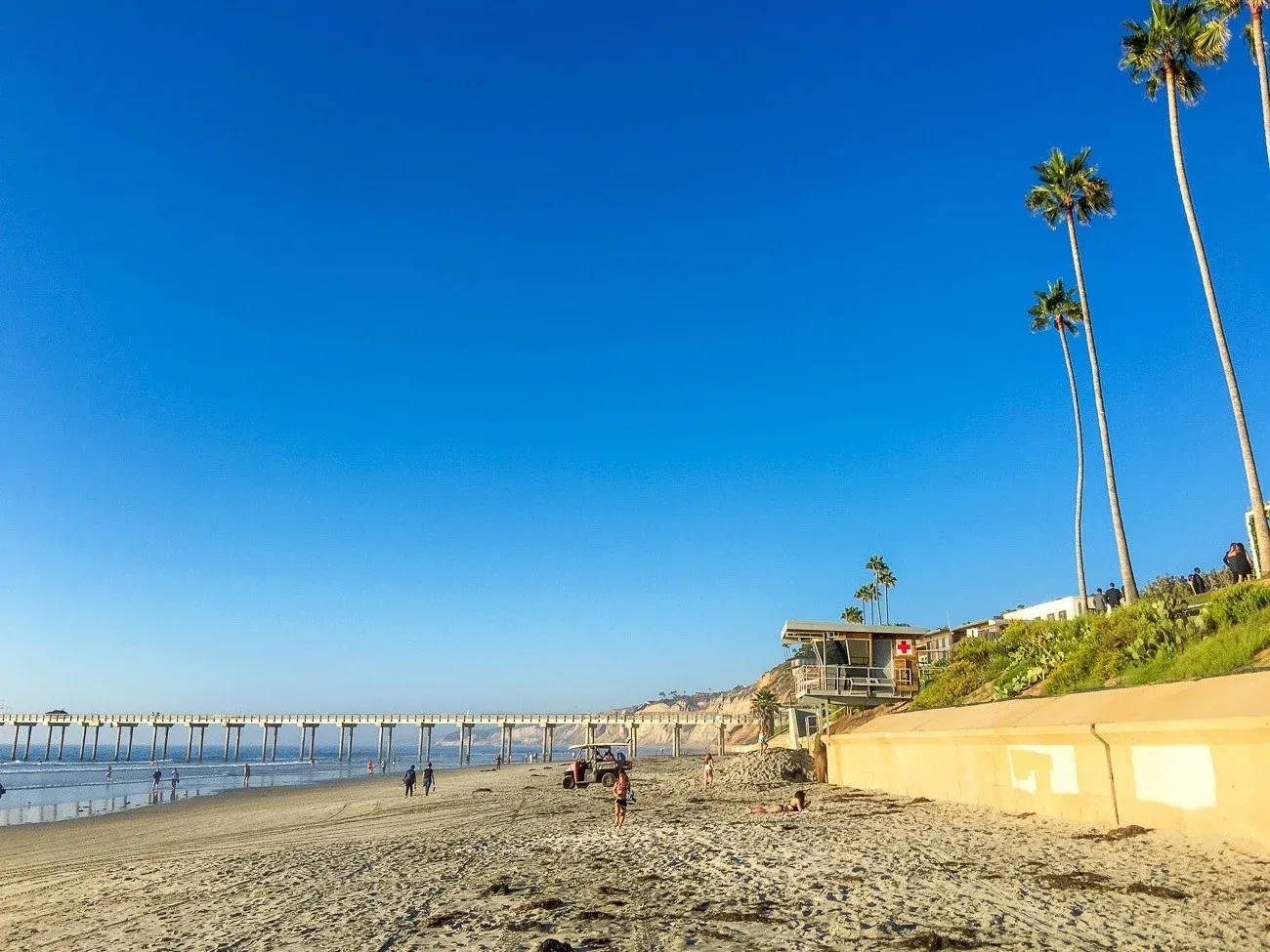
La Jolla Shores Beach is a 1-mile-long stretch of beach that sits just south of the Village (downtown La Jolla). This beach is particularly great for families with small kids, surfers, and kayakers.
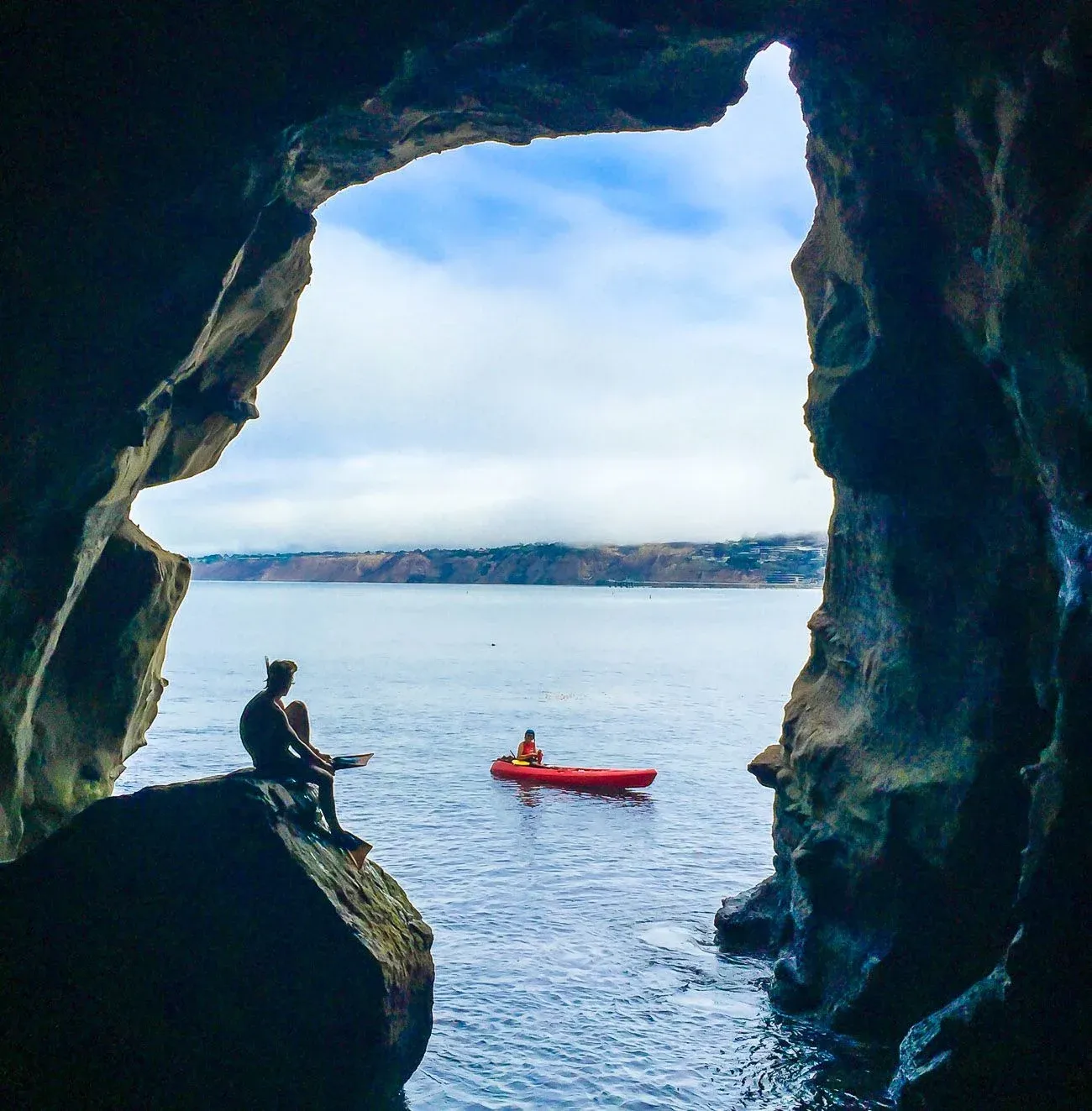
It’s the only kayak launch spot in La Jolla, and its long, flat sandy shore makes for a pretty easy takeoff point for most water sports. You should plan to take a La Jolla kayak tour of our seven sea caves departing from here. If you’d like to learn how to take surfing lessons in La Jolla, this is the spot. And during the winter low tides, you can walk north on the beach, past Scripps Pier, to a neat group of La Jolla tide pools called Dike Rock.
The beach is comfortable and makes for a great picnic spot, with plenty of grass at nearby Kellogg Park. There is also a large playground area for kids, as well as bathrooms and showers, fire pits, and volleyball courts. If you’re heading out here for a bonfire, keep in mind you should get there early to reserve a pit (you can only have wood-burning fires in city fire pits). They go extremely fast, especially in the summer.
Our La Jolla Beach hotels, La Jolla Beach and Tennis Club and La Jolla Shores Hotel, are located next to each other on the sand here. There is also a state-of-the-art permanent lifeguard station near the hotels, Kellogg Park, and the public parking lot.
You’re also within walking distance of the local shops and restaurants on Avenida de la Playa, so spending a full or half day enjoying the neighborhood is easy.
Fun fact: From roughly July through September, La Jolla Shores beach is where the largest aggregation of leopard sharks in the world gathers in the warm shallow water. You can also see stingrays (it’s wise to shuffle your feet when entering the ocean to scare them away) and other rare sea life you wouldn’t see elsewhere, depending on the season.
Activities: Surfing, boogie boarding, scuba diving, swimming, volleyball, fire pits, tide pools, kayaking, running, long walks, dog walks (during permitted hours).
Safety note: Stingrays are common in the shallow water at La Jolla Shores, especially during warmer months. Always do the “stingray shuffle” when entering the water. Keep your feet on the sand and slide them forward rather than stepping. If you are stung, go to the lifeguard station immediately. They will provide hot-water treatment, which significantly reduces pain.
Nearby dining: Both hotels have great beachfront dining between The Marine Room and The Shores Restaurant. You’ll want to book high tide dining at The Marine Room when the waves crash onto the restaurant windows. On Avenida de la Playa, we like The Cheese Shop for to-go sandwiches, Shorehouse Kitchen, and Scoops for ice cream.
Parking and how to get there: La Jolla Shores Beach is easily accessible from Torrey Pines Road and La Jolla Shores Drive. A large parking lot is located at 8300 Camino Del Oro. There is also plenty of free street parking in the nearby neighborhoods, but you still want to take Uber or arrive early in the summer or when the weather is nice.
2. La Jolla Cove Beach
Why go: It’s one of the best La Jolla beaches because of easy entry into the ecological reserve for snorkeling and diving, a nice though small strip of sand for sunbathing (which can get crowded in good weather), and the La Jolla sea lions who call this stretch of beach home.
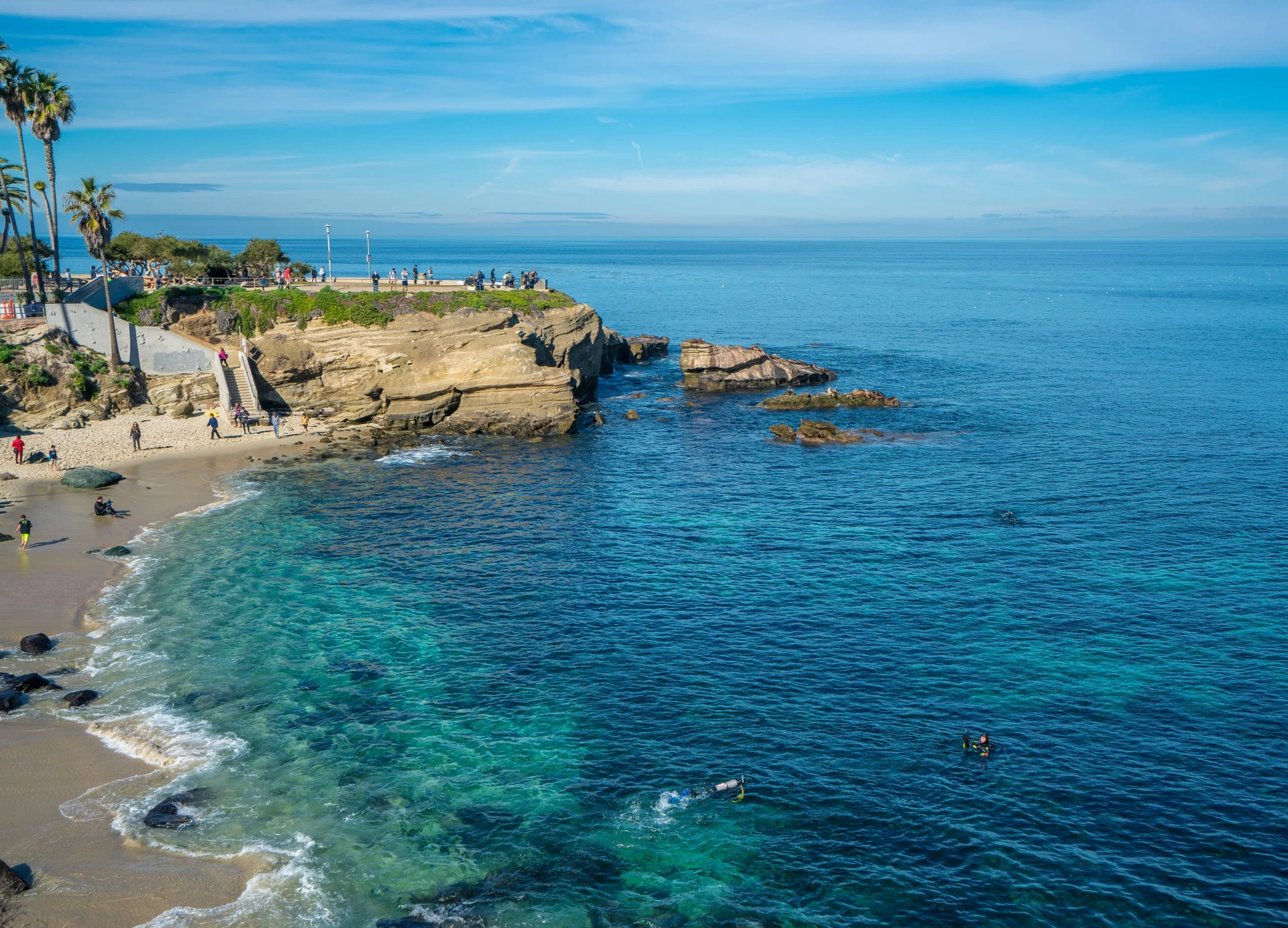
La Jolla Cove is arguably what our little seaside town is known for. The Cove remains protected as part of the San Diego-La Jolla Underwater Park Ecological Reserve, meaning it’s home to an incredible variety of marine life and, therefore, popular with snorkelers, swimmers, and scuba divers.
The swells that roll in from the open ocean here can be relatively forceful along the edges of beautiful La Jolla Cove, so swimmers here are typically more experienced. The water temperature is also often a little colder than the average San Diego beach. Unlike other La Jolla beaches nearby, the dry sand area is very small at high tide. During low tides, however, some great La Jolla tide pools are revealed.
It’s still a relatively popular spot for swimming, San Diego snorkeling, and scuba diving, despite some trouble with pollution in recent years from the stormwater run-off after rains. It’s also home to many open-water swimming events year-round, including the Rough Water Swim. Bouys offshore mark distance for serious swimmers.
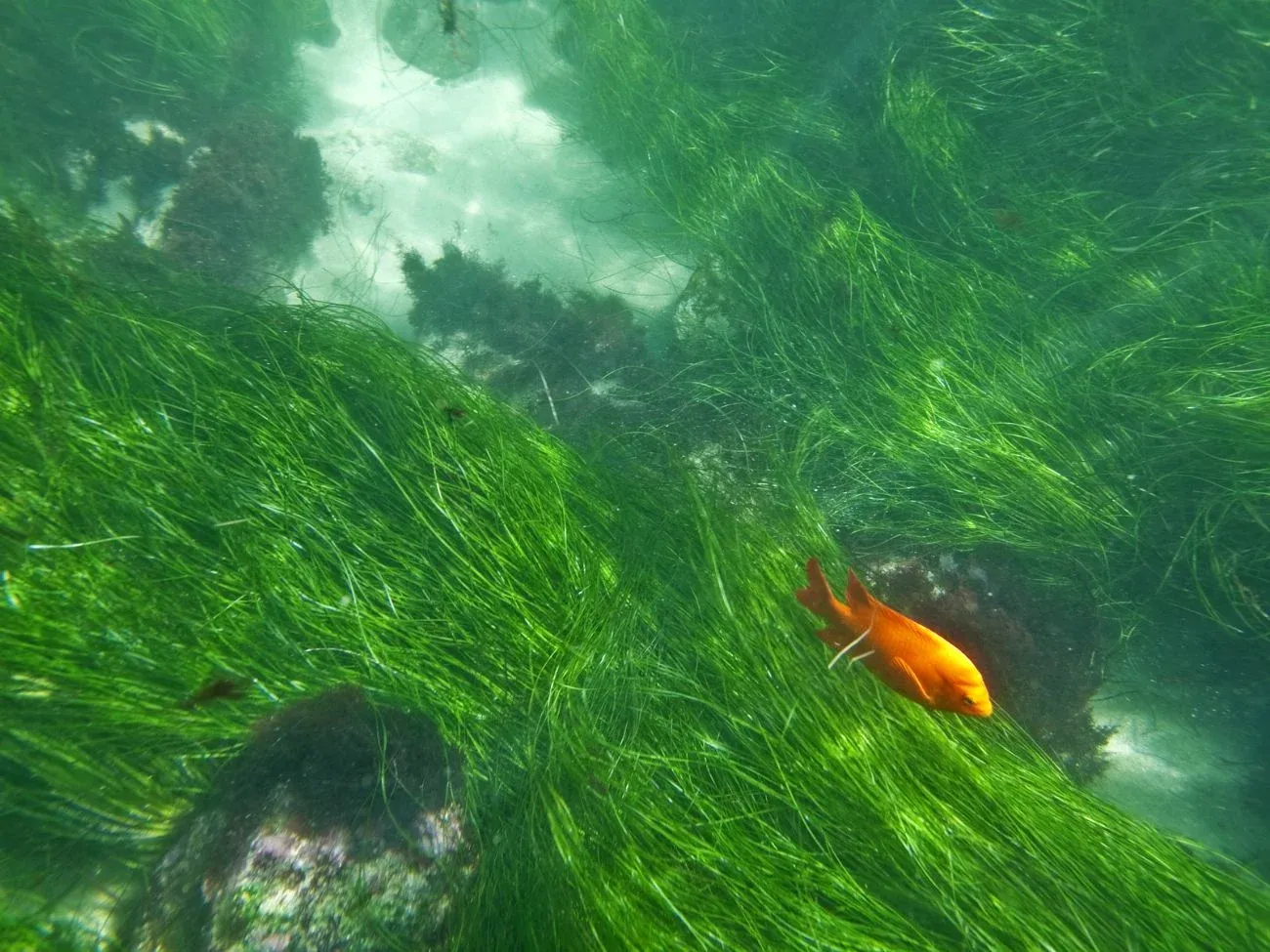
However, surfers, beware. Because La Jolla Cove is within the Underwater Park, swimming devices like surfboards, boogie boards, and kayaks aren’t allowed. All sea animals are strictly protected here. Keep an eye out for the bright orange Garibaldi fish (California’s state fish), which is unusually common in the area.
In recent years, the sea lion population at La Jolla Cove has grown, and so have close encounters between tourists and animals. In the summer of 2024, several viral incidents of visitors getting dangerously close to sea lions made national news. City park rangers now actively ask visitors to watch the sea lions from the landings and boardwalk above the beach rather than approaching them on the sand. This is for your safety: adult sea lions can weigh up to 800 pounds and will bite if they feel threatened, especially during pupping season.
The best viewing spots for sea lions are along the boardwalk railing above Point La Jolla. You can see and photograph them easily from there without putting yourself or the animals at risk.
Fun fact: The water temperature here is almost always cooler than in other areas of San Diego’s coastline because it faces out into much deeper, colder water. If you plan on tide pooling or swimming, be sure to check the tides and water temperature first.
Activities: Swimming, sunbathing, scuba diving (no floating devices like boogie boards or kayaks), tide pools (winter).
Nearby dining: Brockton Villa (great breakfast), Cove House, and Bobboi Gelato line the area — plus La Jolla restaurants in the Village area are all walkable from The Cove. It just depends on how far you’re willing to go.
Parking and how to get there: La Jolla Cove Beach is located at 1100 Coast Boulevard. Parking is typically difficult as the Cove is incredibly popular, but street parking is generally your best bet. You’ll find several paid lots on Prospect Street as well.
La Jolla Cove hotels: One of my frequently asked questions where to stay in La Jolla near La Jolla Cove. My two favorites are La Valencia Hotel (across the street) and Grande Colonial (a few blocks away). They are both located on Prospect Street.
TIP: STOP INTO THE CAVE STORE
Just north of La Jolla Cove, you’ll find The Cave Store. Inside is the entrance to Sunny Jim sea cave. You can also rent gear like snorkels here and shop for souvenirs.
3. Children’s Pool Beach
Why go: To see the famous La Jolla seals and walk on the sea wall.
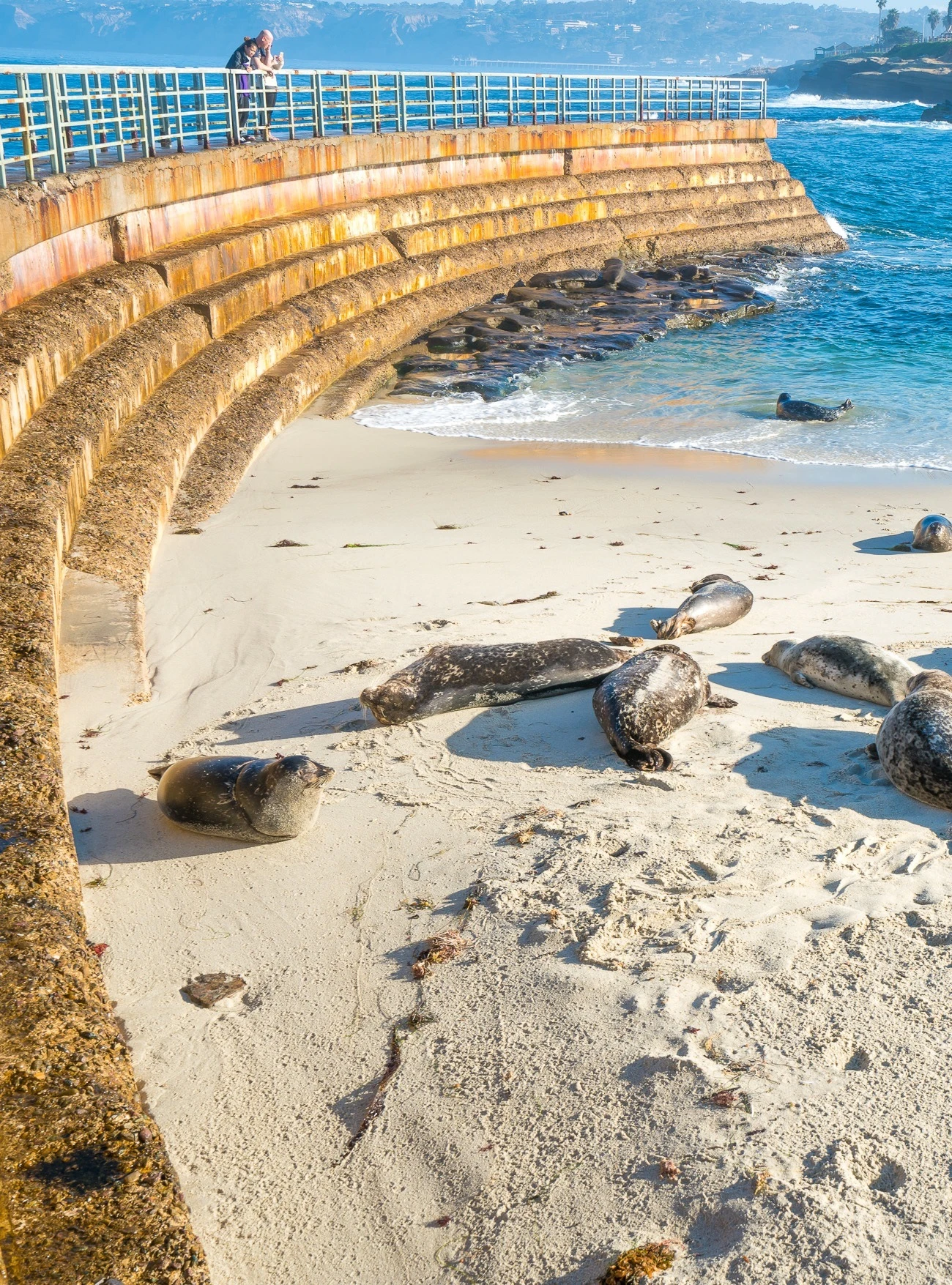
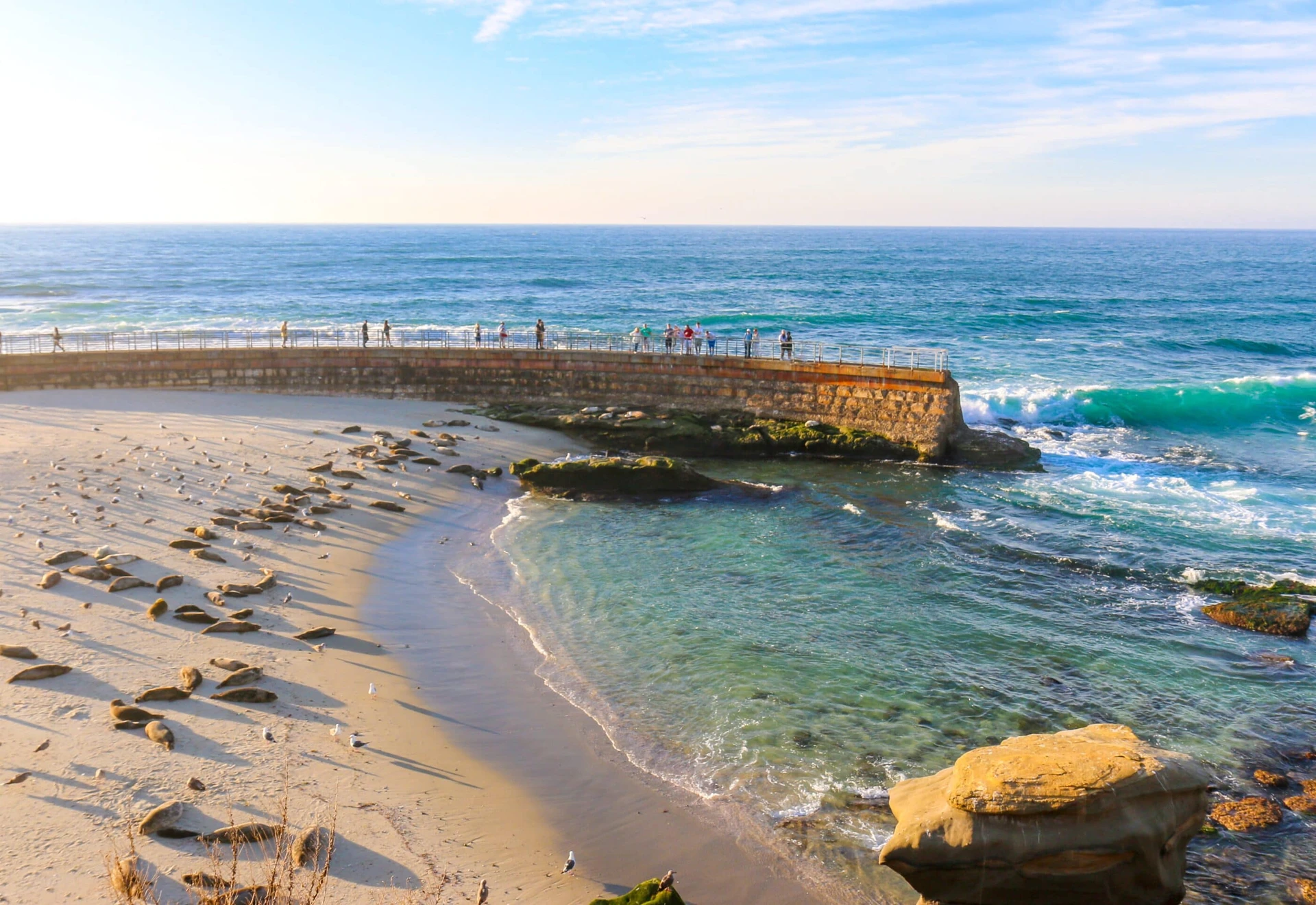
Children’s Pool Beach, located close to downtown La Jolla and within walking distance from La Jolla Cove, is a small cove protected by a concrete breakwater seawall. Ellen Browning Scripps donated the funds for the seawall in 1931, envisioning it as a safe space for children to play and swim out of harm’s way.
Before it was built, there was a shallow-water area between a large rock and a mainland bluff called Seal Rock Point; the seawall was built atop several rocks and topped by a paved walkway protected by railings. Although swimming is strongly discouraged due to high bacterial levels, the walkway remains open to the public and offers unique views of the surrounding seascape and Seal Rock.
The beach area has been fully claimed by harbor seals for years now, and while swimming is technically still allowed, it’s discouraged to protect the seals. You’ll still see them lounging on the sand, and the beach area closes for a few months every year to respect pupping season, roughly between December 15 and May 15.
The seasonal closure is enforced under a Coastal Development Permit that runs through 2029, so expect this schedule to remain in place for the foreseeable future. Outside pupping season, you can walk to the beach area, but swimming is strongly discouraged due to elevated bacteria levels. The real draw here is watching the harbor seals from the seawall walkway and boardwalk above.
There is a year-round lifeguard tower monitoring the area, of course, for the seals, but also because people tend to scuba dive in the reefs just offshore.
Fun fact: This is a NOAA-recognized seal rookery and the only one between Mexico and Ventura County. It’s unusual because it’s in an urban setting.
Activities: Seasonal beachgoing and swimming (I don’t recommend either, even if allowed, if harbor seals are nearby), scuba diving, seal watching
Nearby dining: You’ll need to walk back to The Cove area or up to Prospect Street to eat (at least 10 minutes by foot). But just uphill inside Grande Colonial Hotel is one of my favorite La Jolla restaurants, NINE-TEN. Nearby are also Better Buzz Coffee and other spots.
Parking and how to get there: La Jolla Children’s Pool Beach is located at 850 Coast Blvd., and your best bet is to find street parking along the coast. There is no official lot, though there are some designated free parking spaces along the street.
4. Black’s Beach
Why go: To surf or enjoy some quiet time (note that some people still go nude here) without the kids.
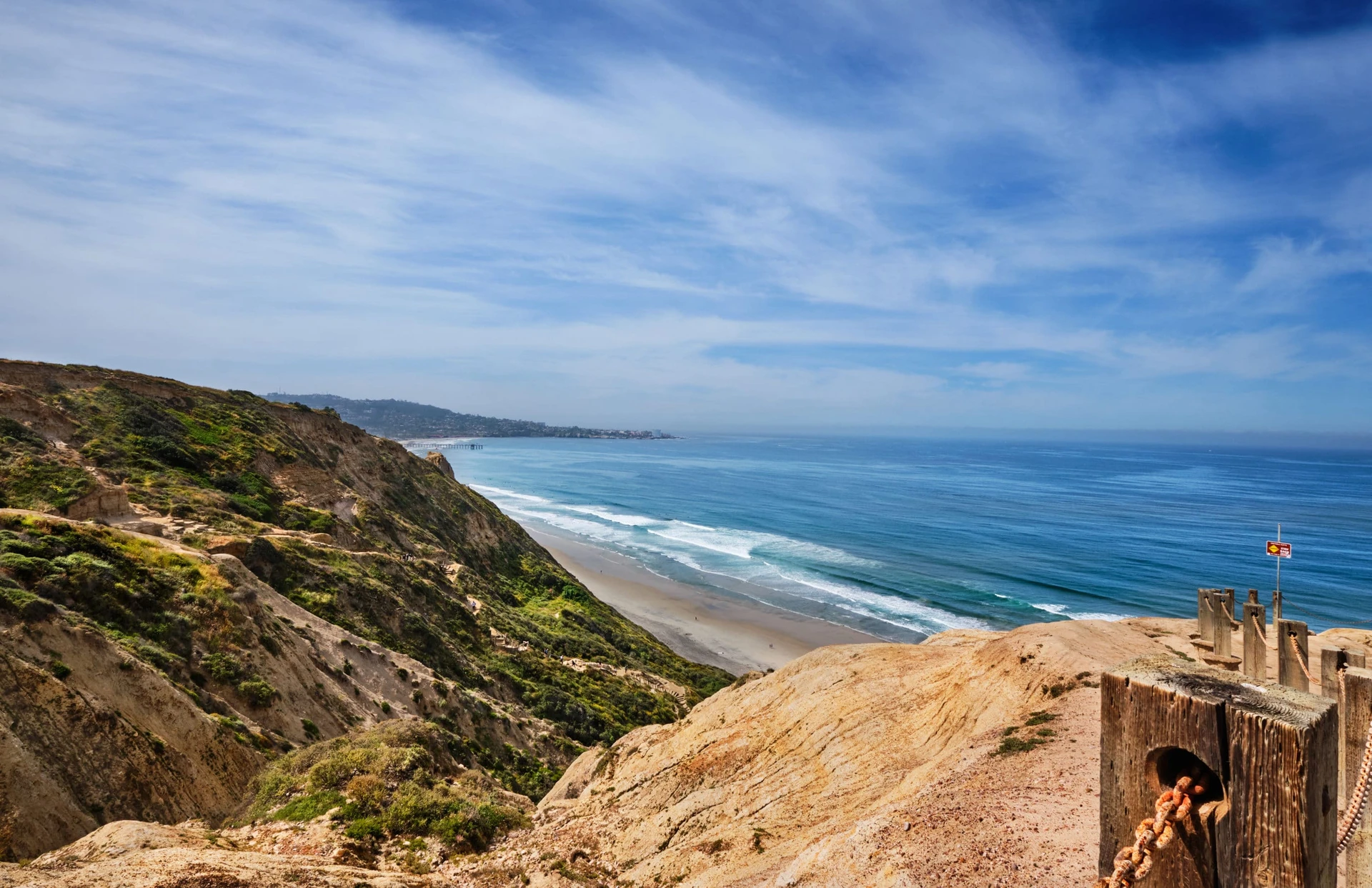
Black’s Beach La Jolla is a secluded section of beach beneath the bluffs of Torrey Pines and is officially part of Torrey Pines State Beach. Black’s Beach is perhaps most notorious for its status as San Diego’s only nude beach, though that’s no longer allowed in the more southern portion managed by the City of San Diego.
Black’s Beach was named for the Black family who owned a horse farm overlooking the beach in the 1940s. They eventually sold the land, and it was divided into several La Jolla Farms lots. The Farms’ residents were the only ones who retained access to the Black family’s private road to the beach, which at that time was a highly coveted secret.
The southern portion of Black’s Beach is well known to surfers as one of the most powerful surf breaks in Southern California. The waves gain their power from Scripps Canyon, an underwater canyon just offshore in the San Diego-La Jolla Underwater Park. Because of this, Black’s has become a pretty dangerous surfing location and is only advised for very experienced surfers. Lifeguards are typically stationed here, though staffing may be seasonal. Always check conditions before entering the water, as this is one of the more dangerous surf breaks in Southern California.
Fun fact: While you can still see many amazing homes in the area, you’ll want to look for the oddly-shaped “Mushroom House” and its matching funicular next time you’re strolling along the beach.
Activities: Long walks and runs, swimming, surfing, sunbathing (ahem, nude sunbathing).
Nearby dining: None really, unless you come via the Gliderport. There, you’ll find the Cliffhanger Cafe, which sells some good, to-go sandwiches.
Parking and how to get there: Black’s Beach can be difficult to access due to its location (directly below the Torrey Pines bluffs), though currently, there are four access routes to Black’s Beach. You can park in the La Jolla Shores neighborhood, enter the beach, and keep walking north until you find it, but the most popular is the Gliderport Trail.
Torrey Pines Gliderport Trail: The Gliderport Trail is located between the Torrey Pines Gliderport and the Salk Institute. This steep trail down the 300-foot cliffs is usually well maintained by locals, but do take care to stay on the designated trail at all times. It can get pretty slippery otherwise.
5. Marine Street Beach
Why go: To experience a quiet, local favorite and to surf.
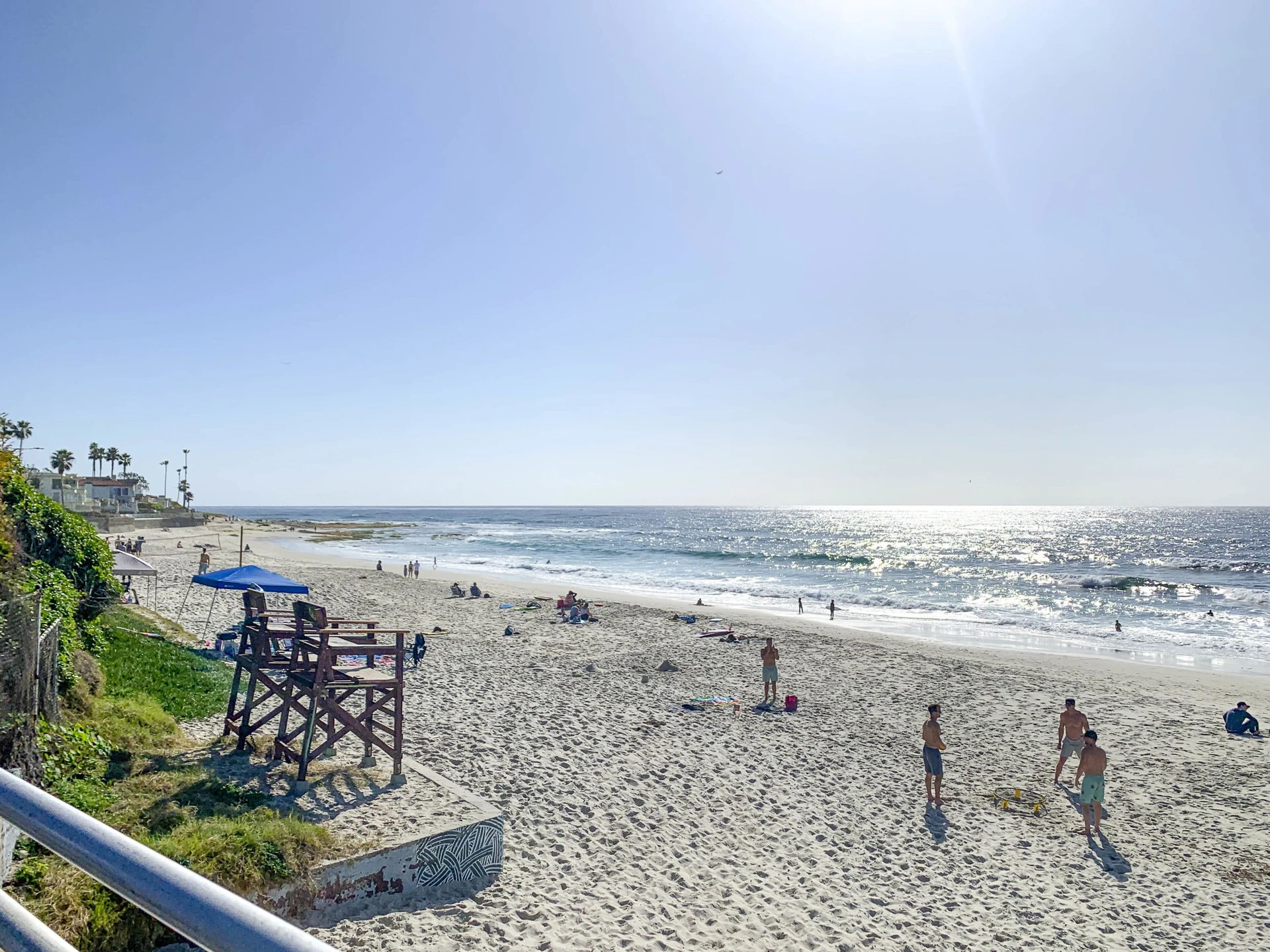
Marine Street is one of the best La Jolla beaches because it’s a wide, white sand beach that sits just between two rock reef points, Little Point and Horseshoe. The surf here is famous for being rough and unpredictable, making it popular with surfers and bodyboarders but not advisable for inexperienced swimmers. Unfortunately, due to that, it’s also been the site of countless injuries and rescues.
Marine Street has a long history of being a strictly locals-only beach. Though not as bad as some beaches in the area, fierce hometown loyalty is alive and well here. Years ago, surfers wrote the words “Locals Only” on the center wall at the beach. It isn’t always visible, but locals will occasionally rewrite it from time to time.
Keep an eye out for the two oversized beach chairs just to the left as you walk down the stairs. They’ve been there for years and make for a great photo op. There is also a volleyball net that my daughter and her friends use.
Fun fact: It’s a popular spot for photographers, and many famous ocean photographers have shot here, most notably Clark Little.
Activities: Surfing, sunbathing, beach volleyball, photography, dog walks (during permitted hours).
Nearby dining: Walk up Marine Street to Verdes el Ranchero for delicious Mexican. You could keep walking down the block toward Pearl Street where Pizza on Pearl, Taco Stand (fast-casual and in the Michelin guide), and El Pescador (fish sandwiches and salads), await, to name a few.
Parking and how to get there: Just follow Marine Street down until you reach the shoreline. Street parking is available on both cross streets. Many locals tend to park just in front of the barriers before the stairs down to the beach (technically, the curbs are red, and you should know that our parking enforcement is aggressive, so I don’t recommend this). There are no public restrooms here.
6. Windansea Beach
Why go: You’re an expert surfer in search of killer waves or looking for a scenic place to lay out or watch the sunset.

Windansea Beach—most well known for its surfing—is a stretch of coastline in the heart of La Jolla. This La Jolla beach has a colorful history and has been a storied favorite of surfers since the 1960s.
Its name comes from the oceanfront Windansea Hotel, which was originally built in 1909 when it was simply called the Strand Hotel. Sadly, it burned down in 1943, but the beach maintained its title.
The surf here is mostly shore break. It can be pretty severe and unpredictable. Many rescues happen here, too. That’s why you would never let your kids play at the shoreline, and many La Jolla parents like me don’t let kids enter the water there at all.
That being said, our kids do go there because they like that it’s typically less crowded and has small jagged sandstone cliffs that provide a bit of privacy and shade. It’s really pretty.
Fun fact: The distinguishing landmark at Windansea is a palm-covered shack that was originally constructed in 1946 by three surfers: Woody Ekstrom, Fred Kenyon, and Don Okey. The San Diego Historical Resources Board officially designated the Surf Shack as a historical landmark in May of 1998. The shack was destroyed by a high tide in 2015 but was rebuilt by locals.
Activities: Surfing (experts only), sunbathing, photography, sunset gazing — no swimming advised.
Nearby dining: Walk a few short blocks up Westbourne Street to eat like a La Jolla teen at Rigoberto’s taco shop (carne asada burritos). Next door is the Promiscuous Fork (burgers, tacos, salads) and then the Valley Farm gourmet market, a few steps down. The Shack dive bar is across the street, which is kind of fun if you want a burger and a super casual patio dining experience.
Parking and how to get there: The Windansea parking lot is located along Neptune Place, between Nautilus and Bonair Streets. Although recently upgraded by the City, it offers only a handful of parking spaces. Luckily, street parking is almost always available. There are no drinking fountains, showers, or public restrooms.
7. Shell Beach
Why go: For winter tide pooling and a quick walk along a small beach.
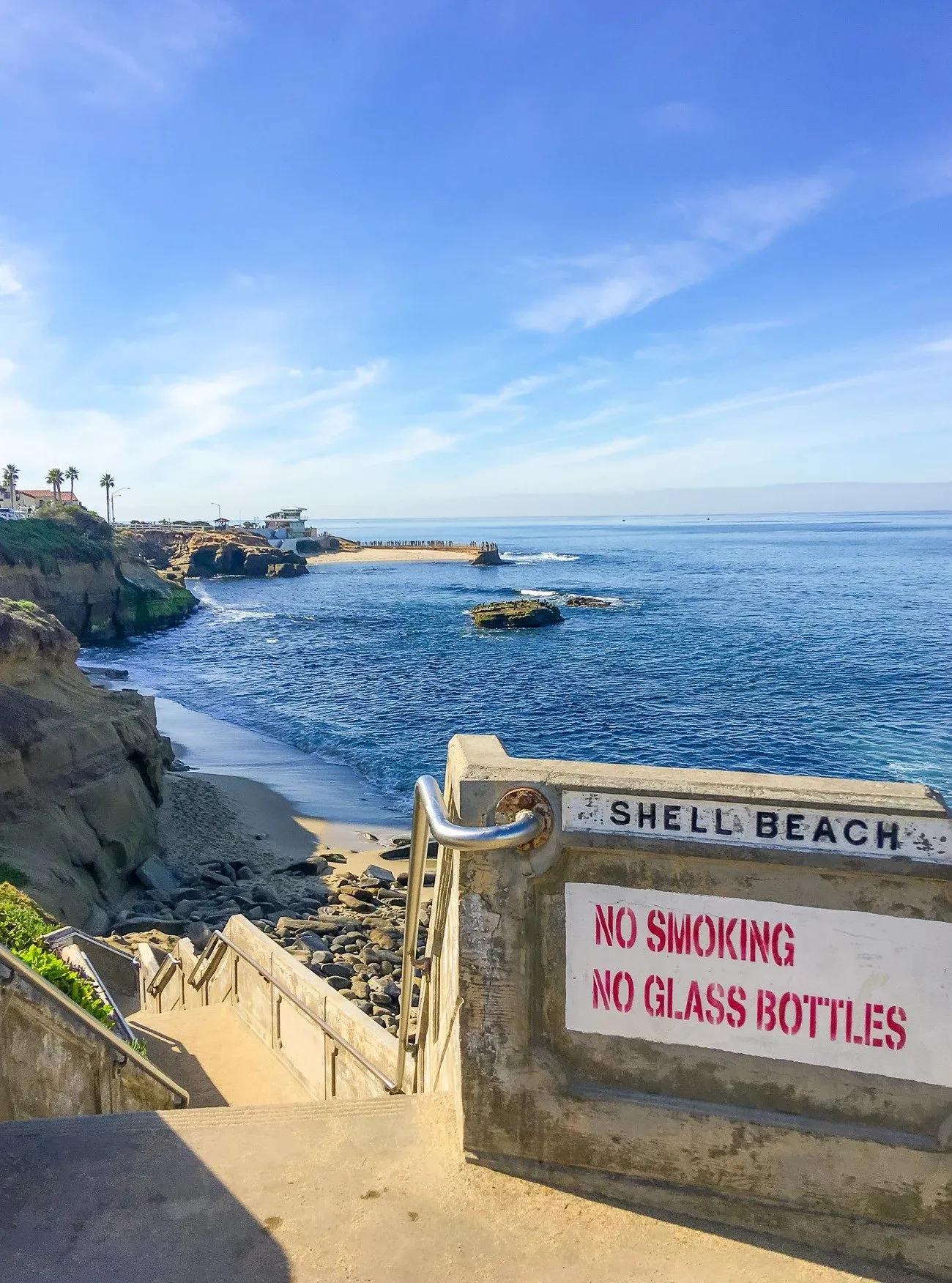
Shell Beach is a small beach located just south of Ellen Browning Scripps Park (right across the grass from La Jolla Cove) and north of Children’s Pool. It can be accessed only by a flight of concrete stairs. Look for the engraved “Shell Beach” sign on the concrete wall.
The beach is more commonly known as a hidden gem tide pooling spot. The best time for tide pooling at Shell Beach is during low and minus tides in the winter months, roughly November through March. An incredible variety of marine life is showcased on the southern end during low and minus tides—just look for the rocky, flat area.
A pathway along the bluff goes north through the park and continues to the Coast Walk Trail. Seal Rock is just offshore, and Children’s Pool Beach is visible beyond that to the south.
Fun fact: Between La Jolla Cove and Shell Beach, you’ll see several green huts that are called belvederes. These are a great place to watch sunsets and take photos. There are also a couple of picnic tables and benches in this area.
Activities: Shelling, tide pooling (winter), swimming (tide permitting), sunbathing
Nearby dining: Since it’s next door to La Jolla Cove, I’d still recommend Brockton Villa, Cove House and Bobboi Gelato as closest and really good.
Parking and how to get there: Shell Beach parking can be challenging, but it is allowed all along Coast Blvd. and in designated spaces.
8. South Casa Beach
Why go: You’re already at the Children’s Pool and would like to step out on the sand to explore a different beach.

South Casa Beach is located directly south of the Children’s Pool (which is also referred to as Casa Beach). In fact, it’s just on the other side of the Children’s Pool lifeguard station, which also services South Casa Beach.
Use the walkway down from the boardwalk to access this La Jolla beach which is a mini cove with excellent tide pools in winter. You’ll see people sunbathing on the sand here during other times of the year. Swimming isn’t recommended thanks to proximity to the sea wall and rocks, but people like to play at the water’s edge.
Activities: Winter tide pooling, sunbathing, watching sunsets.
Nearby dining: It’s behind the Children’s Pool so the same restaurant recommendations apply. You’ll walk back up to the eateries lining the cove or up to Prospect Street.
Parking and how to get there: Use the free parking along Coast Blvd. and surrounding residential areas.
9. Wipeout Beach
Why go: You’re taking a nice long walk along the Village beaches or looking for seclusion.
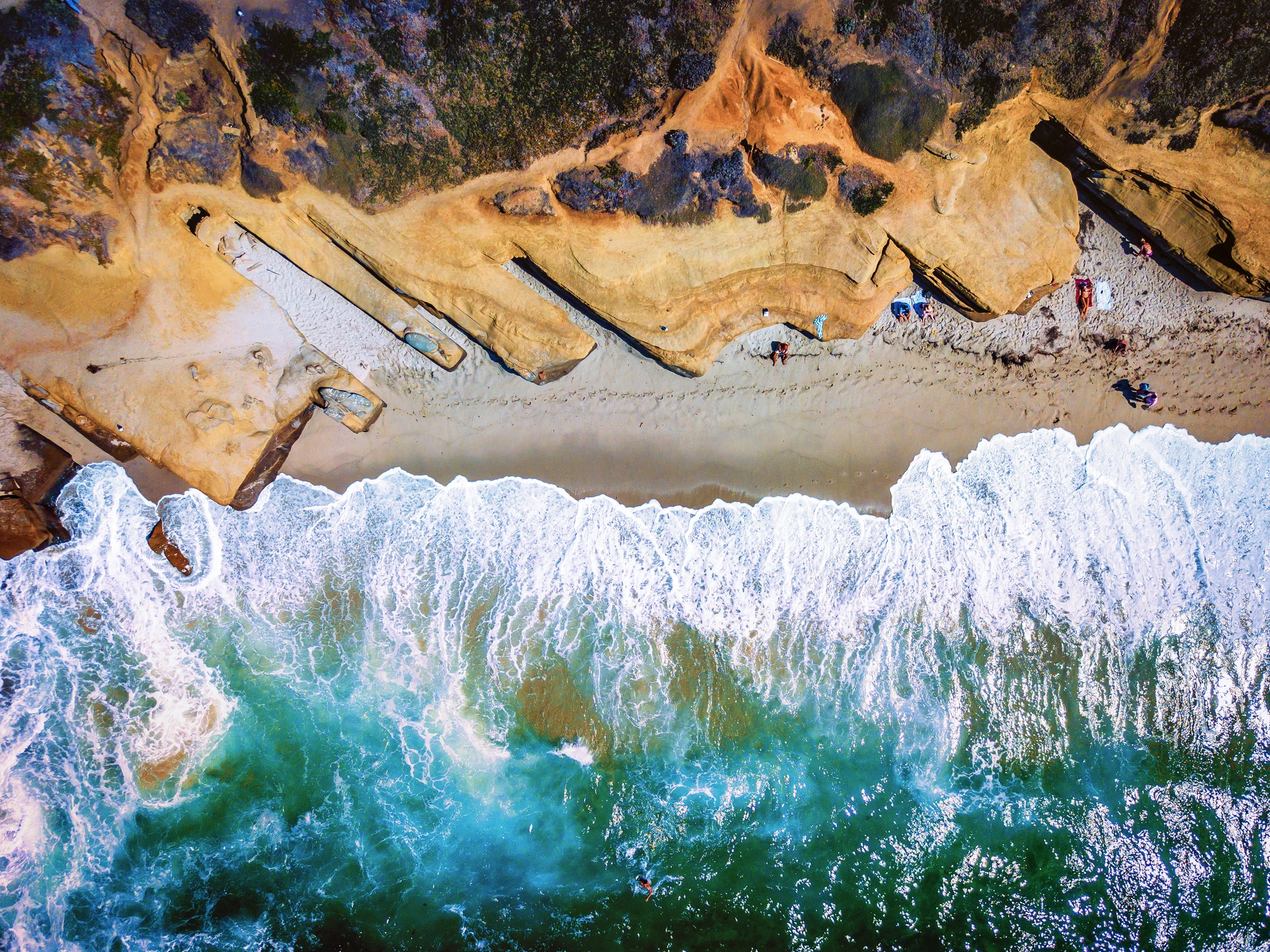
Wipeout Beach is located on the 700 block of Coast Blvd., and is a sandy stretch of beach just south of South Casa Beach and the Children’s Pool. It’s a great spot for sunbathing but again isn’t recommended for inexperienced swimmers because of the rip current. Low tide is probably the best time to visit this spot, as there’s more sand to walk along, and you’ll be able to see a few shallower exposed tide pools.
There are a few small caves along the shoreline that you can explore from Wipeout, but unfortunately, they’re usually blocked by seaweed and other debris. If you’re lucky enough to see an opening and are feeling adventurous, just be aware of the incoming tide and wave size.
Public restrooms, showers, and a lifeguard station are just up the stairs from this beach. It’s an easy walk to Ellen Browning Scripps Park and other beaches in the area.
Activities: Sunbathing, tide pooling (winter), photography — no swimming
Nearby dining: The Museum of Contemporary Art San Diego, La Jolla, is steps away. Not only is it a worthwhile place to admire art, the renovated building, and spectacular views, The Kitchen at MCASD serves an internationally-inspired breakfast and lunch complete with wine, beer, and cocktails.
Parking and how to get there: Some free parking is available along Coast Blvd., and a few paid lots are within walking distance of the beach.
10. Boomer Beach
Why go: To observe California sea lions from the boardwalk and sidewalk above. Note that the beach itself is now closed to foot traffic.
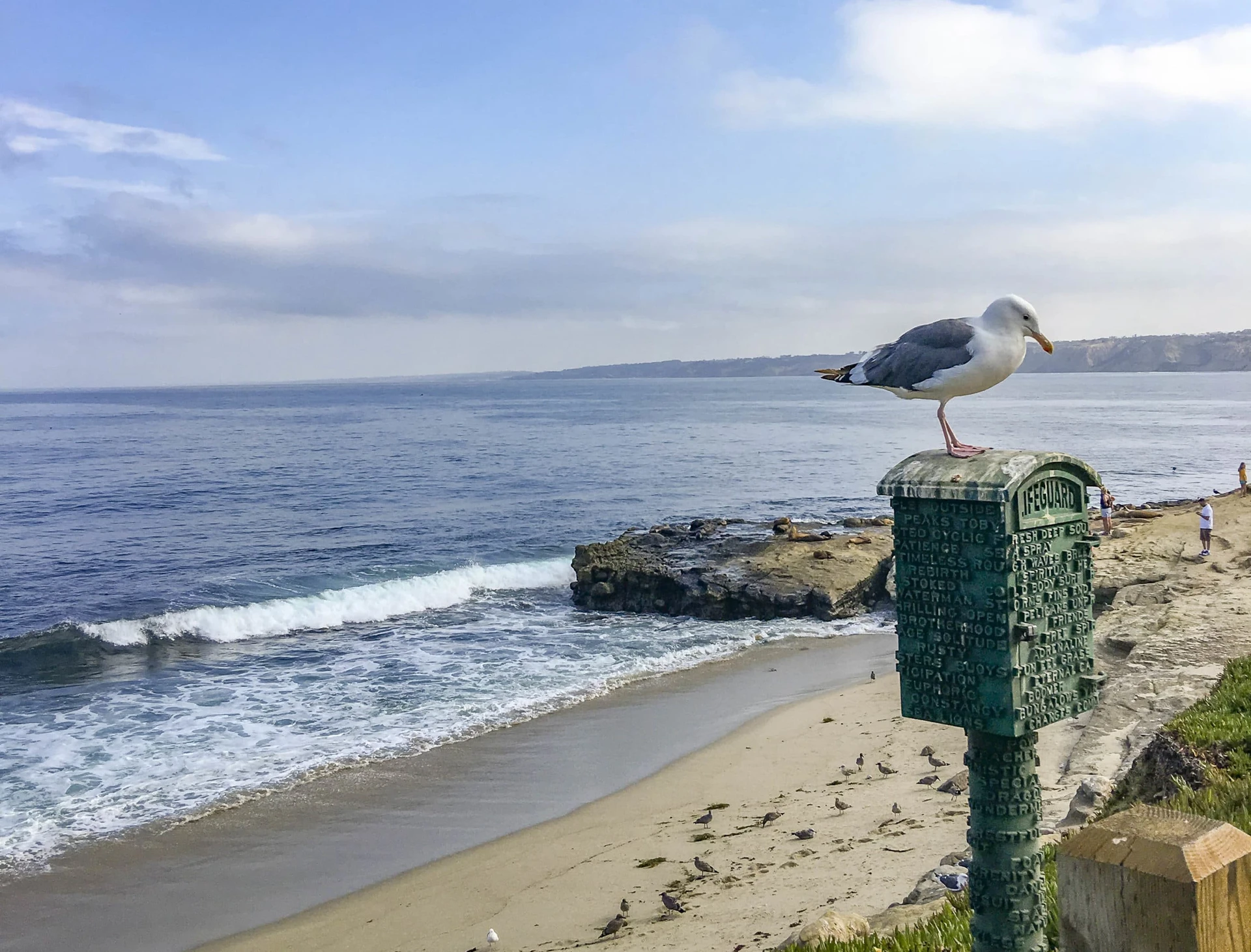
Boomer Beach is located just west of Ellen Browning Scripps Park and south of La Jolla Cove. It used to be a popular body surfing spot for experienced swimmers, but in 2023, the San Diego City Council voted unanimously to close Boomer Beach and adjacent Point La Jolla to people and dogs year-round to protect the California sea lions that breed and raise pups here.
The closure was approved by the California Coastal Commission and is in effect for seven years (through approximately 2030). The area is fenced off, and park rangers enforce the closure. An ocean access lane does remain open for swimming, surfing, and spearfishing from a designated corridor, but you cannot walk on the beach itself.
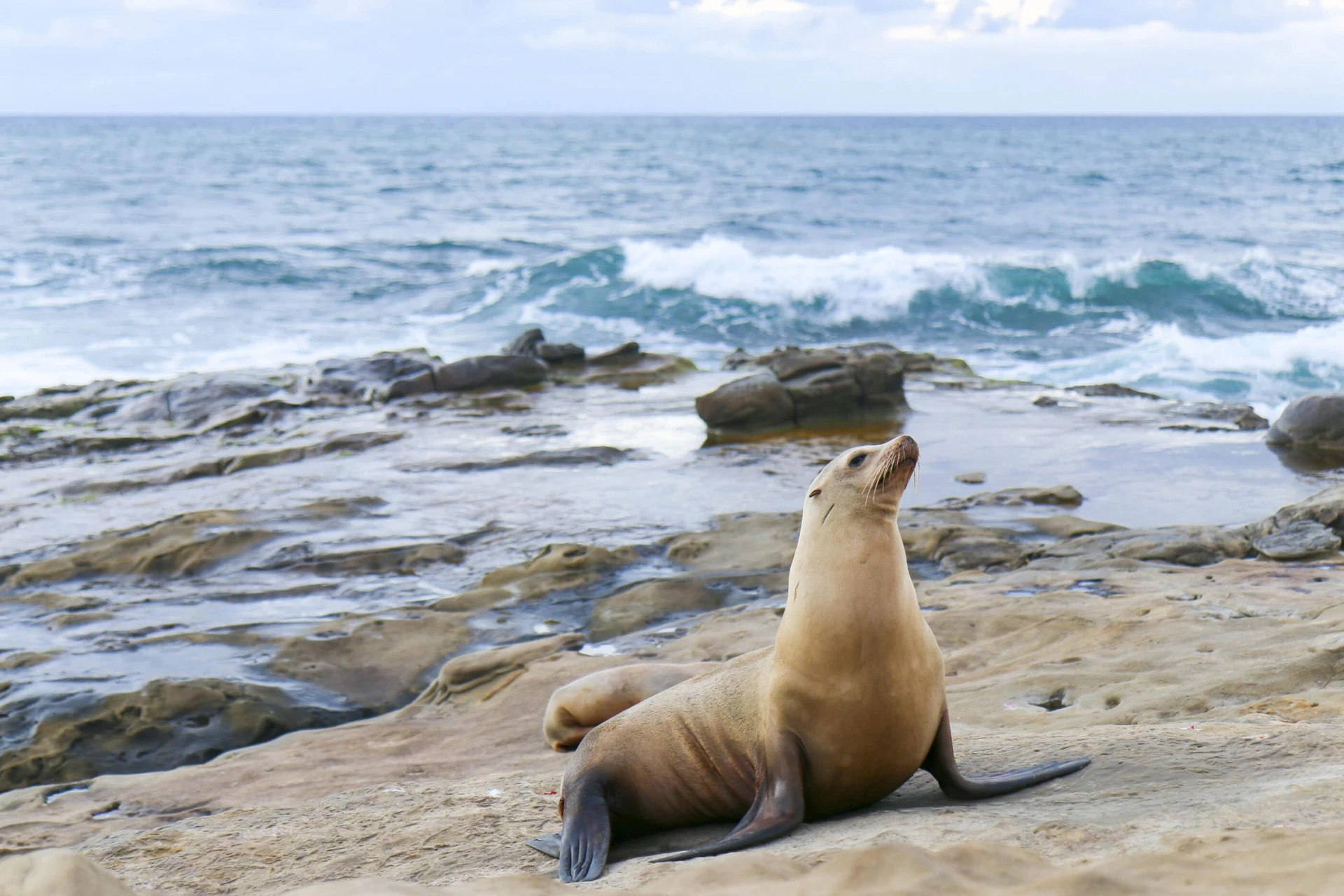
Despite the closure, Boomer Beach is still worth a stop. From the sidewalk and park above, you have clear views of the sea lions hauling out on the rocks and sand. During pupping season (roughly May through October), you may see mothers nursing pups and youngsters learning to swim. It’s a remarkable sight in the middle of an urban setting.
Fun fact: In 2025, a memorial plaque honoring the Bottom Scratchers, a pioneering San Diego diving club, was installed at Boomer Beach in Scripps Park.
Activities: Sea lion watching and photography from the boardwalk above. Ocean access for swimming/diving only via designated corridor.
Nearby dining: Same options as Shell Beach and La Jolla Cove, all within a short walk.
Parking and how to get there: Street parking along Coast Blvd. Plan to circle a few times, especially in summer and on weekends.
See also:
- Best Photography Spots in La Jolla
- Free Things to Do in La Jolla
- Top Places to Go Tide Pooling in San Diego County
Tips for Enjoying the Best La Jolla Beaches
A few things worth knowing before you head to the sand.
Lifeguards
La Jolla Shores, La Jolla Cove, and Children’s Pool have year-round lifeguard stations. During peak summer months, you’ll see additional seasonal towers at these and several smaller beaches, including Black’s Beach. Regardless of staffing, always check conditions before getting in the water.
Dogs
Leashed dogs are allowed on La Jolla beaches, but only during limited hours. From November through March, dogs are not permitted between 9 a.m. and 4 p.m. From April through October, the restriction extends to 9 a.m. through 6 p.m. Service animals are the exception. La Jolla Shores and La Jolla Cove are among the most ticketed spots in San Diego for dog violations, so pay attention to the posted hours.
Swimming and Surfing Zones
Several beaches are divided into designated areas for swimmers and surfers. Look for the black and yellow checkered flag, which marks the dividing line. Signage is usually posted nearby.
Water Quality
After rainstorms, bacteria levels can rise at La Jolla beaches due to stormwater runoff. I always recommend checking the San Diego County beach water quality page before swimming, especially within 72 hours of rain.
Stingrays
At La Jolla Shores in particular, stingrays are common in shallow water during warmer months. Do the “stingray shuffle” when you enter the ocean. Keep your feet on the sand and slide them forward rather than stepping. If you do get stung, head to the nearest lifeguard station right away. They’ll treat it with hot water, which helps significantly with the pain.
Shark Awareness
San Diego uses aerial drones to monitor for white shark sightings along the coast, and beaches are temporarily closed when sharks are spotted nearby. Leopard sharks, which gather at La Jolla Shores by the hundreds in summer, are completely harmless. If you see a closure sign or a lifeguard warning, take it seriously and stay out of the water.
Sun and Water Safety
Wear sunscreen even on overcast days. San Diego’s marine layer can be deceptive, and UV rays penetrate the clouds. Be mindful of rip currents, especially at beaches with stronger surf like Black’s Beach and Windansea. If you’re caught in one, swim parallel to shore rather than fighting against it.
Beach Rules
Smoking, glass containers, and alcohol are all prohibited on La Jolla’s public beaches. The one exception is the La Jolla Beach and Tennis Club, where members and hotel guests can drink on their small private stretch of sand.
Seagulls
They will absolutely steal your food. Keep snacks in a closed bag or cooler, and don’t leave anything unattended. Paper and plastic bags are their favorite targets.
Most of all, have a great time!
La Jolla Beach Map
FAQs About the Best Beaches in La Jolla
What is the best La Jolla beach for surfing lessons?
Not only is La Jolla Shores Beach one of the best beaches in San Diego, but it is also the best spot in La Jolla for surf lessons.
Numerous surf schools host their lessons on La Jolla Shores, including Surf Diva and Everyday California.
Exclusive Everyday California Discount
Use code LJMOM20 for a 20% discount on kayak and snorkeling tours, lessons, and rentals.
What is the best La Jolla beach for families?
La Jolla Shores. It has gentle waves, a wide flat shoreline, year-round lifeguards, a playground at Kellogg Park, bathrooms, showers, fire pits, and free street parking in the surrounding neighborhoods. Several surf schools also offer beginner lessons for older kids and adults.
Where can I rent beach chairs, umbrellas, and surfboards in La Jolla?
La Jolla Shores is the only La Jolla beach with rental shops nearby. Several outfitters on Avenida de la Playa rent surfboards, boogie boards, beach chairs, umbrellas, snorkel gear, and kayaks. Everyday California, Surf Diva, and La Jolla Kayak are two of the most popular.
If you’re heading to La Jolla Cove for snorkeling, The Cave Store rents snorkel gear right above the Cove. No other La Jolla beaches have nearby rental options, so plan accordingly if you’re heading to Windansea, Marine Street, or Black’s Beach.
Can you swim at La Jolla Cove?
Yes, but it’s better suited for experienced swimmers. The water is colder than at other San Diego beaches, and swells can be strong along the edges of the cove. Boogie boards, surfboards, and kayaks are not allowed because the Cove is within the San Diego-La Jolla Underwater Park Ecological Reserve. I’d recommend checking water quality conditions after any rainfall.
What is the best time to visit La Jolla beaches?
Late summer through early fall, roughly August through October. The water is warmest, the weather is consistently sunny, and summer crowds thin out after Labor Day. For tide pooling, the winter months offer the lowest tides. If you want to see leopard sharks at La Jolla Shores, plan for July through September.
Is it free to visit La Jolla beaches?
Yes, all La Jolla beaches are free and open to the public. Parking is also free on residential streets, though some paid lots are available near La Jolla Cove and in the Village. Arrive early on summer weekends or consider a rideshare.
What is the difference between the seals and sea lions in La Jolla?
La Jolla has both, and visitors often mix them up. Harbor seals are the smaller, quieter ones you’ll see at Children’s Pool. They have spotted coats, no visible ear flaps, and move by scooting on their bellies. California sea lions are the larger, louder ones at Boomer Beach and La Jolla Cove. They have visible ear flaps, dark brown coats, and can “walk” on their front flippers. Both are federally protected, and you should never approach or touch either species. Read my full guide to the La Jolla seals and sea lions for more information.
Is La Jolla Cove safe for snorkeling?
Generally, yes, and it’s one of the best snorkeling spots in San Diego, thanks to the protected marine reserve. That said, avoid snorkeling after rainstorms when bacteria levels rise, and be aware that visibility varies by season. Summer and early fall tend to offer the clearest water. You can rent gear at The Cave Store near the Cove.
Which do you think are the best La Jolla beaches?

Katie Dillon






Leave a Reply