


La Jolla Tide Pooling: Quick Guide
La Jolla tide pools are among the best in town because we have multiple spots to visit along our seven-mile coastline.
One of the many things I love about them is that they never look the same. Tides change, and sea life moves from one habitat to the next.
I live in La Jolla and am a huge advocate of going to the beach when they are visible, whether you’re a resident or a tourist.
My guide covers where to go tide pooling in La Jolla, a preview of sea life typically seen, tips for best tide pooling practices, and other helpful advice you should definitely read before heading out.
See also: Best Tide Pools in San Diego
Why La Jolla Is a World-Class Tide Pooling Destination
Shaped over time by sandstone cliffs, rocky terraces, and volcanic outcrops, La Jolla’s coastline is full of natural crevices, shallow basins, and hidden pockets that trap seawater between tides.
These pools become miniature marine habitats, teeming with everything from anemones and crabs to sea slugs and octopuses.
What also sets La Jolla apart even further is its protected status within the San Diego-La Jolla Underwater Park.
Strict conservation rules prevent collecting or disturbing marine life in most of our tide pools, allowing species to thrive naturally.
This combination of geology, biodiversity, and protection makes La Jolla tide pools some of the most remarkable in the world.
Understanding the Tides: The Secret to a Great Visit
While tide pooling is a popular activity in winter, I’m getting tons of questions about it year-round because of increased interest in getting outside in San Diego.
Danny says, “Typically, we start seeing good times [for tide pooling] starting in late October, going all the way to March.”
The moon’s gravitational pull (the sun has a smaller tidal effect, too) on the Earth as it rotates causes lower tides to fall during daylight throughout this season.
Fun fact: California experiences two high tides and two low tides per day.
Check Today’s Tides & Decide When to Go
It’s easy to check the San Diego tide charts to note when minus tides are happening. I do this and plan our visits to the tide pools in La Jolla accordingly.
| Season/Months | Tide Conditions | What to See | Important Notes |
| Winter (Dec – Mar) | Excellent. Frequent minus tides during daylight, mostly late afternoons. | The richest biodiversity of the year. Good chances to see octopus and nudibranchs. | This is the absolute best time for tide pooling in La Jolla. |
| Spring (Apr – May) | Okay. Low tides begin shifting to early evening. | Abundant life is still visible. | Early in April can be alright, but May is tough. |
| Summer (Jun – Aug) | Challenging. The lowest tides occur during the night or very early morning. | Marine life is less visible during daytime high tides. | Early in April can be alright, but May is tough. |
| Fall (Sep – Nov) | Improving. Low tides begin to return to daylight hours. | Diversity increases as the prime season approaches. | A great time to visit with fewer crowds than in winter. |
La Jolla’s Best Tide Pools: A Location Guide
Most access points to La Jolla beaches will have tide pools exposed during a minus tide.
Some beach access points to them are tucked away in residential neighborhoods, while others are easily accessible from Coast Blvd. or La Jolla Shores Beach.
For those who need a bit more guidance, I’ve listed the nine best tide pools in La Jolla, along with directions on how to reach them.
1. Dike Rock (The Naturalist’s Choice)
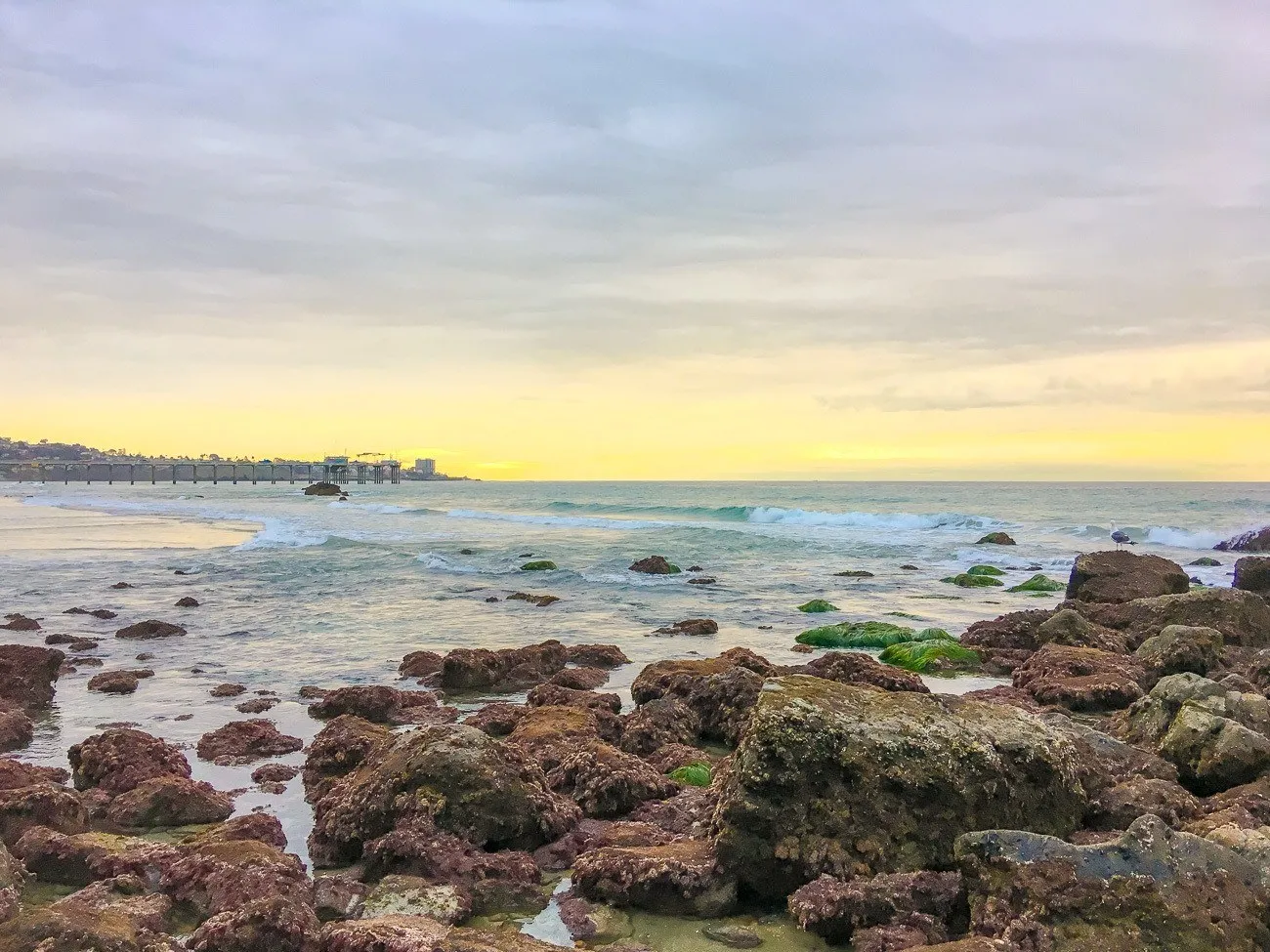
Dike Rock is located just to the north of Scripps Pier. This is where Birch Aquarium hosts tide pooling tours because it’s one of the best tide pools in La Jolla.
Sure, it’s close to their facility, but this is also a less crowded beach area, and there’s usually a lot to see between the rocks.
Danny says, “Dike Rock is interesting because it’s more of a sandy habitat interspersed with big rock formations.” The sand draws juvenile fish, blind gobies, and different shrimp.
The kids loved carefully climbing over the rocks here during our tour. Every little pool was home to a different plant or animal.
The benefit of tide pooling in a group is that there are more eyeballs to spy different animals—I can’t recommend it enough.
And, of course, the Birch Aquarium guides are fun to explore the tide pool ecosystems with because they know exactly where to look. When we visited, huge sea hares were out in abundance, laying eggs.
Directions & Tips
2. La Jolla Shores Beach (South of the Marine Room Restaurant)
I’ve been told that high numbers of baby sea hares have recently been spotted here at low tides.
This reef formation is also fun to explore for its usual marine life, such as hermit crabs, tube snails, sea cucumbers, and more.
If the tides are low, exploring this area and Dike Rock on the same visit would be easy. It’s probably a 20-minute walk on the sand between these two best tide pools in La Jolla.
And La Jolla Shores is one of my favorite sandy beaches in the entire San Diego area.
Directions & Tips
3. La Jolla Cove
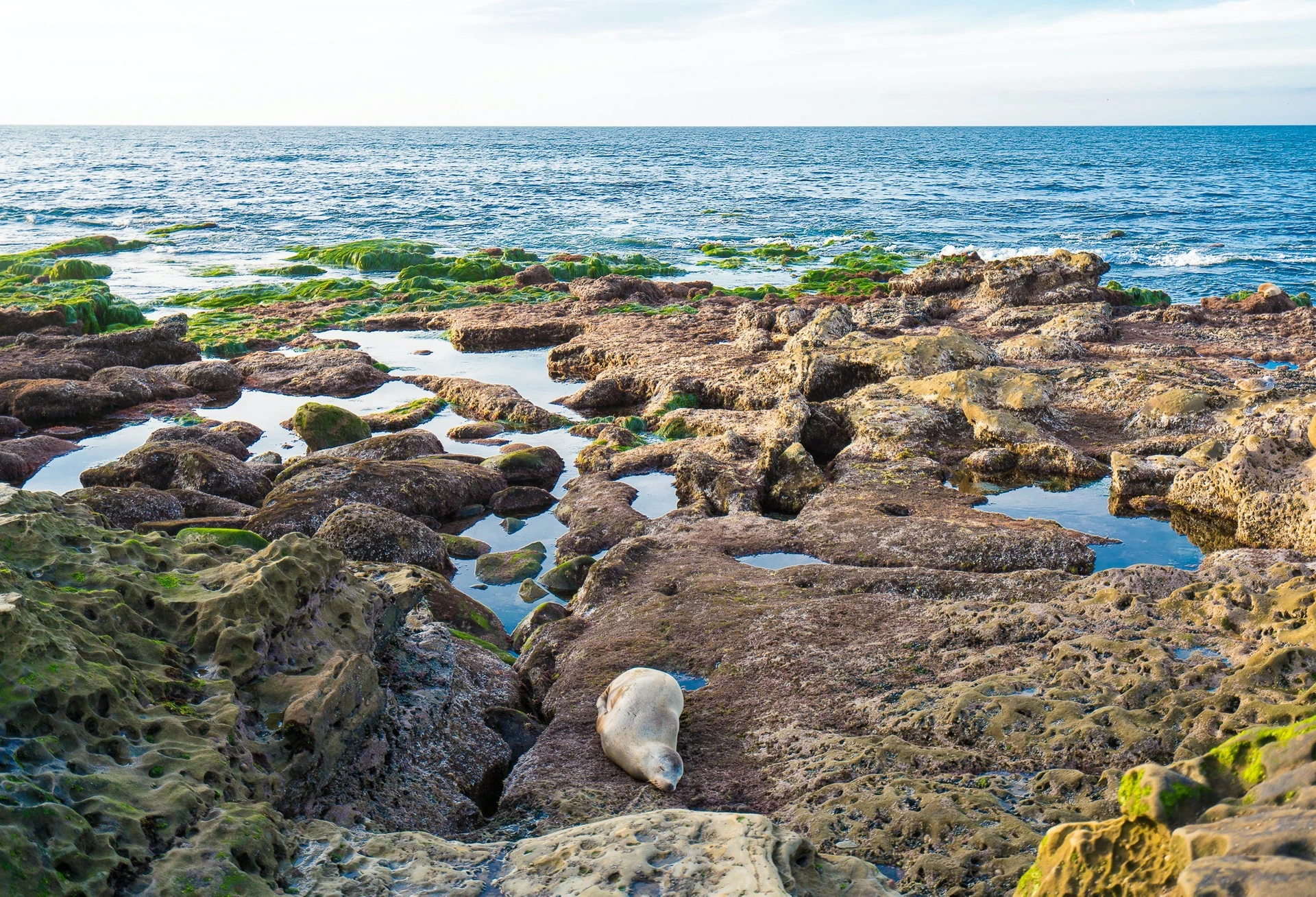
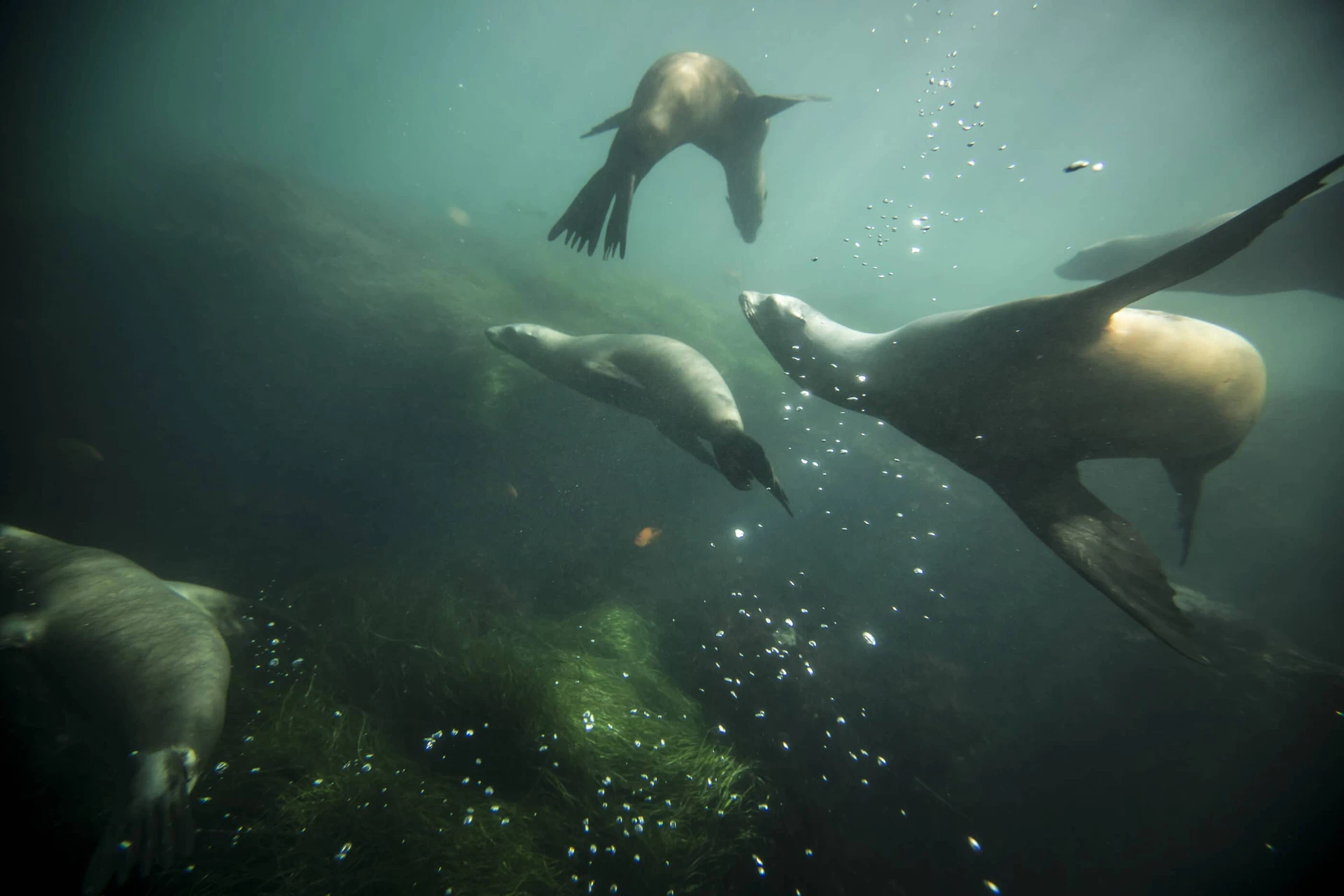
If it’s low tide at La Jolla Cove, many of the La Jolla sea lions and seals will head out to little rock islands in the ocean.
This means you might be able to see tide pools on the flat rocky area called Point La Jolla between Boomer’s Beach and La Jolla Cove, where they would typically hang out.
This beach area is at the end of Ellen Browning Scripps Park, where it meets the Cove.
I say might because this point now has a year-round closure to protect the sea lions, so I’m not exactly sure what your ability to explore tide pools will be like.
The seagrass and rocks in view during low tides are stunning, though, and even if you’re on the boardwalk or at adjacent Ellen Browning Scripps Park, you might see some crabs and a few sea anemones, but not much else.
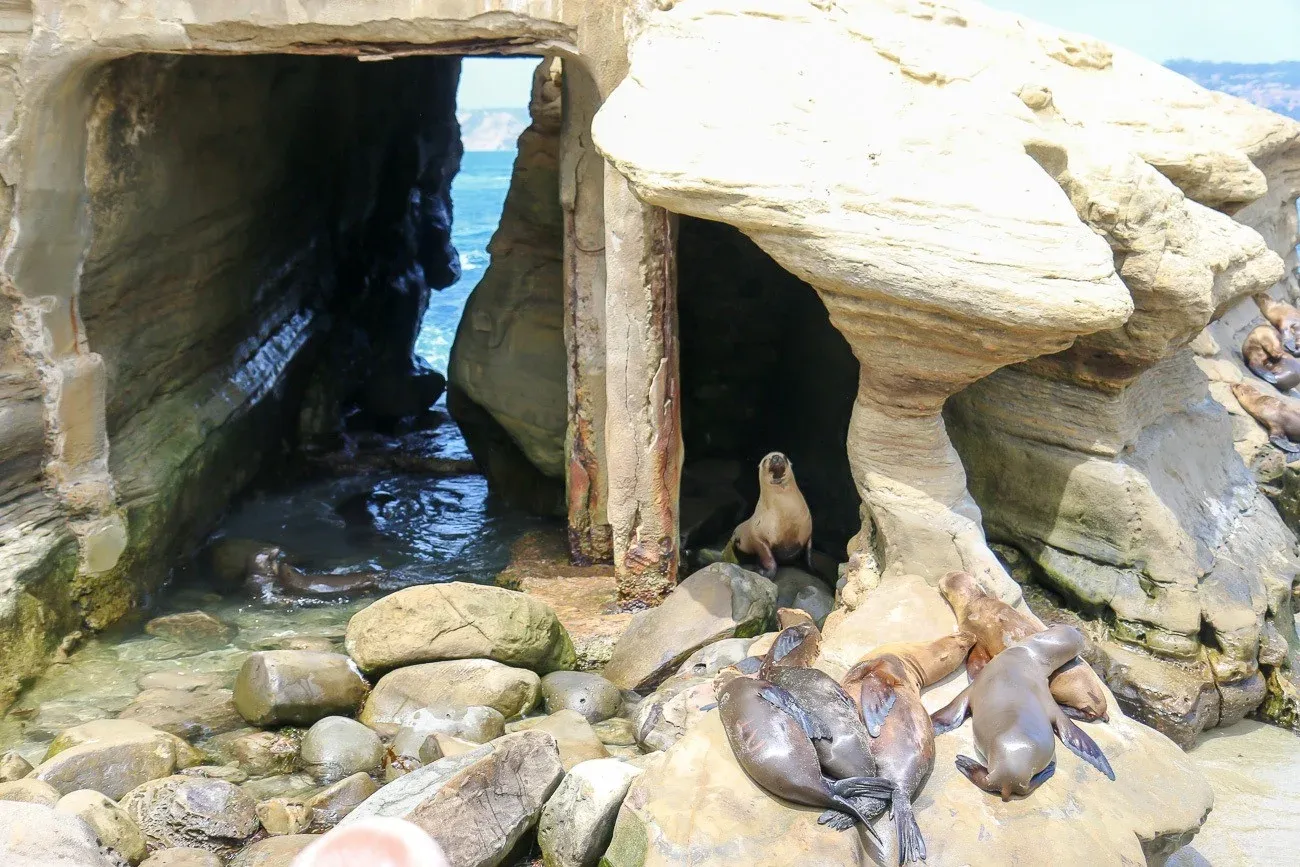
Your best bet is to take the stairs down to the sand to explore the small cave and rocky areas accessible from La Jolla Cove beach.
This little spot and the Point La Jolla area are usually what people refer to when they mention La Jolla Cove tide pools.
The other good news is that you can start here and walk south along the boardwalk to several of the other tide pooling spots listed below.
This beach is a great place for swimming because waves typically don’t break here, and it’s an entry point to the underwater park where you’ll see even more sea life when snorkeling or scuba diving.
Directions & Tips
4. Shell Beach
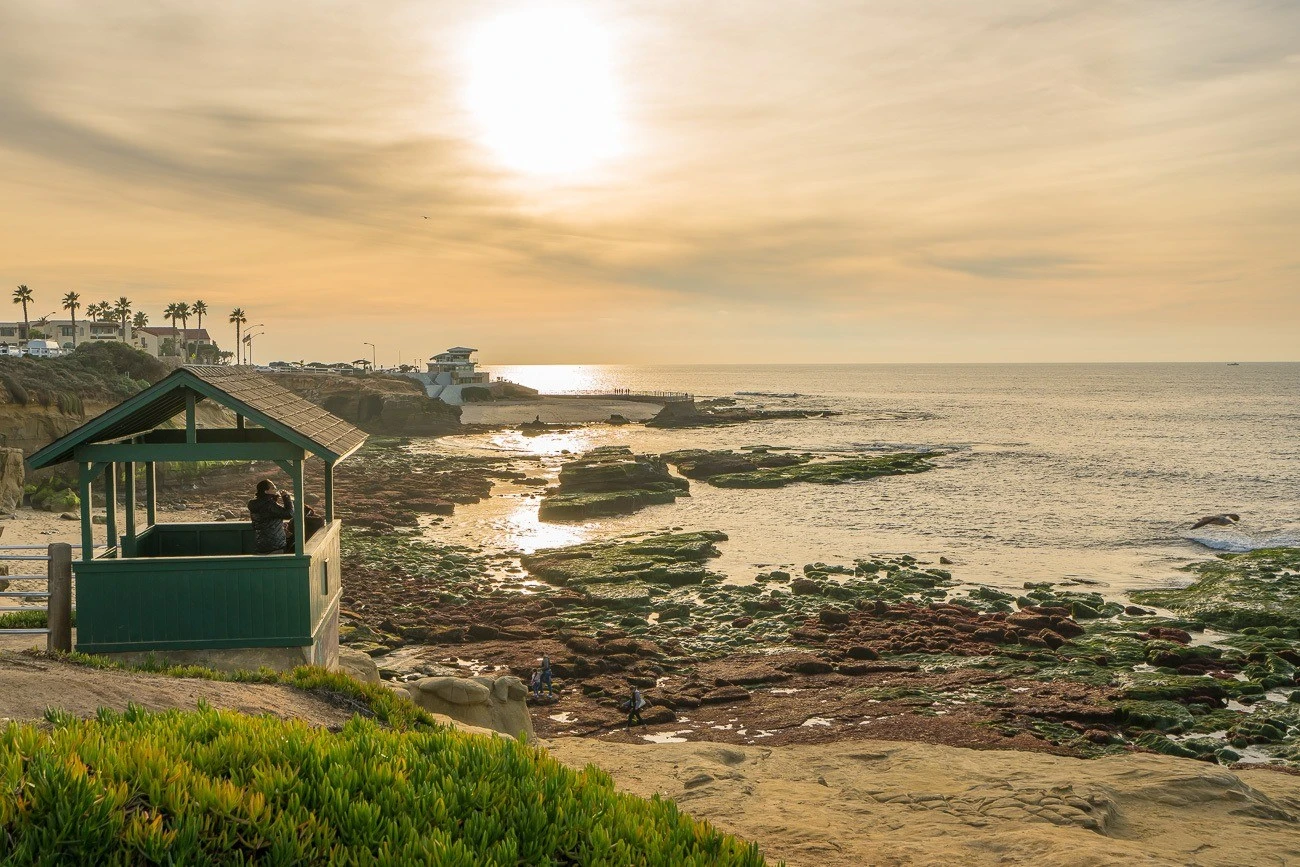
Shell Beach is a great little place for tide pooling and one of my favorite hidden gems. The last time we visited, we saw lots of hermit crabs, limpets, small fish, and a few sea anemones.
The Shell Beach tide pools sometimes reveal themselves in the summer, which, as mentioned earlier, is not the regular tide pooling season.
The cement stairway to the sand can be blocked at the base by big rocks washed up by the ocean. You’ll need to tread carefully over them.
Directions & Tips
5. South Casa Beach
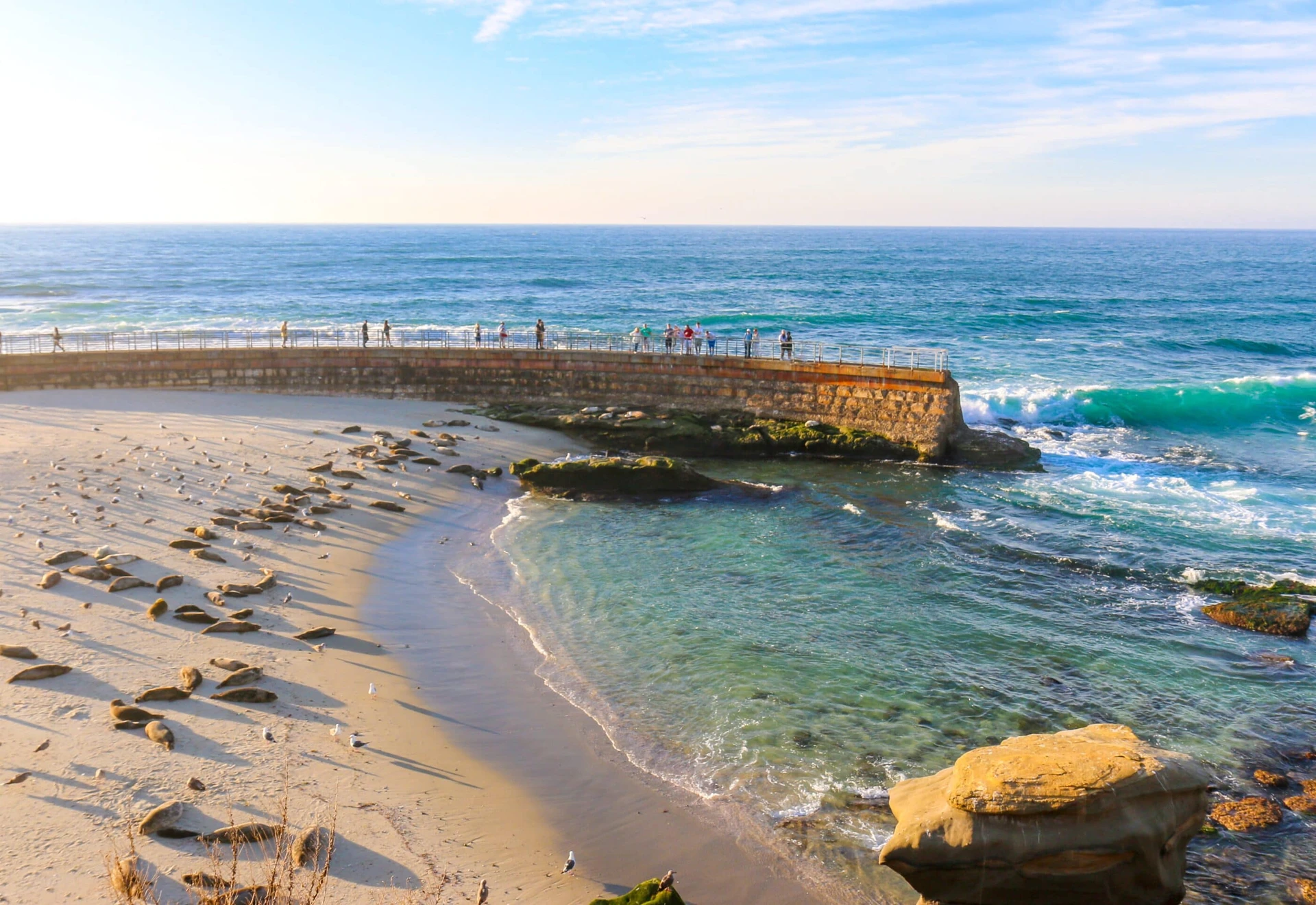
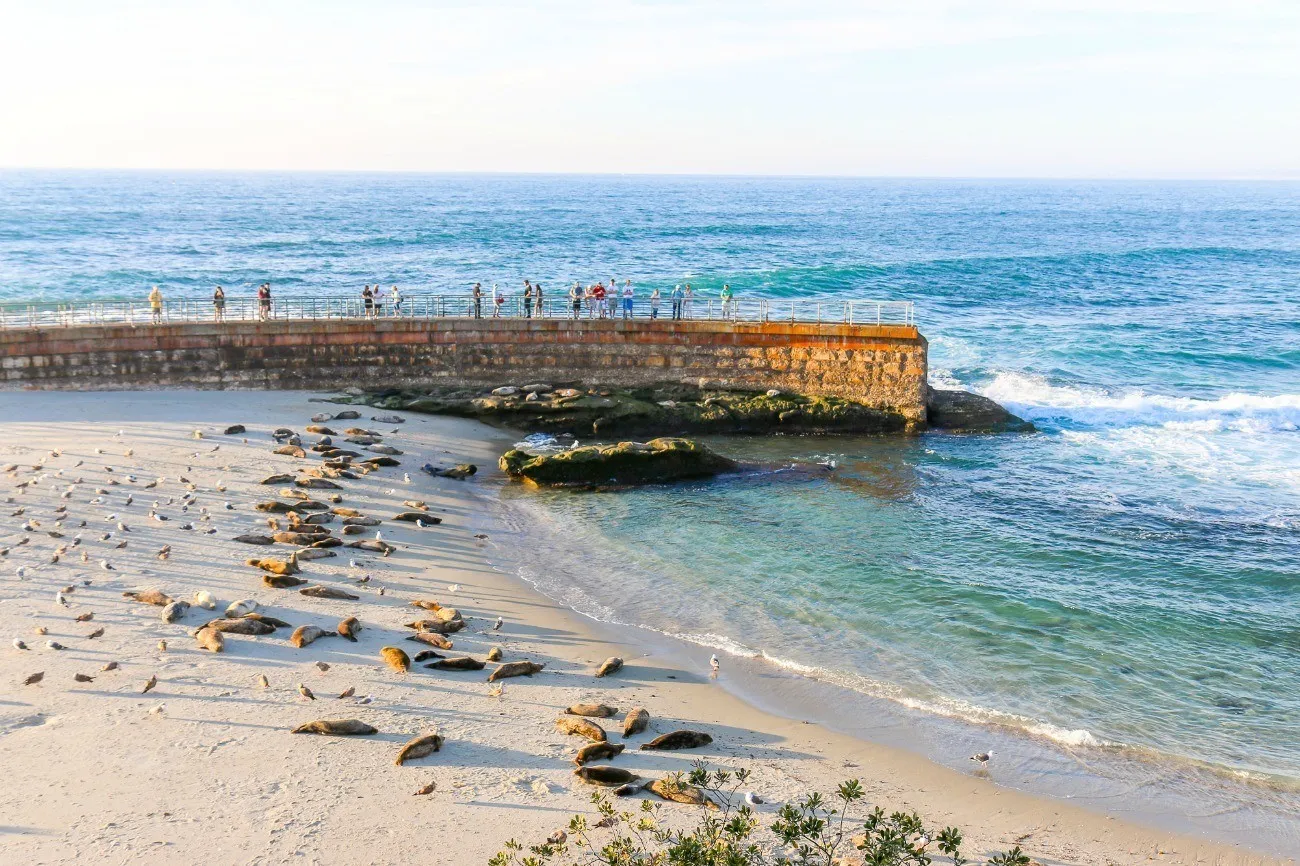
Keep walking south from Shell Beach toward Children’s Pool Beach. South Casa Beach is behind the Children’s Pool sea wall and lifeguard station (Children’s Pool Beach is where the La Jolla harbor seals hang out when they’re not in the ocean).
This is another tide pooling gem with easy access via a stairway. This spot is easy for kids to explore marine life during low tides, thanks to the combination of sand and rocks.
Directions & Tips
6. Between Wipeout Beach and Hospital Point
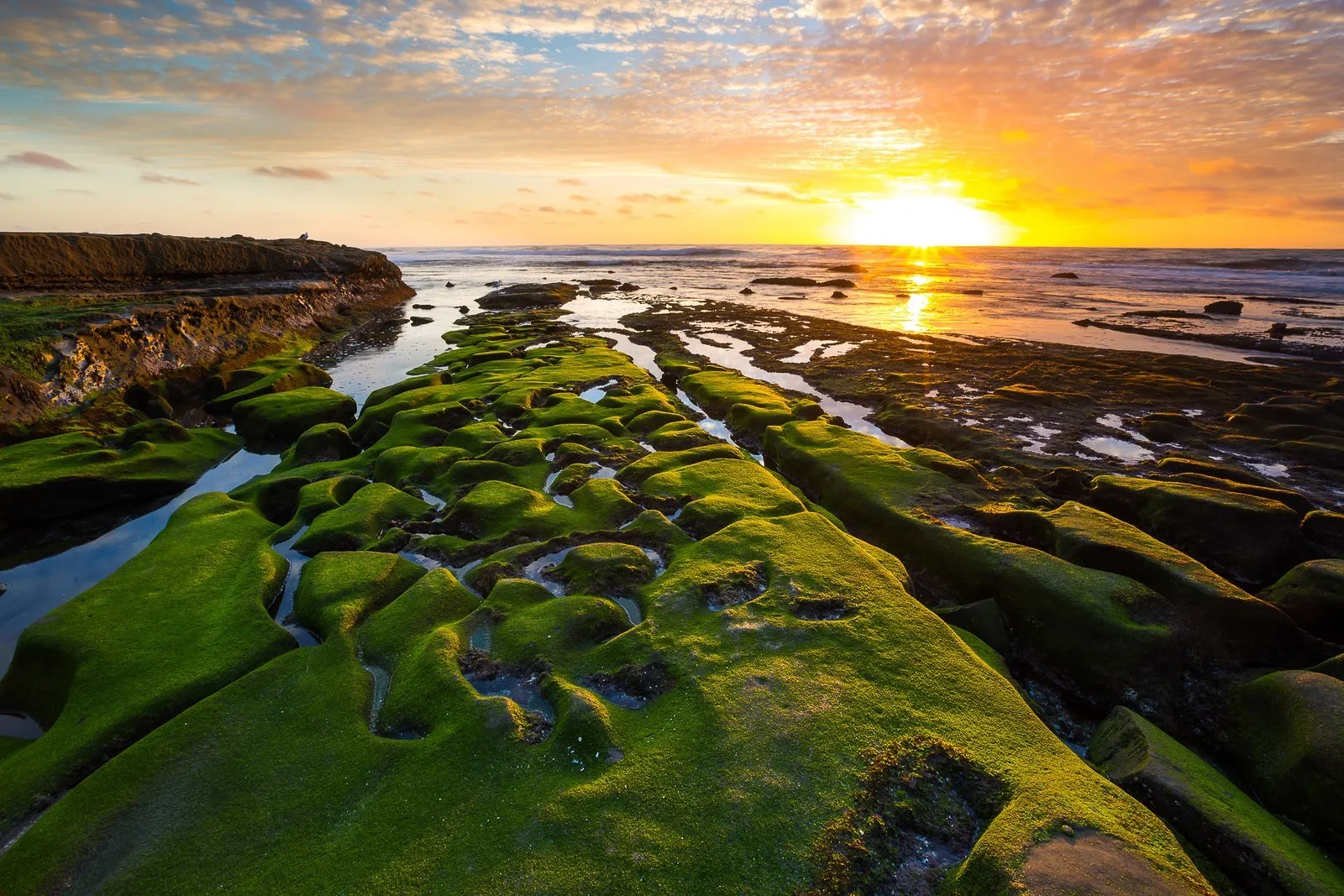
Walk a few minutes further south from South Casa Beach to Wipeout Beach. From here to Hospitals, passing Whale View Point is one of our favorite tide pooling spots.
If you’re a photography buff, Hospitals is where these little, round, curved pools reveal themselves (they are incredibly popular on Instagram and Pinterest) during low tides.
Here, you’ll find mostly rocky bluffs with little pockets of sand. Over time, we’ve spotted crabs, limpets, sea anemones, fish, sea slugs, urchins, and more. Stay for the sunset.
Directions & Tips
7. Windansea Beach
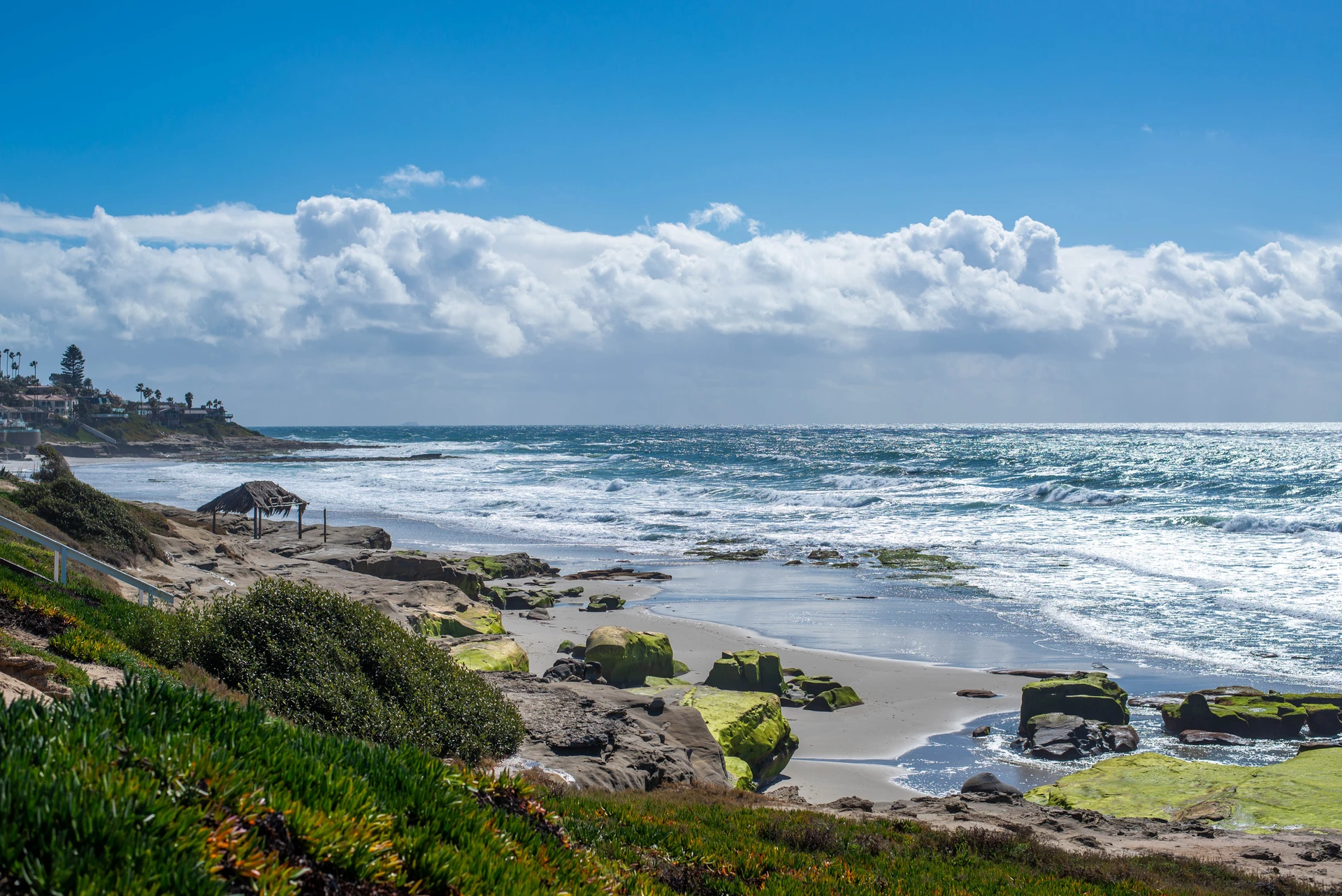
The waves surfers rave about here are due to underwater reefs. Some reveal themselves during low tide.
It tends to be a little less crowded here, though it’s mostly a sandstone landscape (that you’ll have to scramble down a little) versus actual sand. Sea anemones and various small crabs seem most commonly seen here.
Directions & Tips
8. False Point
False Point is a good option for those living in or staying in the Bird Rock neighborhood. Its draw is that there are lots of rocks to navigate, many of which are loose.
This also means you need to be very careful when walking on the rocks and keep an eye on small children, as the tide pools and rocks are particularly slippery.
The good news is that flipping them over (remembering to put them back) can reveal various sea creatures. (This is also where Birch Aquarium used to lead tours, but they have mostly been at Dike Rock recently.)
Directions: You’ll find these Bird Rock tide pools at Sea Ridge Drive and Linda Way, where there is residential parking. Take the stairs down to the beach from Sea Ridge Drive.
Directions & Tips
Another Nearby Tide Pool
If you follow Sea Ridge Drive north, it turns into Calumet Avenue. You’ll see a small grassy park called Calumet Park. Below the park is a tide pool area. It’s a little small, and I wouldn’t go out of my way to only visit it, but it’s a 5-minute walk from False Point.
9. Birch Aquarium at Scripps
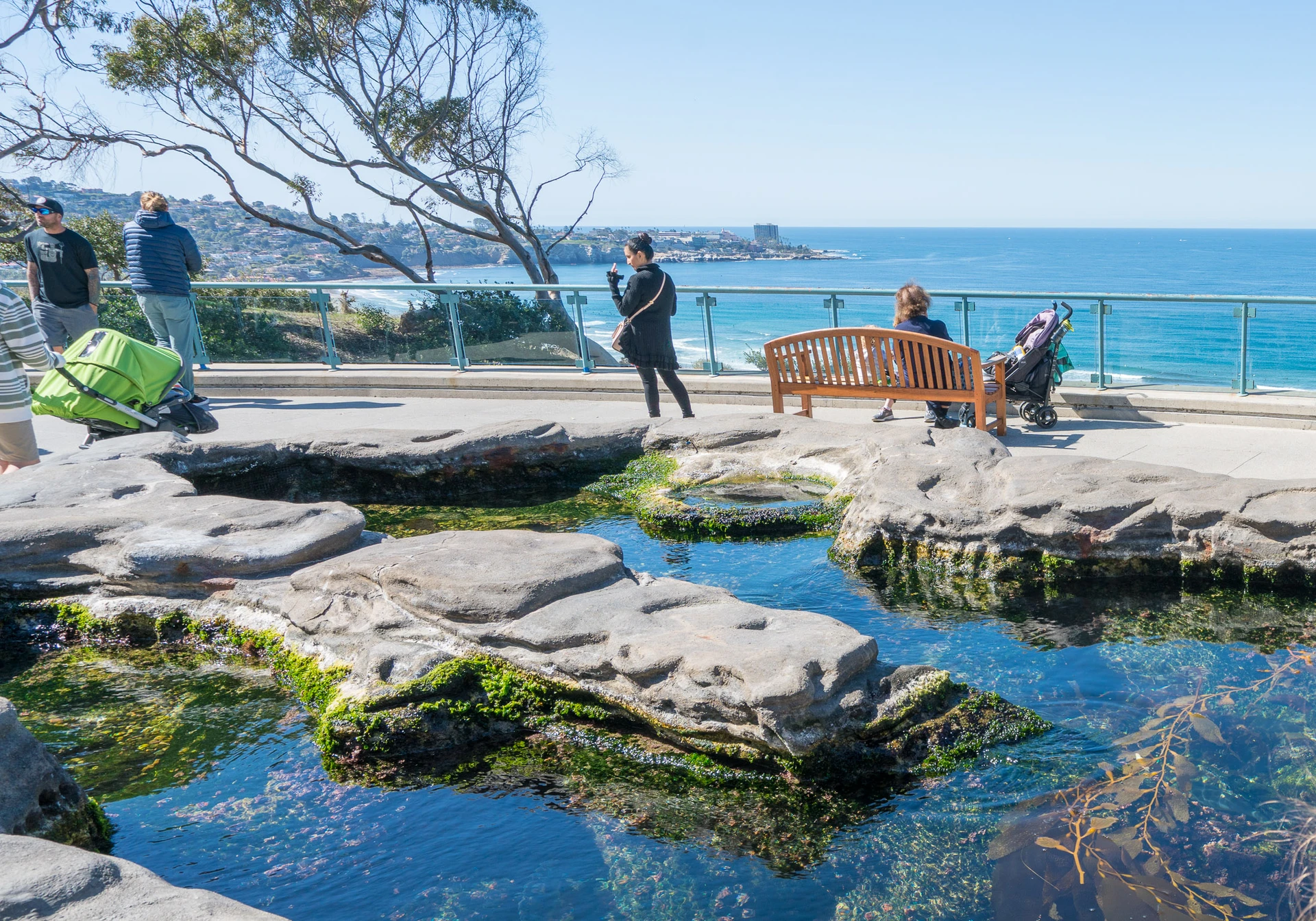
When you visit this San Diego aquarium, head out to Tide Pool Plaza for one of the best views in San Diego and to see the tide pools.
No, this isn’t the beach, but they have built a rocky intertidal zone filled with sea life that you would see in La Jolla tide pools.
What is also neat about Tide Pool Plaza is that docents are present to answer questions and, where appropriate, help people touch.
You can also check the schedule to see when tide pool feedings are happening during your visits.
I send people to Birch Aquarium to see tide pools when there are no daylight low tides during their visit. Anyone with kids who are aspiring marine biologists or interested in the environment should include it on their San Diego itinerary.
Directions & Tips
What Will You See? A Guide to La Jolla’s Intertidal Wildlife
It’s incredible to think that an animal must be able to tolerate currents, sun, and sometimes hours in the air to survive life in tide pool habitats.
“A lot of animals can feel you are walking on the rocks or sense chemicals in the water, and they’ll hide for a little bit,” Danny adds. “If you’re just quiet and watching the tide pool for a moment, those animals will start revealing themselves. It really is a type of magic.”
This is by no means a complete list of animals, but these are the most commonly seen in La Jolla tide pools and San Diego tide pools across the county.
Sea Anemones
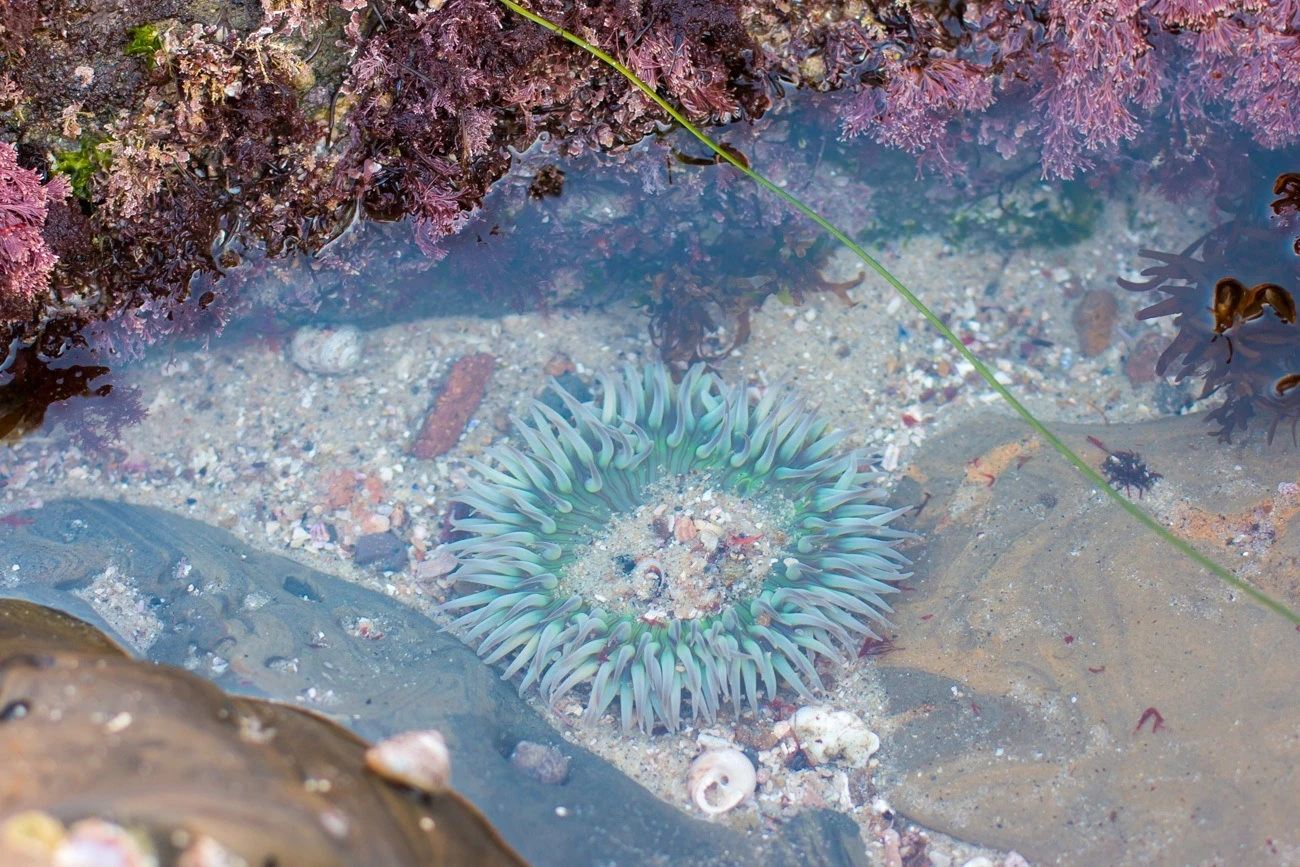
Did you know that sea anemones can live 50 years or longer and that there are over 1000 varieties found at different depths worldwide? Sea anemones are my favorite tide pool creatures.
We have mainly two types here in San Diego. The first is the solitary sea anemone, which I’ve always been particularly fond of. Their tentacles range from pale green to blueish green.
To survive in the air or when disturbed, they curl their tentacles inward, revealing a soft brown exterior dotted with broken shells. When submerged in water, their tentacles are typically open.
The other type of sea anemone most commonly seen is smaller, less colorful (or brown, really), and lives in groups. Sea anemones can also slowly change location, too.
Crabs
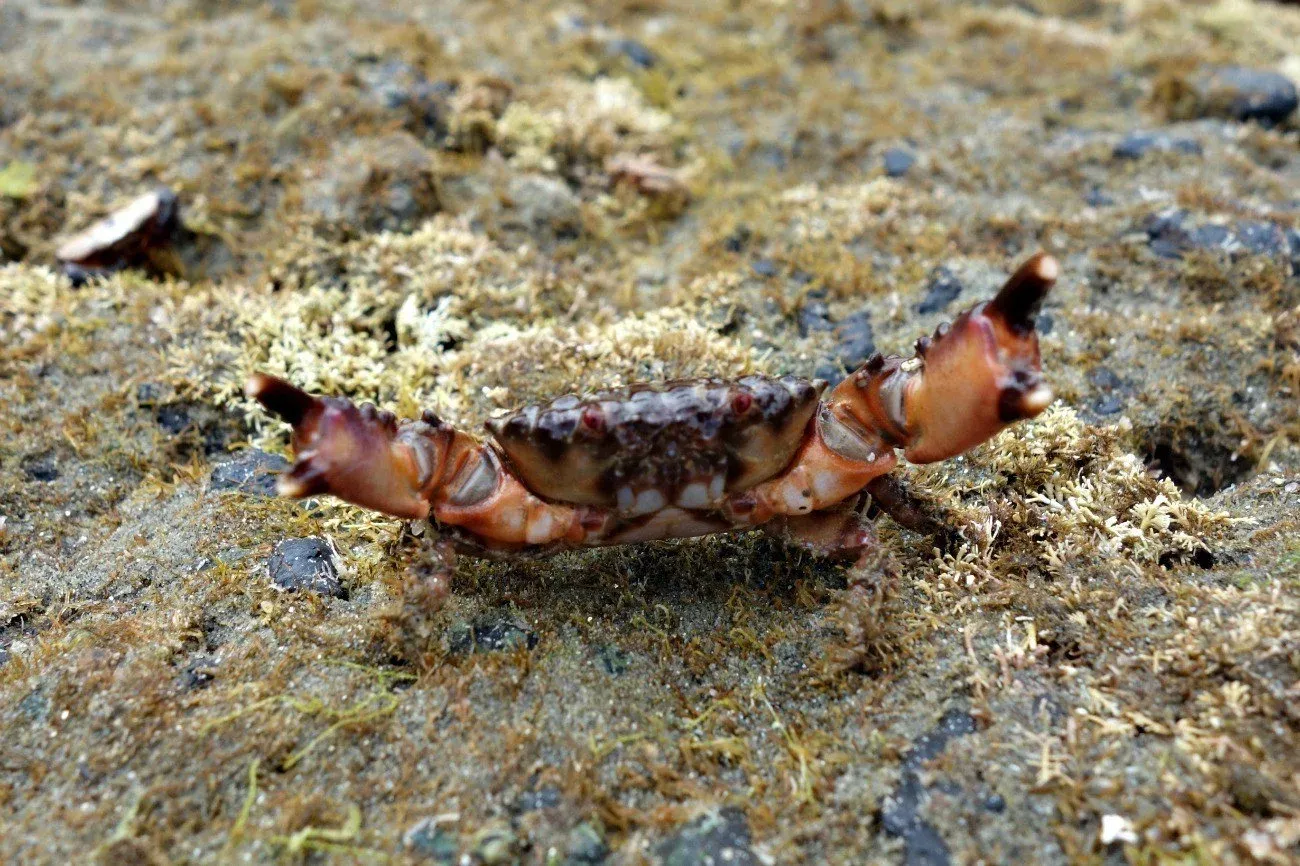
Our little tide pool crabs are small and fast, scurrying sideways over tide pools with their little pinchers.
Fun to watch; they’re able to hide in little crevices and pretty much eat whatever they can grab. They can split time above and below the water.
Limpets and Chitons
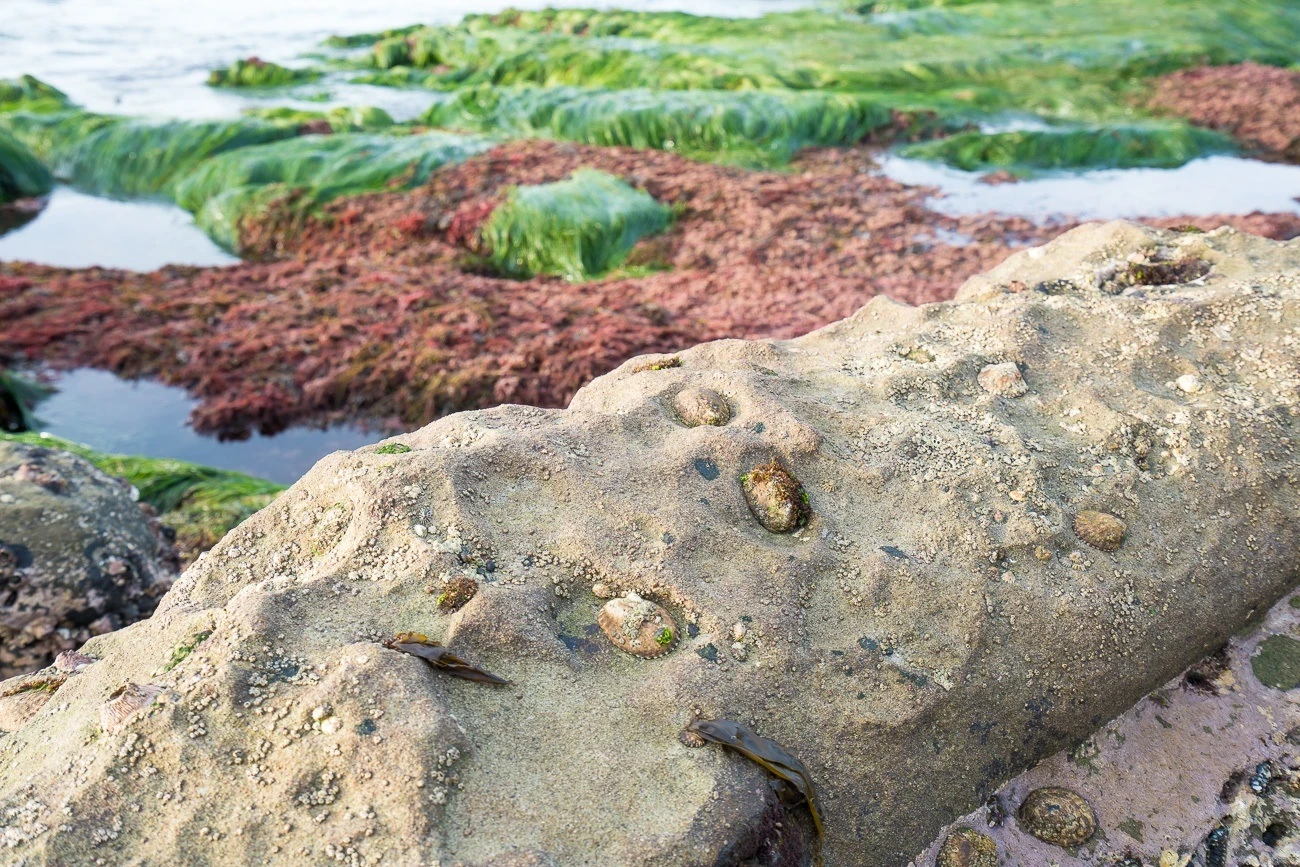
While they don’t move around as you watch, I personally love finding chitons and limpets stuck to rocks. They’re quite common in all of our tide pools. In some places, you can see them at high tide.
Hermit Crabs
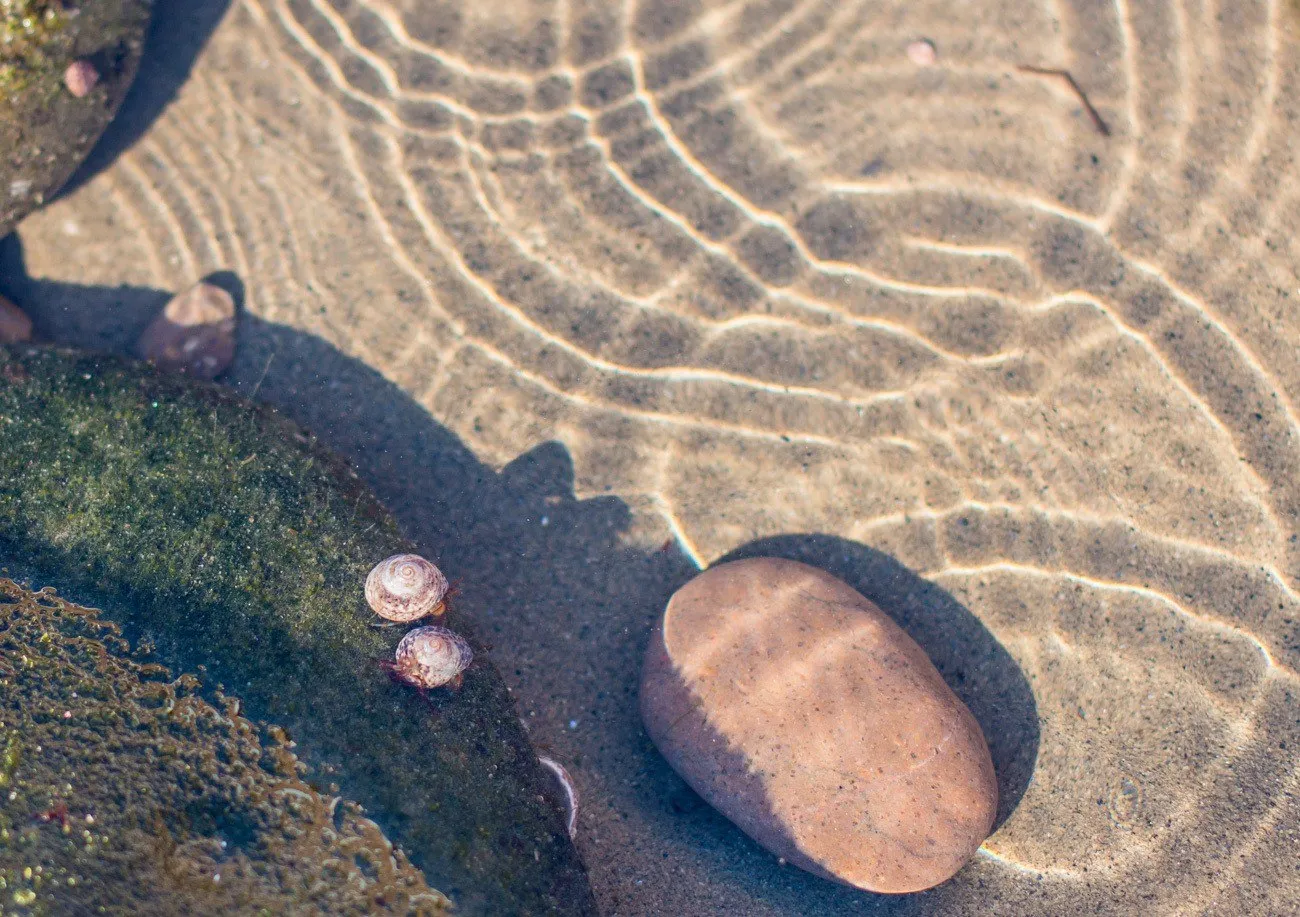
Always a source of entertainment, hermit crabs can be found in abundance. I’ve seen them scurrying around in various sizes and underneath a variety of shells every single time I’ve been tide pooling in La Jolla.
(To help kids fight the temptation to take shells from the beach, tell them that the hermit crabs need them for housing.)
Two-Spot Octopuses
While I have yet to see an octopus in a San Diego tide pool, Danny vividly remembers his first sighting.
“I got really lucky when I pulled up this turban snail shell,” he says. Turban snail shells are commonly found around La Jolla tide pools and are about the size of your fist.
He saw a little arm and tentacles scrunched up inside and realized it was an octopus hiding in the shell. He put it in one of their bins, and out came a 2-foot-long octopus.
“It just blows your mind because this animal is just scrunched up in there like a cool, neat little hiding place,” Danny says.
Octopuses have no bones, so they can fit into any space the size of their beak, a neat adaptation for living in tide pools.
Sea Stars
Environmental changes impact the number of sea stars seen in local tide pools. We were lucky to see two during our Birch Aquarium tide pooling tour at Dike Rock.
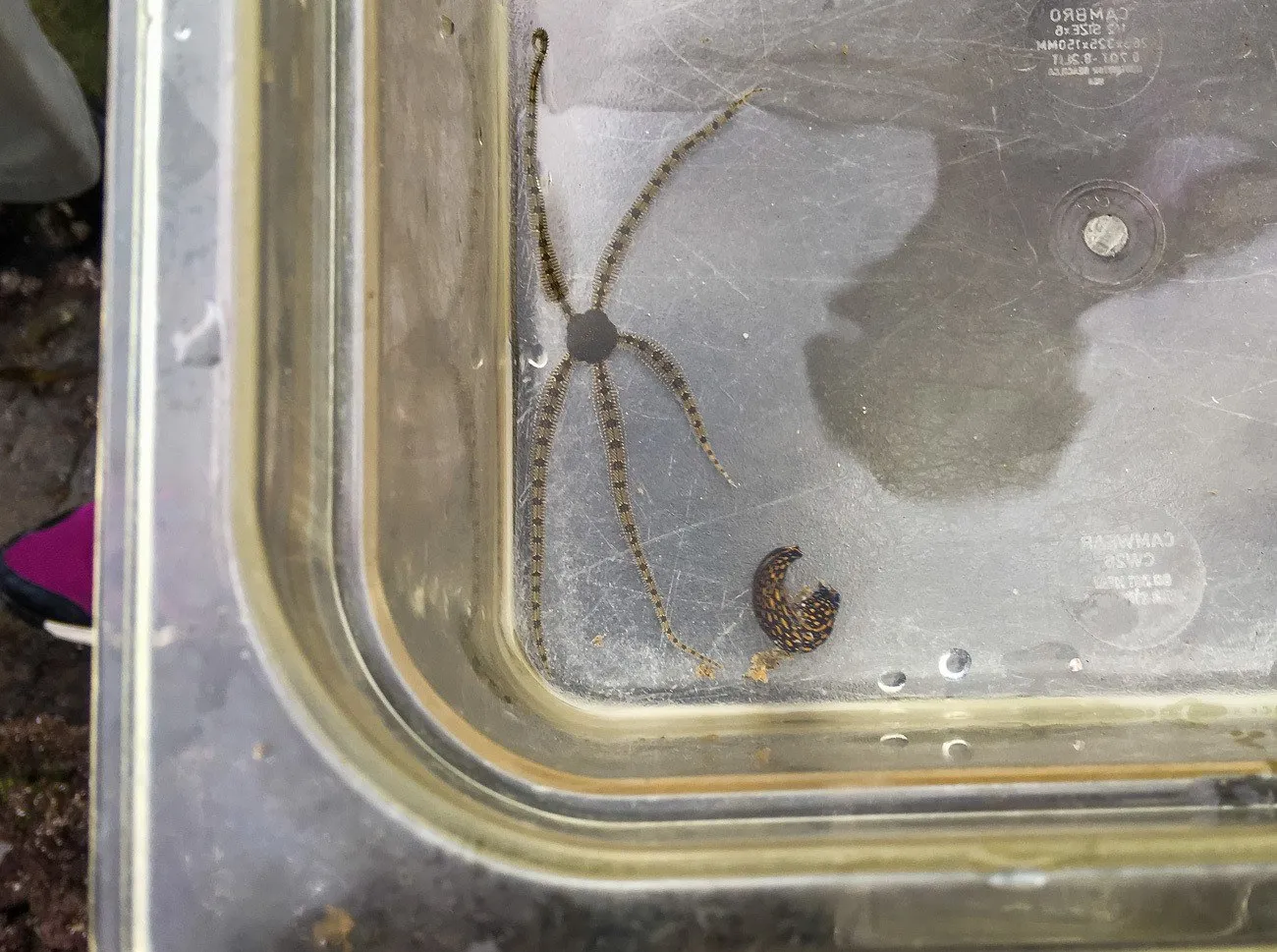
One of our Birch Aquarium guides spotted a brittle star and scooped it up with water into a bin for us to see (in addition to this little sea slug).
The kids loved watching our guides and volunteers try to identify what kind of starfish the one pictured below was.
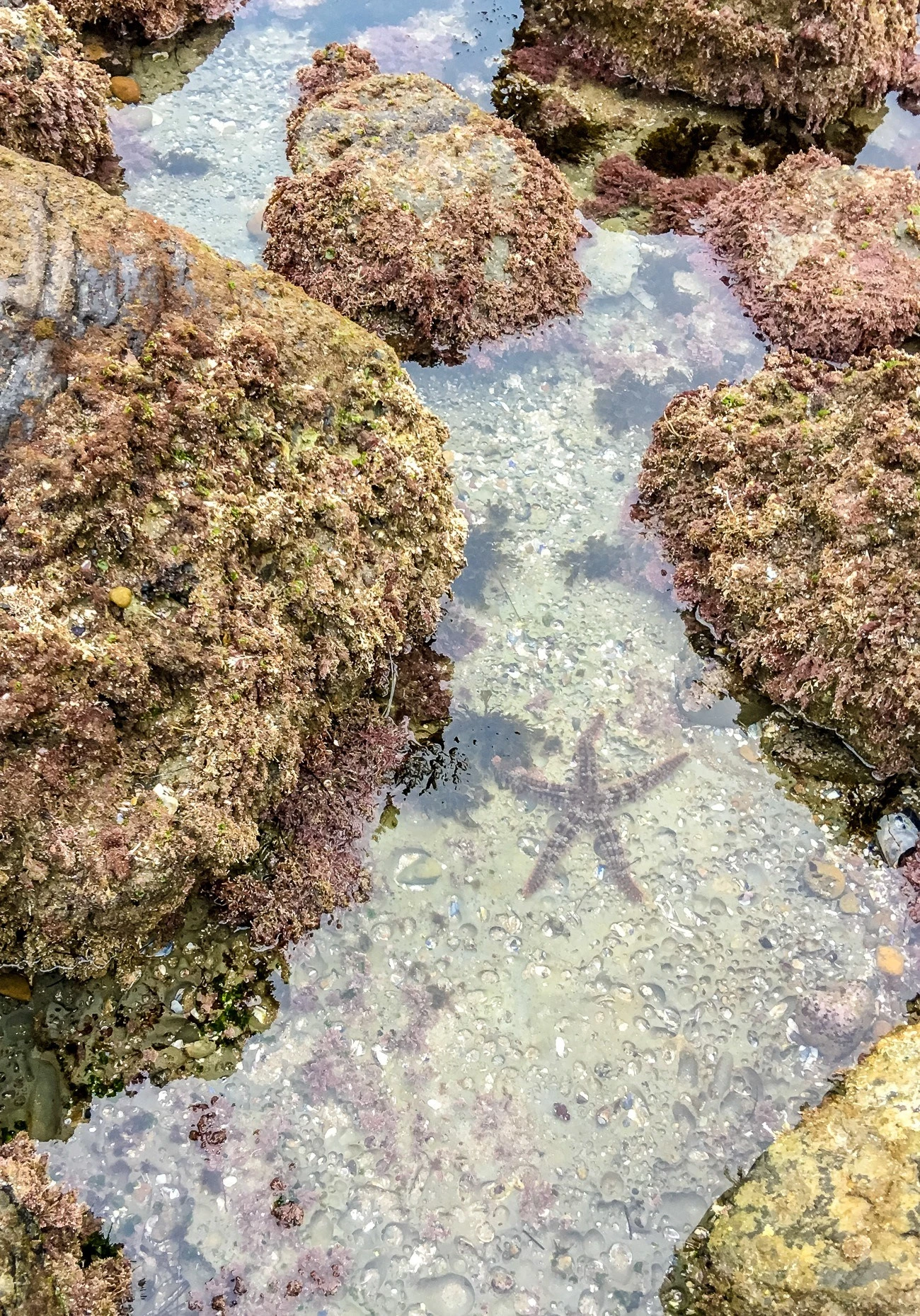
It was neat to see the starfish move around this pool!
Spanish Shawl
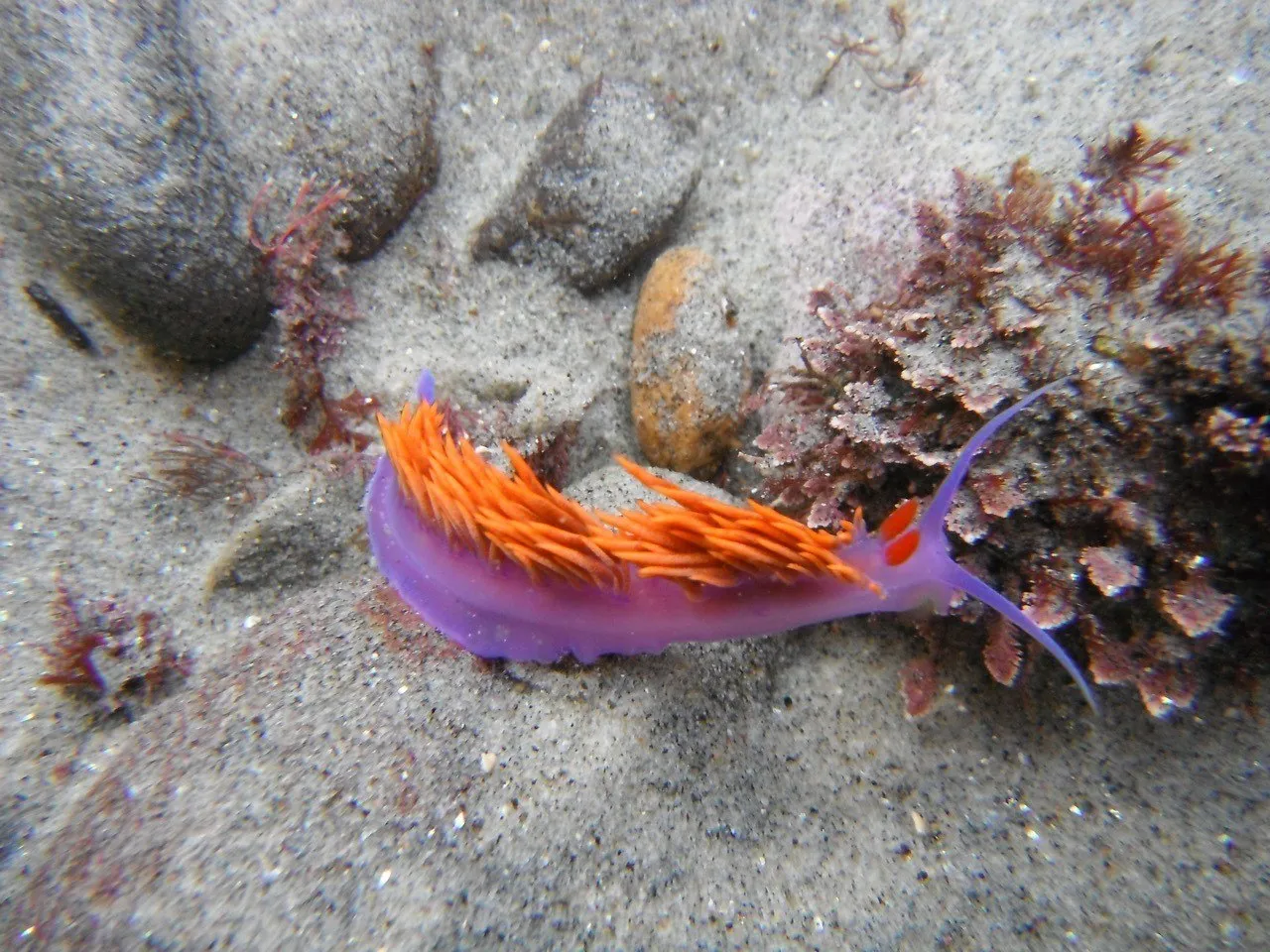
Tide poolers in La Jolla can usually spot two types of sea slugs. This first is a Spanish Shawl. It’s only 2-3 inches long, but its neon purple and orange gills are quite striking against the tide pool landscape.
Sea Hares
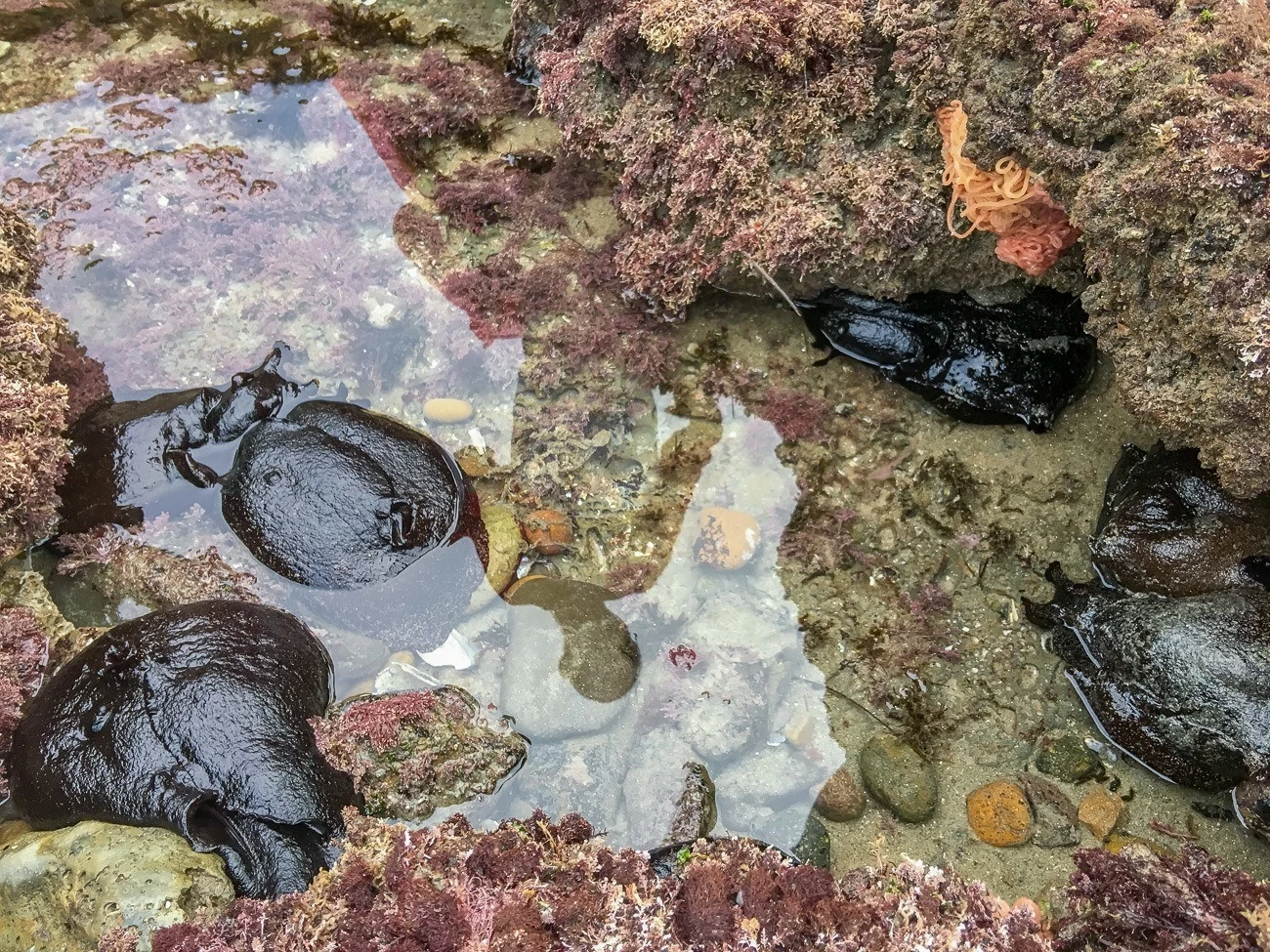
On the other side of the sea slug spectrum, sea hares grow to about a foot long. Sensors resembling rabbit ears on their heads detect chemicals in the water.
Did you know that you can tell what a sea hare has been eating by its color? If they’re eating red algae, they turn red. If they’re eating dark green algae, they turn black or green. Sea hares will also emit a dark purple ink if stressed.
Barnacles
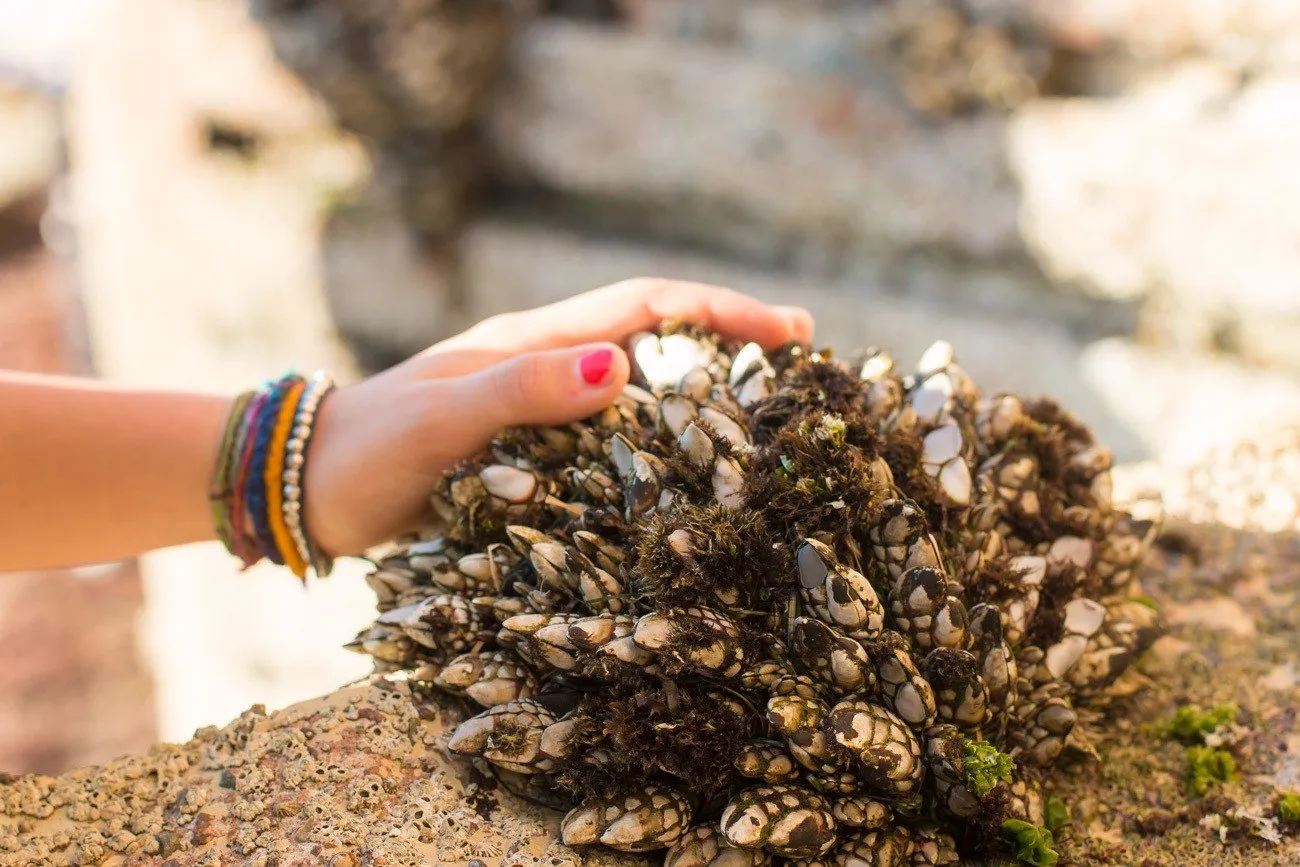
If there are tide pools, there will most likely be a variety of barnacles. You’ll see the regular variety that grows in clusters on rocks and piers, in addition to larger gooseneck barnacles.
The Golden Rules: Tide Pool Safety and Conservation
Tide pool exploration is a popular activity for local families and visitors. The La Jolla tide pools are ecologically significant, and it is important to exercise caution and respect for the environment while you explore.
Therefore, good tide pooling etiquette is necessary to protect these gems. A good mantra to keep in mind when you go is to take only pictures and leave only footprints.
As people spend more time at outdoor attractions, our tide pools receive more traffic than usual, which is worrying to environmentalists and residents.
- Much of La Jolla’s coastline is in the La Jolla Underwater Park Ecological Reserve. This means that you may not remove any marine objects, whether living or dead, from these areas. This includes the area roughly between La Jolla Cove beaches and La Jolla Shores beach.
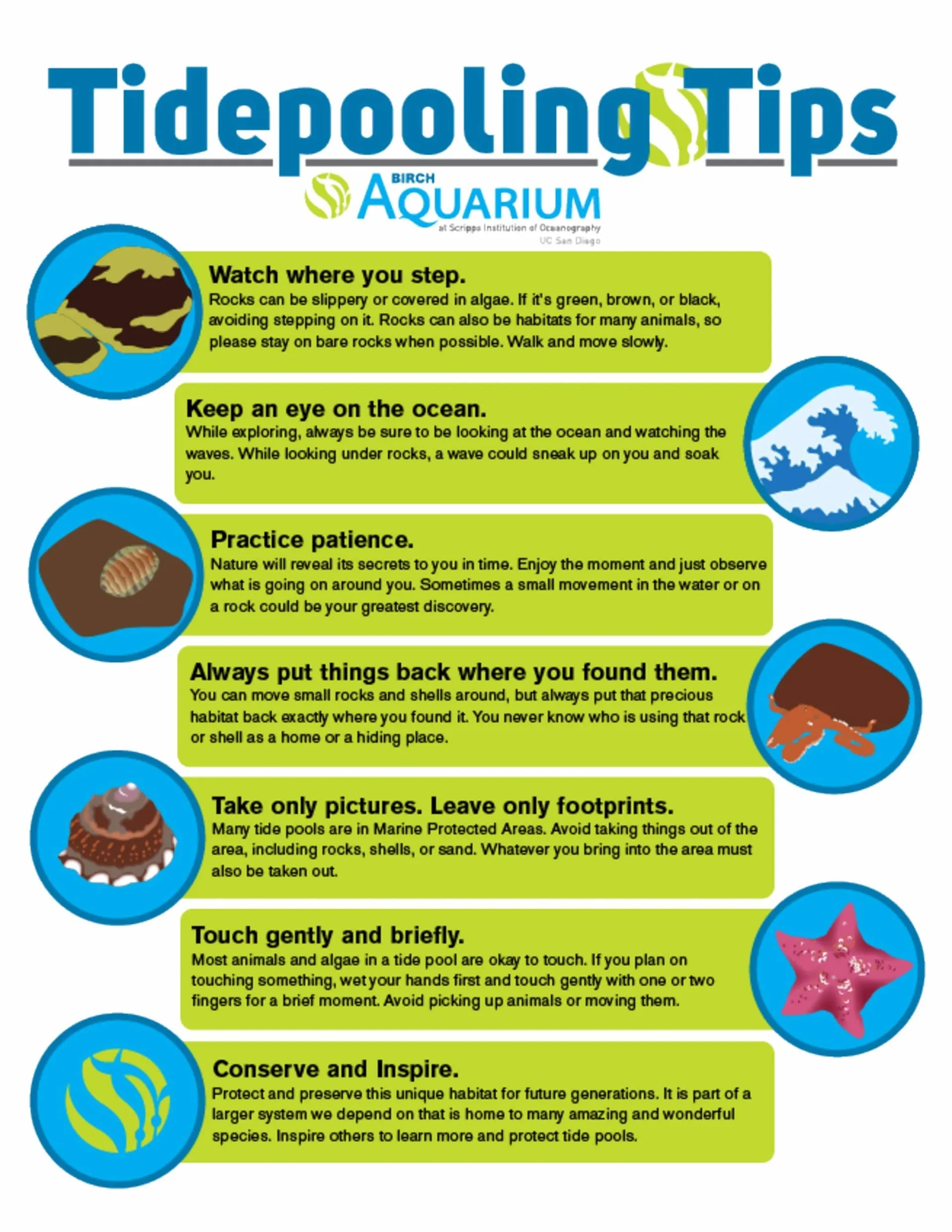
- Watch out for algae-covered rocks as you explore the tide pools. If it’s green, brown, or black, avoid stepping on it or tread lightly.
- Whatever you bring in, take back out. If you move anything like a rock, put it back. An animal might be using it as a habitat.
- Never turn your back on the ocean. It’s easy to get excited and not see a wave coming.
- If you’re going to touch something, exercise caution. Be aware of what might be on your hands, like hand sanitizers or other chemicals that may be harmful to animals. If you’re unsure of what something is, the best practice is not to touch it. Always rinse your hands first, then only touch for a few seconds.
This graphic is fantastic to discuss with kids and whoever you’re going tide pooling with. Please save it to Pinterest or print out a PDF here: Birch Aquarium Tide Pooling Tips.
Good tide pool etiquette can also be practiced at home. Danny points out that the tide pools are the first interface between land and water, so any runoff hits them first.
This means anything entering our storm drains—litter, chemical fertilizers, oil, grease, and more—can impact our tide pools.
Did you know that one of the many jobs our tide pools perform to protect us includes slowing down water before it erodes our cliffs?
They’re important. Let’s protect them.
What to Bring for Your Tide Pool Adventure
The following advice has been handy while tide pooling with kids in tow.
Sturdy Shoes for Safety
Footwear is incredibly important. Shoes or boots with a good grip that can get wet are ideal. Flip-flops are not advised because the algae that cover the rocks are very slippery when wet.
It is also wise to keep a change of shoes in the car if you’re headed elsewhere after a tide pooling adventure. Your shoes will get sandy, wet, and dirty.
Pocket Guide for Help
(As an Amazon Associate, I earn from qualifying purchases.) If not on a tour where you have people helping you identify sea life, we like the California Seashore Life Pocket Guide, which identifies local birds, crabs, fish, clams, mussels, sea urchins, and other sea critters you might see in or near a tide pool area (sea slugs are oddly missing from it).
Light Stick for Gently Moving Floating Seaweed
If there is seagrass in an area, it is helpful to bring a light stick to brush it away as it floats over the water gently. However, skip the stick if you or the kids can’t resist poking animals or exploring hidden areas where sea creatures might be.
Clear Container for Viewing
A clear container helps kids see small animals, such as hermit crabs, if you happen to catch one. The naturalists at Birch Aquarium place water in a container and drop small animals into it for quick viewing before gently releasing them back into the same pool they were found in.
In light of increased traffic to our tide pools, please minimize or resist picking up marine life.
Plastic Bag for Trash
You may see small pieces of microplastics or other trash as you comb through the rocky intertidal zone and enjoy the beach. If you have a small bag with you, it’s good tide pooling or beach etiquette to pick it up.
We personally participate in beach clean-ups, and you’d be surprised by what washes up on shore that threatens the animals in our tide pools and can even be hazardous to beachgoers.
See also: Best Things to Do in San Diego with Kids
Enjoy our tide pools throughout the season and, as Danny says, “Pass along the word of what’s the best way to interact with this habitat.”
Be sure to check out Birch Aquarium’s tide pooling tours and other outdoor adventures. You can also read my other list of best tide pools in San Diego, which includes other popular spots like Cabrillo National Monument, Swamis in Encinitas, and Tourmaline Beach in Pacific Beach.
FAQs About Visiting the Tide Pools in La Jolla
Visiting tide pools in San Diego has been a hot topic lately, as more people prefer outdoor activities. It is also one of the best free things to do in La Jolla and all of San Diego.
Here are a few tips and some answers to FAQs. And don’t forget to supplement your day in my hometown with other ideas from my list of best things to do in La Jolla.
Can I see La Jolla tide pools in the summer?
It takes a little bit of effort and luck to see La Jolla tide pools in the summer when the tide is low, mostly at night. You can check the tide charts and go during the lowest possible time.
You might see an occasional hermit crab, mussels, barnacles, or a sea anemone or two, but it wouldn’t nearly be in the type of volume we’re used to in the winter.
You could start at the La Jolla Cove tide pools and wander down to South Casa Beach to take a peek in these rocky zones. I’ve seen tide pools at Shell Beach a few times during the summer.
Even if you see nothing, it’s a beautiful walk. You’ll likely see our seals and sea lions along the way, another must-see for marine life enthusiasts and families.
There are still minus tides, but they’re happening at night. Occasionally, they happen in the early morning hours before sunrise, so it’s possible, if you’re an early bird, that you could catch some tide pools in view at the crack of dawn.
Or, better yet, head to Birch Aquarium to see their human-made tide pools.
Can I bring my dog?
Dogs are not allowed on San Diego beaches, boardwalks, and adjacent parks from November 1 to March 31 between 9 a.m. and 4 p.m. They are not allowed on San Diego beaches between 9 a.m. and 6 p.m. from April 1 to October 31.
La Jolla is part of the City of San Diego, so we adhere to these same laws. This means that you can bring your dog to La Jolla beaches outside of these banned hours.
However, keeping your dog away from tide pools is best practice, as dogs and marine life typically don’t mix well.
What time is low tide at La Jolla tide pools?
Check an online tide calendar to see when the best time to go tide pooling is. Even if your San Diego vacation is planned months ahead, these calendars will accurately tell you what the tides will be like.
If a tide hovers around zero or shows a minus, that’s your cue to go to the beach. If you see a negative one or a lower tide during daylight, you really need to go. It’s just a beautiful sight, even if you have no intention of searching for creatures.
Can I take shells from tide pools in La Jolla?
It depends. If you visit tide pools in the Ecological Reserve, like at La Jolla Cove, you may not remove anything other than trash from the beaches. This includes shells, rocks, and even sticks or seaweed.
These items serve as homes or protection for wildlife in these tide pools or play an essential role in the area’s ecosystem. Even with all of the pockets and small crevices in these tidal zones, animals still battle to find places to settle.
The more we take, the fewer habitats they have. So, even at beaches where you can legally take shells, like Shell Beach, you may want to consider leaving them.
Do periwinkles live in La Jolla tide pools?
Yes! Periwinkles are small whelks or sea snails that live in the supratidal zone, receive splashes from waves, and are rarely submerged.
This means that you can actually see them more often than other animals. Their little turban shells frequently serve as homes for hermit crabs.
Can you give me directions to the best La Jolla tide pools?
It’s a bit tricky to guide you to the exact location of the tide pools at the beach. I would set your GPS for La Jolla Cove and park along Coast Blvd.
If it’s low tide, you can not miss the tide pools (you’ll see lots of green sea grass) between the Cove and south of the Children’s Pool.
You can also set your GPS for La Jolla Shores Beach to view the tide pools south of The Marine Room restaurant or Dike Rock.
Set your GPS for Caroline’s Seaside Cafe to get closer to Dike Rock and use street parking. Take the stairway down to the sandy beach and walk north.
Do I need to pay to visit the La Jolla tide pools?
No, access to all of the natural tide pools in La Jolla is free. This is a notable difference from the tide pools at Cabrillo Monument, which require a park entrance fee.
Which La Jolla tide pools are your favorites? What have you seen?

Katie Dillon







Leave a Reply